

What Is the Minimum Pitch for a Metal Roof?
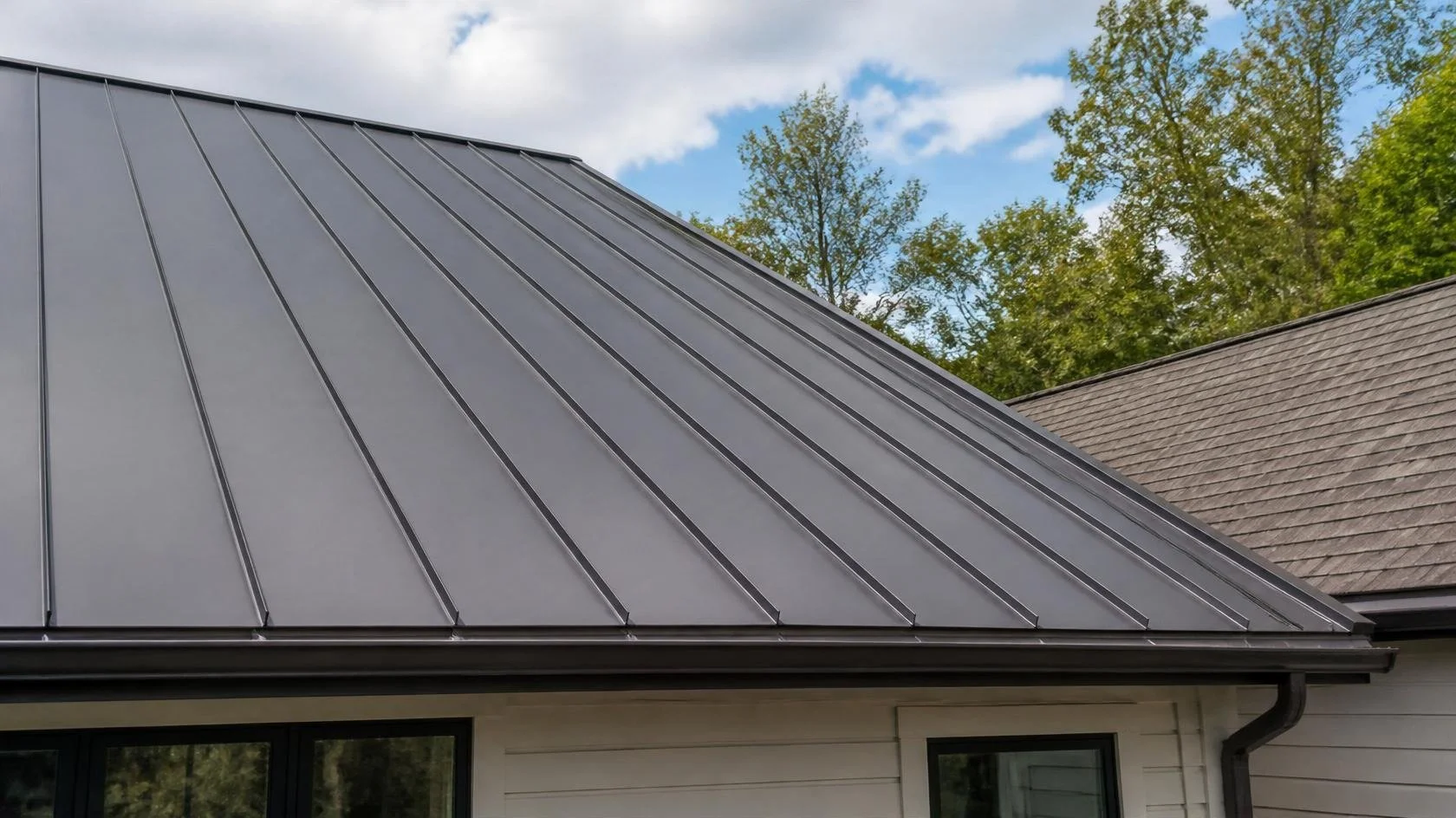
A standing seam metal roof on a sloped home in Maryland.
If you’re a homeowner in Maryland, you already know how unpredictable the weather can be. One minute it’s sunny, the next you’re dealing with heavy rain or snow. Your roof plays a huge part in keeping your home safe from these elements.
When talking with your roofer, you might have heard of the term “roof pitch (or slope)” before. Pitch is simply the angle or steepness of your roof. It's measured in a ratio of how much the roof rises vertically for every 12 inches it runs horizontally. But what many homeowners don't know is that it matters more than you realize, especially if you’re considering switching to a metal roof.
The minimum pitch for a metal roof in Maryland is:
¼:12 pitch for a standing seam metal roof, but ½:12 is safer
3:12 pitch for a snap-lock standing seam roof
3:12 pitch for an exposed fastener metal roof
Before jumping in, it’s important to know exactly what a roof pitch is, and whether your home meets the minimum pitch requirements for a metal roofing system. If it’s too flat, you risk leaks or water pooling. If it’s too steep, you might be paying for more material than you really need.
Let’s break it all down for you in simpler terms.
What Exactly Is Roof Pitch?
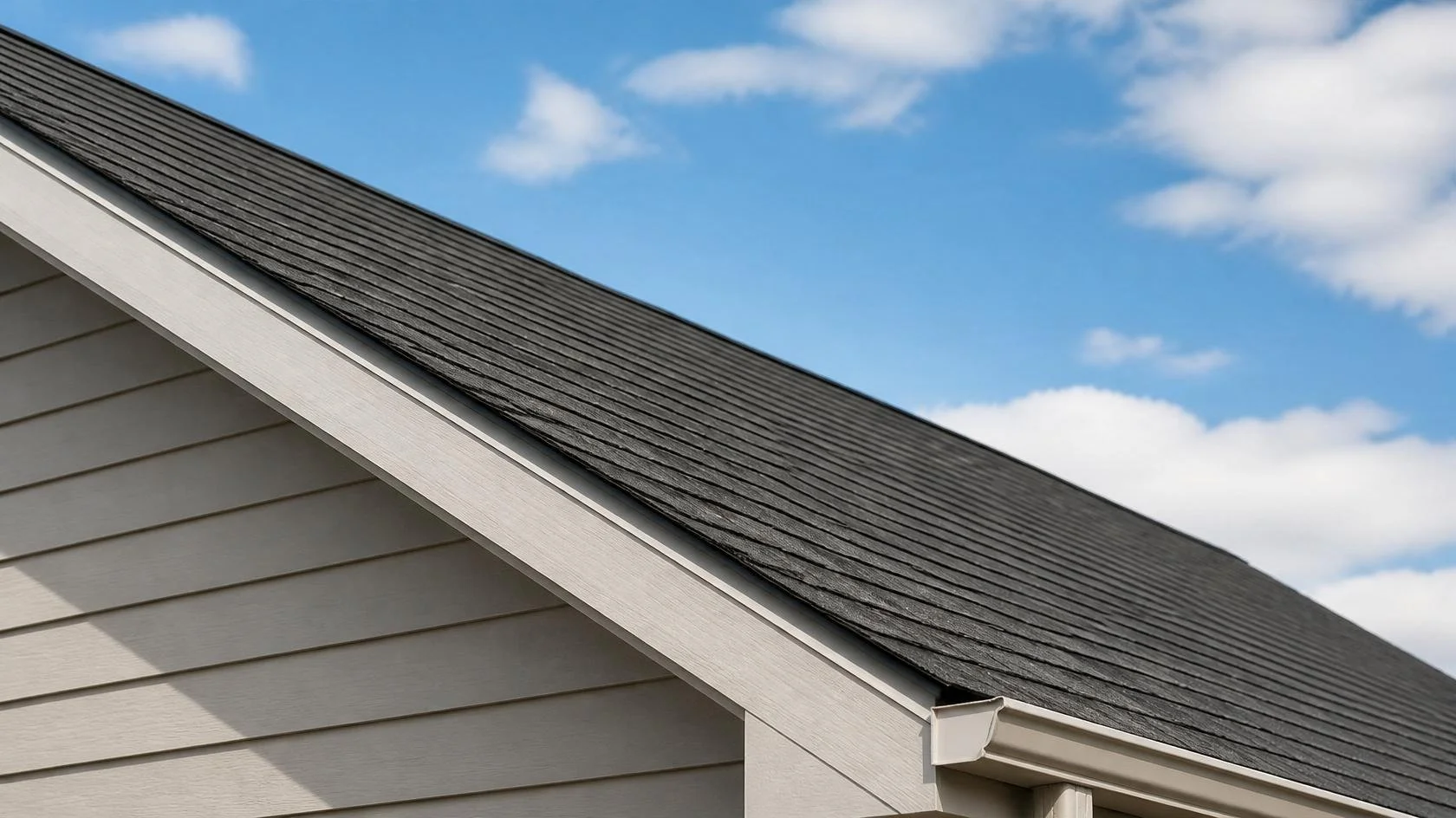
Close-up view of a roofline showing the angle, or pitch, of a Maryland home’s roof.
“Pitch” is just another word for the angle or steepness of your roof. It’s basically like the sides of a triangle, and is measured as a ratio. In roofer terms, it's how much the roof rises vertically for every 12 inches it runs horizontally (that's why they're all “/12”).
So if your roof rises 4 inches for every 12 inches across, that’s called a 4/12 pitch. A 2/12 pitch is much flatter, while an 8/12 or higher pitch is quite steep.
Some homes even have different roof sections (called facets) with different slopes. For example, the main part of your roof might be steeper while the porch area is lower. You're probably wondering why you need to know all this.
Knowing your roof pitch helps in two big ways:
It affects how well water and snow drain off your roof.
It determines how much material and labor your roofer will need, which means it directly impacts cost.
The Minimum Pitch for a Metal Roof
According to the 2021 International Residential Code (IRC Section R905.10.2), the minimum slope requirements for metal roofs are:
Lapped, non-soldered metal roofs (no sealant) – Minimum slope: 3 in 12 (25% slope)
Lapped, non-soldered metal roofs (with sealant) – Minimum slope: ½ in 12 (4% slope)
Standing seam metal roofs – Minimum slope: ¼ in 12 (2% slope)
It can be a bit hard to understand this way so let's break it down a bit more for you.
Breaking It Down in Simpler Terms
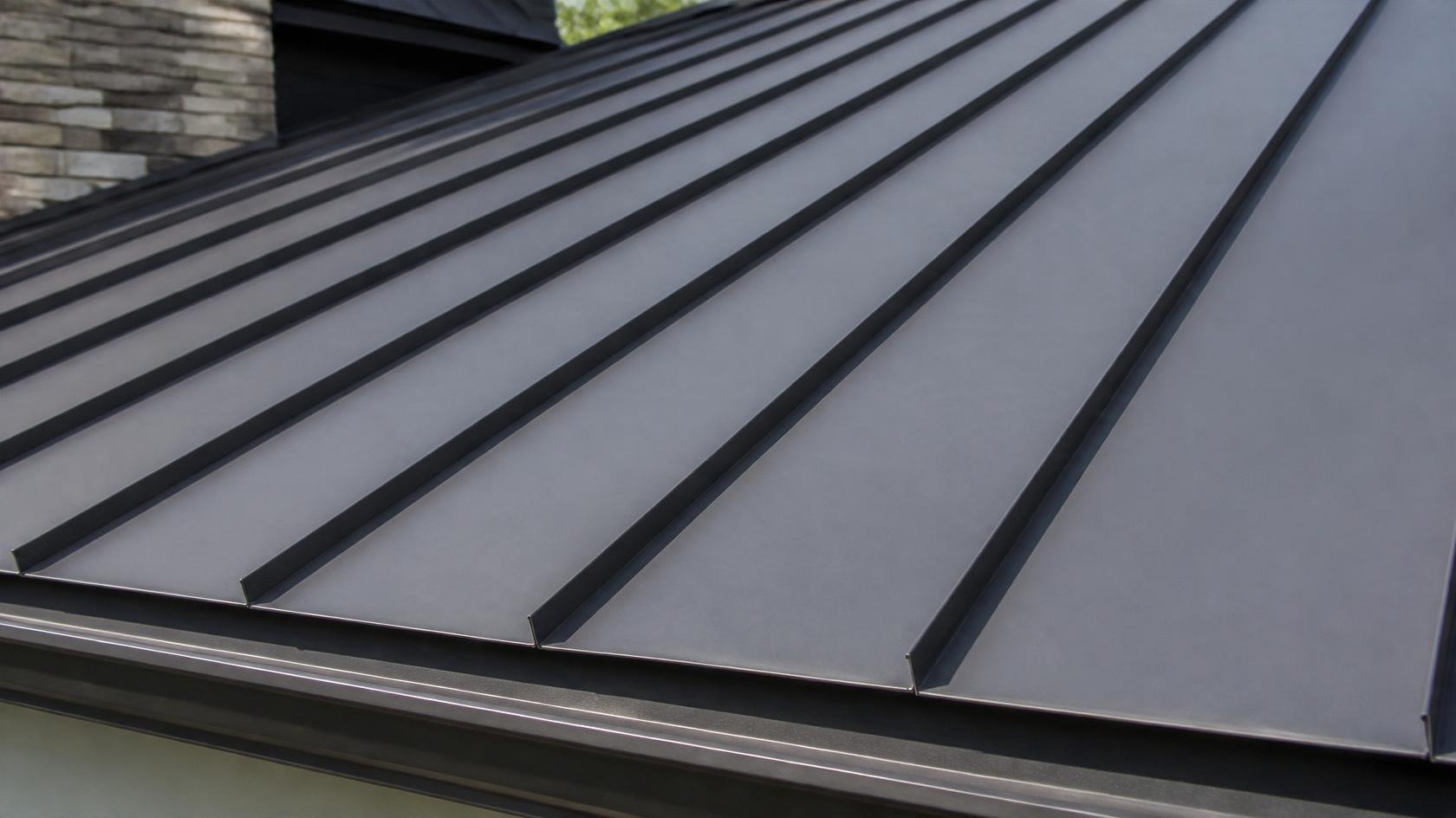
Close-up of standing seam metal roof panels with raised seams on a Maryland home.
A standing seam metal roof, which is the most popular type for homes in Maryland, can be installed on roofs as low as ¼:12 pitch. Though most contractors prefer ½:12 to be safe.
If you’re going with snap-lock standing seam panels, you’ll need at least a 3/12 pitch.
Exposed fastener metal roofs (the kind where screws are visible) should never go below 3/12, even if sealant is used, because those screws are prone to leaking over time (so much math huh😅).
In simpler terms:
Standing seam metal roofs = great for low slopes
Exposed fastener metal roofs = not so good for flat or low-pitch roofs
Now that you're a bit familiar with the minimum slope for a metal roof in Maryland, let's talk about why pitch matters exactly.
Why Pitch Matters for Metal Roofs
Metal roofs are known for their durability and long lifespan, but they still need the right slope to perform properly. The flatter the roof, the harder it is for water to drain, and standing water can lead to leaks over time.
That’s why building codes (like the International Residential Code used in Maryland) set minimum slope requirements for metal roofing. These codes aren’t just “guidelines” — they’re there to protect your home from long-term damage.
What If Your Roof Is Too Flat for a Metal Roof?
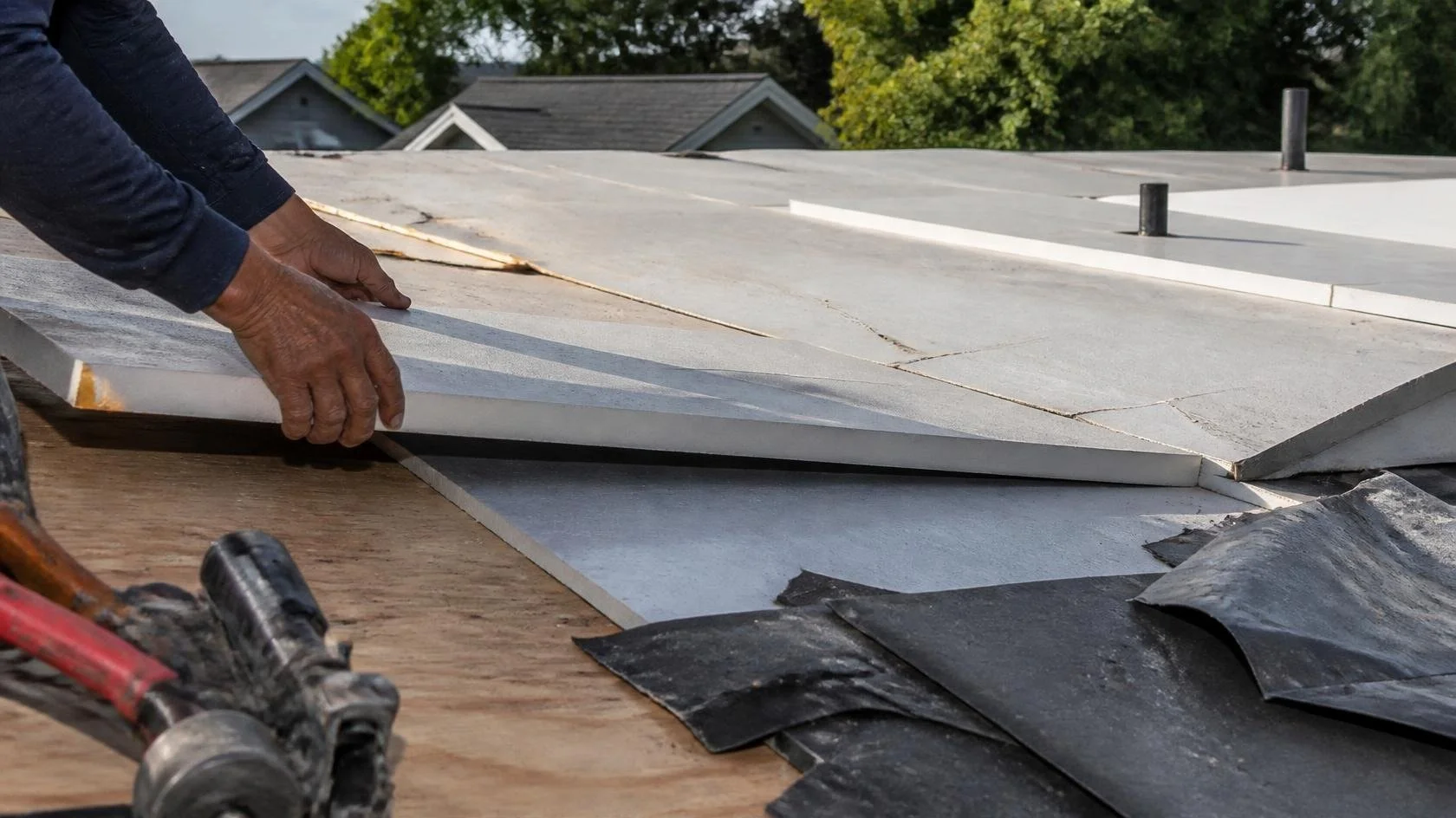
Tapered insulation boards being installed on a low-slope roof to build up pitch before a metal roof install in Maryland.
Don’t worry, it’s not completely a dealbreaker.
If your current roof doesn’t meet the minimum pitch requirements, roofers can build up the slope using what’s called a tapered insulation system (also known as a built-up roof system).
Here’s how it works:
Layers of tapered insulation boards are installed over your existing decking.
These boards gradually increase the height, creating a new slope that meets the code.
Once the right pitch is achieved, your metal panels can be safely installed.
Note that this process adds to the cost and labor, but it also comes with perks, such as:
Improved drainage
Better energy efficiency
Reduced condensation and noise
How Much Does a Metal Roof Cost on a Low Slope?
In Maryland, the average cost of a standing seam metal roof runs around $14–$18 per square foot.
If your roof needs tapered insulation to meet slope requirements, the price can go up by 20–40%.
For those looking for a cheaper option, exposed fastener metal roofs range from $5–$10 per square foot, but remember — they require regular maintenance and can leak over time.
If your home’s pitch is borderline, it’s usually better to invest in standing seam panels. They cost more upfront but offer decades of protection with minimal upkeep.
Common Roof Pitch Examples
| Roof Type | Pitch Ratio | Description |
|---|---|---|
| Flat Roof | 0/12 – ½/12 | Minimal slope, not ideal for metal roofing |
| Low Slope | 1/12 – 3/12 | Works for standing seam with sealant |
| Medium Slope | 4/12 – 6/12 | Great for most residential roofs |
| Steep Slope | 7/12 and above | Best for heavy rainfall or snow |
Most homes in Maryland fall in the 3/12 to 6/12 range, though it varies by age and style. Older homes tend to have lower slopes, while many newer builds use steeper pitches.
Local Tip for Maryland Homeowners
Because Maryland sees heavy rain, snow, and humidity, choosing the right pitch isn’t just about following code; it’s about long-term performance.
If you’re unsure of your roof’s pitch, you can ask a local roofing contractor, like DA Roofers, to help measure it using a simple level and ruler, or even drone technology. They can tell you whether your slope is safe for metal roofing or if it needs adjustment.
Final Thoughts
The minimum pitch for a metal roof depends on your roofing system, but here’s the takeaway:
Standing seam roofs can go as low as ¼:12, but ½:12 is safer.
Exposed fastener roofs need 3:12 or higher.
If your roof is too flat, you can still make it work by building up the slope with insulation.
In Maryland, where weather changes fast, the right slope can make all the difference between a roof that lasts 50 years, and one that leaks after every storm.
FAQs
1. Can you put a metal roof on a flat roof?
Not directly. You’d need to add slope using tapered insulation or framing adjustments before installing the panels.
2. What happens if your roof pitch is too low for a metal roof?
Water can pool and eventually cause leaks or rust. Always meet the code or build up your slope before installing metal roofs.
3. What type of metal roof is best for low slopes?
Standing seam metal roofs work best on low slopes since they’re sealed and have raised seams that keep water out.
4. How do I find out my roof pitch?
You can use a smartphone app, or go old school with a level and ruler. Or, just call your favorite local roofer to measure it. They can give you an exact ratio in minutes.
5. How much does it cost to add slope to a roof?
Building up a slope with tapered insulation can add $3–$6 per square foot, depending on your roof size and complexity.
