

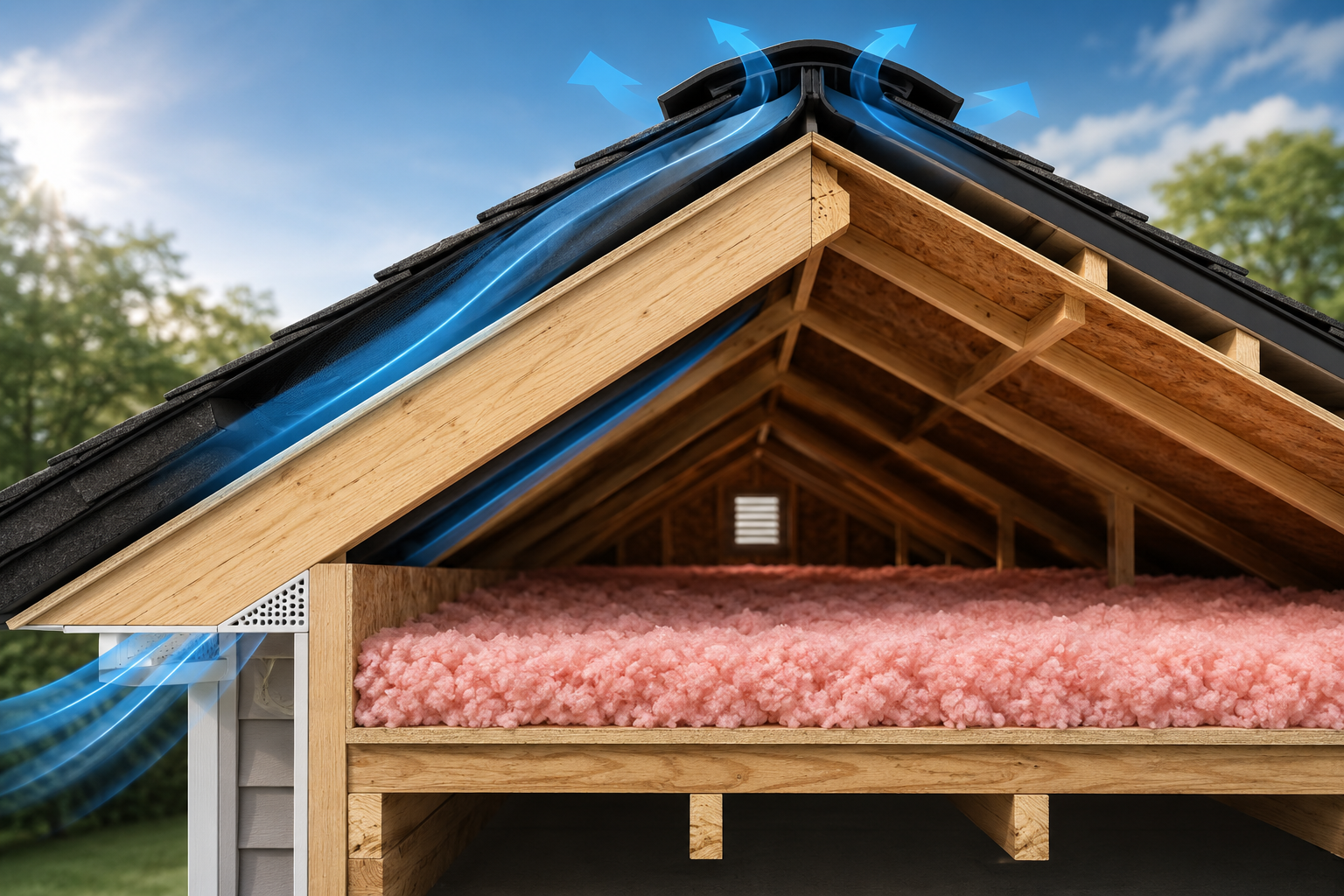
Roof attic showing proper ventilation airflow and insulation beneath the roof deck.
If you're a homeowner in Maryland, you already know how unpredictable our weather can be. One week it’s humid and muggy, and the next, we’re scraping frost off our cars. What most people don’t realize is that these swings in temperature and humidity affect more than just your comfort; they can seriously impact your roof.
Two key factors often overlooked when it comes to roof health are ventilation and insulation. These two work together like a team: one keeps your attic breathing, the other keeps your home comfortable. Without them, your roof won’t last as long, your energy bills will spike, and you might end up with damage that was easily avoidable.
So these two systems matter a lot to your roof. We wanna break it down so you can have a better understanding.
What Roof Ventilation Actually Does
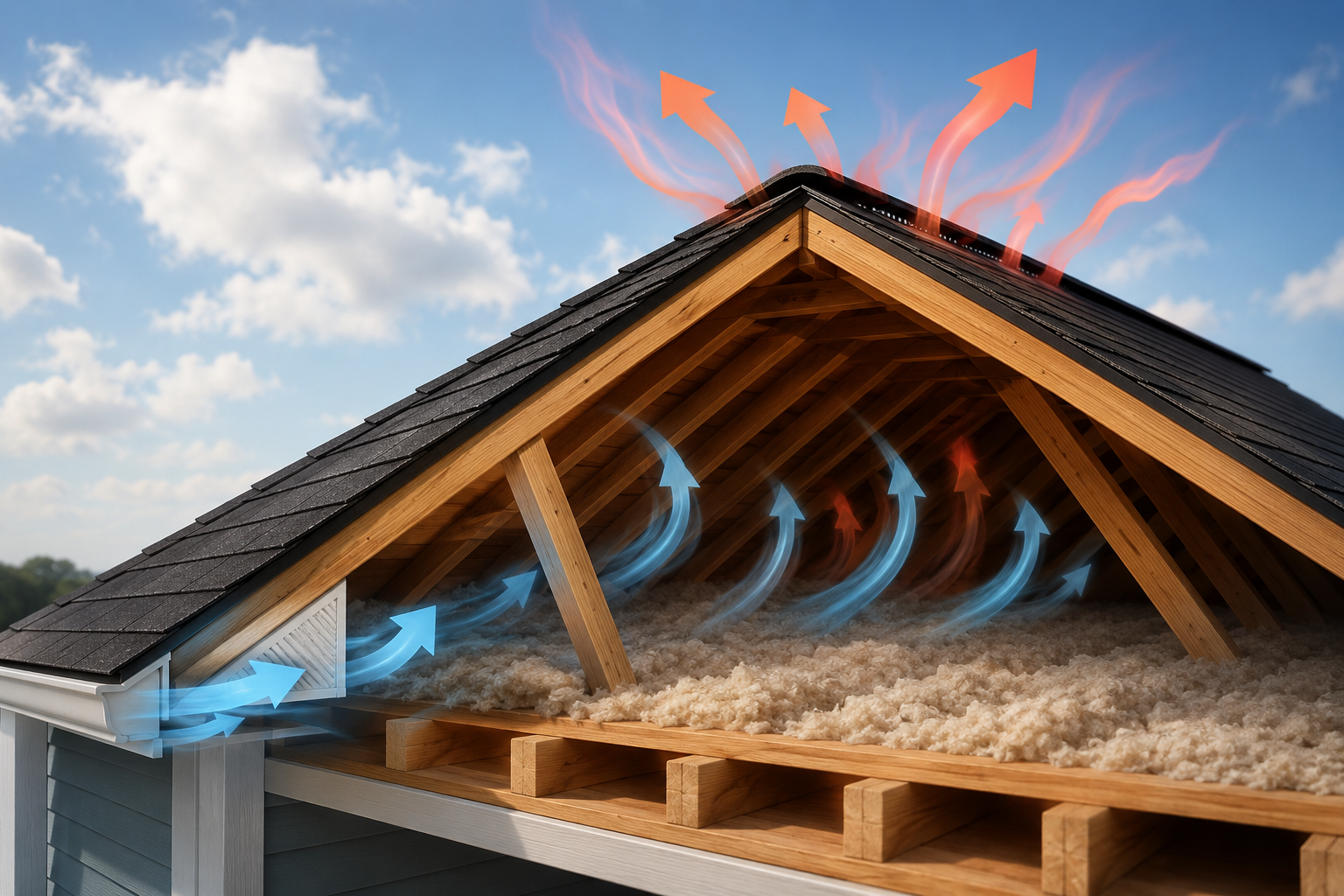
Roof ventilation system showing cool air entering through soffit vents and warm attic air escaping through the ridge vent.
Think of your attic like the lungs of your home. It needs to breathe. Roof ventilation allows hot, humid air to escape while letting cool, fresh air in. This balance keeps your attic dry and your roof materials from overheating. Here’s how it works:
Intake vents (usually under the eaves or soffits) pull in cool air.
Exhaust vents (like ridge or box vents) let out the hot, trapped air.
Without enough ventilation, your attic can feel like an oven in summer and a damp cellar in winter. That kind of trapped heat and moisture leads to mold, rot, and damaged shingles; all of which shorten your roof’s lifespan.
Why Roof Insulation Is Just as Important
If ventilation is the “breathing” system, insulation is your roof’s thermal blanket. It slows down the transfer of heat between your attic and living spaces.
In summer, insulation prevents hot attic air from coming into your house.
In winter, it keeps warm indoor air from escaping into the cold attic.
Good insulation makes your home comfortable year-round and keeps your HVAC (Heating, Ventilation, and Air Conditioning) system from overworking. In Maryland's climate, where we get both humid summers and chilly winters, insulation is a must for maintaining stable indoor temperatures and energy efficiency.
The Connection Between Ventilation & Insulation
Here’s where the magic happens:
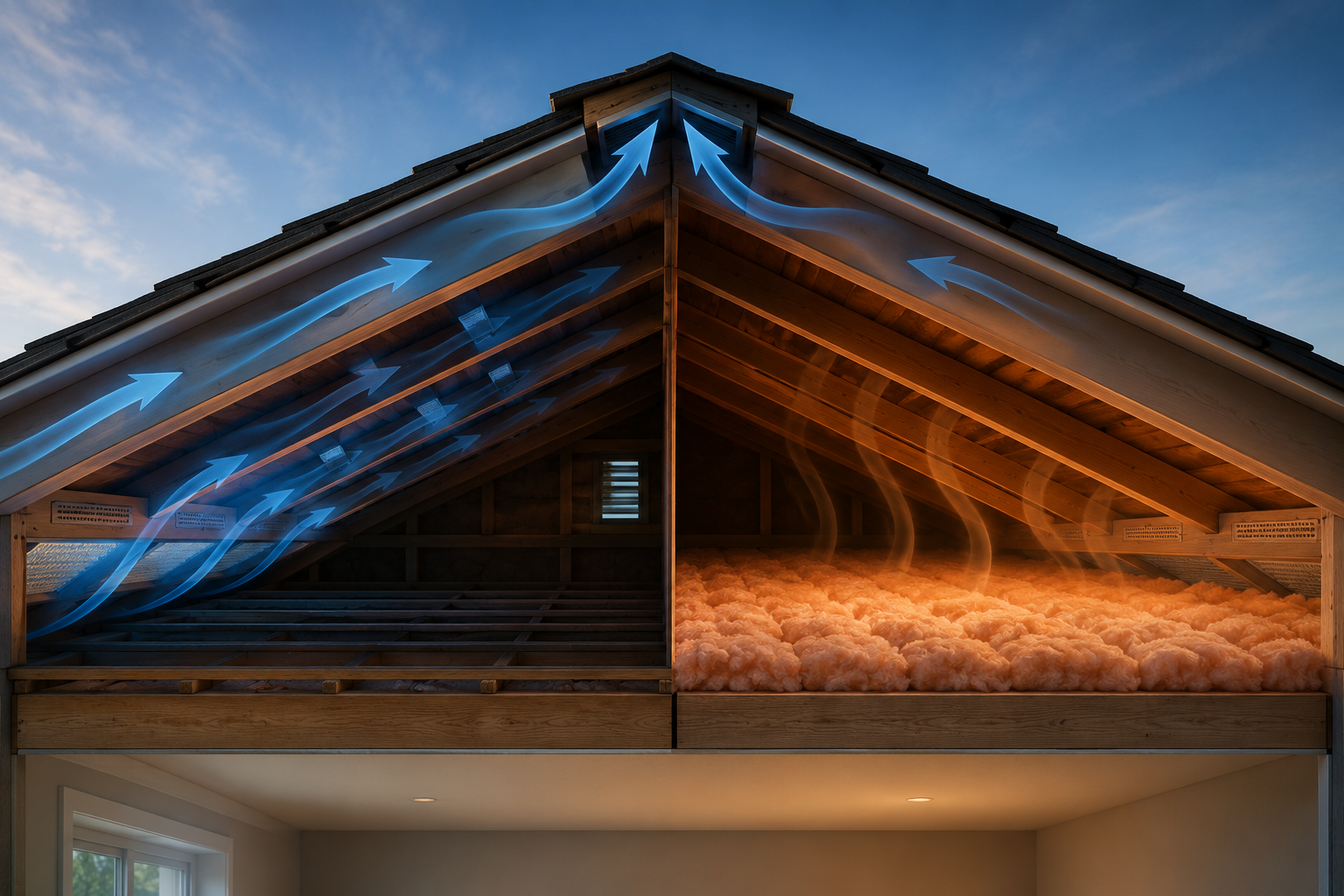
Cutaway of an attic showing roof ventilation airflow and insulation working together to regulate heat and moisture.
Insulation keeps heat where it belongs (inside during winter, outside during summer).
Ventilation clears away the moisture and excess heat that can ruin insulation over time.
If you have good insulation but poor ventilation, moisture can build up and soak into the insulation, making it useless. On the flip side, great ventilation without insulation means your home loses energy fast, and your heating or cooling system ends up working overtime.
Together, they keep your attic balanced, your roof healthy, and your energy bills under control.
Signs Your Roof May Not Be Properly Ventilated
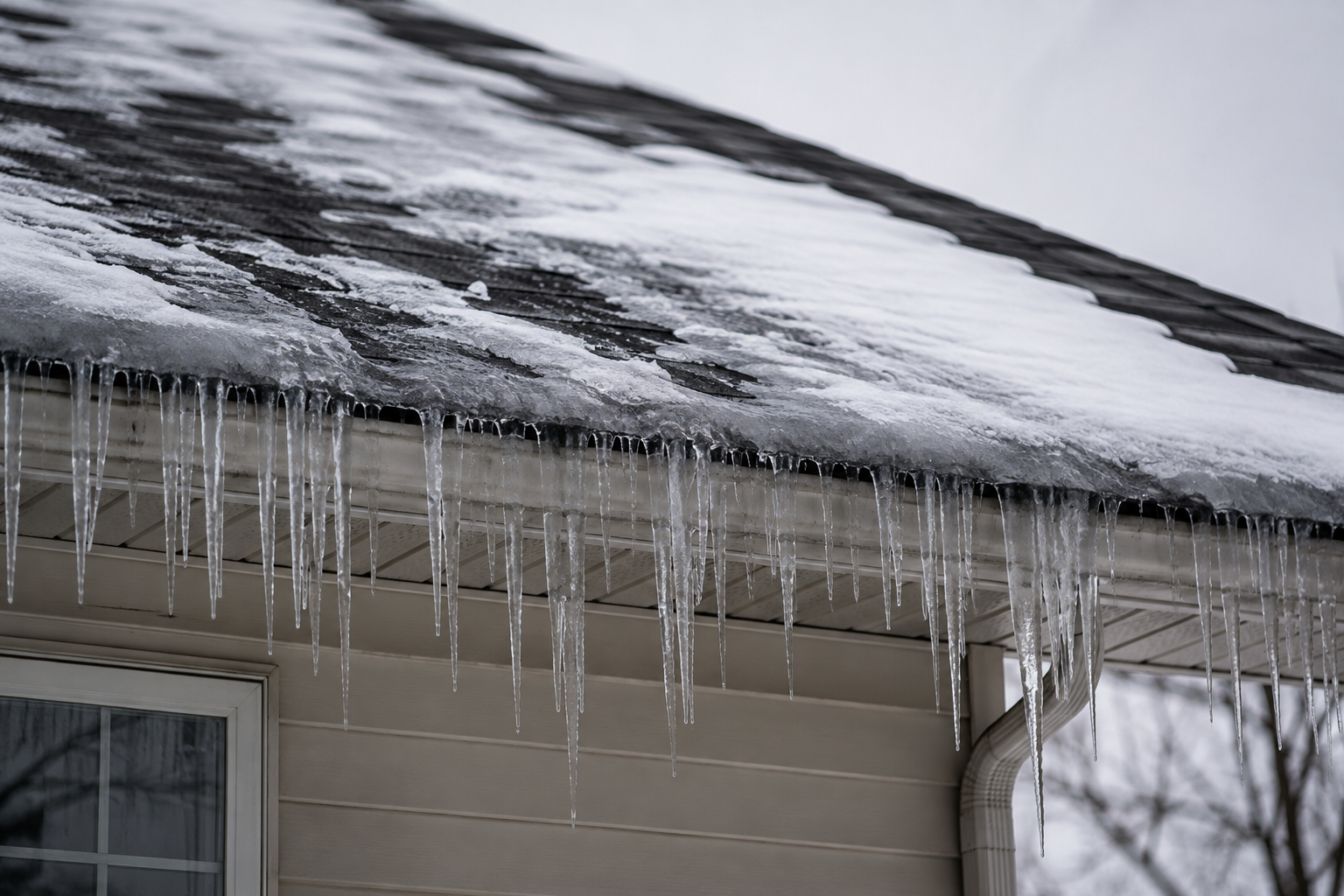
Winter ice dam buildup along the edge of a roof caused by inadequate attic ventilation.
Wondering if your roof’s ventilation and insulation are doing their job? Here are a few red flags you might notice if something's not working well:
High energy bills: If your AC or heater is working harder than it should, it's definitely a sign of poor insulation.
Hot or stuffy attic: If your attic feels like a sauna, air isn’t circulating properly.
Mold or mildew smell: This means moisture is likely trapped in the insulation or wood.
Ice dams in winter: Warm air from the house melts snow on the roof, which then refreezes along the edges. If you notice ice dams, you might have a ventilation problem.
Peeling paint or warped shingles: These are signs that heat and humidity are damaging the structure.
If any of these are happening in your home, it’s worth having a roofing expert inspect your attic ventilation and insulation setup.
Common Types of Roof Vents
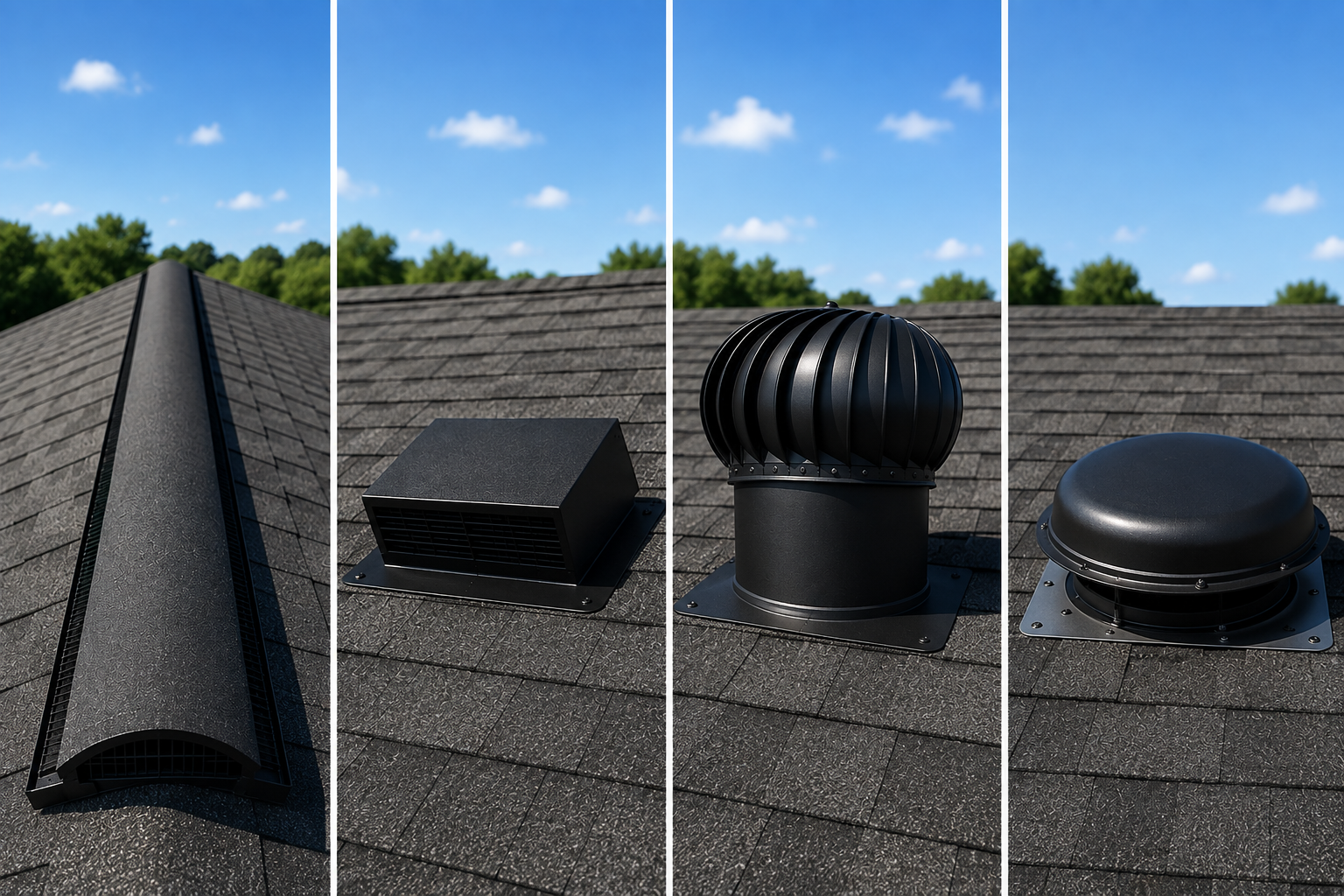
Side-by-side comparison of ridge vents, box vents, turbine vents, and attic fans installed on asphalt shingle roofs.
When it comes to letting your roof “breathe,” not all vents are created equal. Some are way more effective than others. Here are some common ones you'll find on Maryland homes:
Ridge vents: These vents run along the roof’s peak and release hot air.
Soffit vents: They're located under the eaves, and pull in cooler air.
Box vents (static vents): These are small and boxy, and often used on traditional roofs.
Turbine vents: They use wind to spin and draw hot air out of your home.
Power or solar vents: They actively move air in-and-out using electricity or sunlight.
Each type has its pros and cons, and the right mix depends on your roof design, attic size, and local climate. In humid areas like Maryland, a balanced system with both intake and exhaust vents works best.
How Maryland Weather Affects Your Roof's Ventilation Needs
Living in Maryland means your roof deals with a bit of everything; high summer humidity, sudden storms, and frosty winters. This variety makes proper ventilation and insulation even more critical.
Here’s how our local weather plays a role:
Humid summers: Without ventilation, moisture builds up in your attic, leading to mold and wood rot.
Cold winters: Poor insulation lets warm air escape, creating ice dams that can damage shingles and gutters.
Stormy seasons: Quick temperature drops and trapped moisture can cause attic condensation and leaks.
Because of these conditions, Maryland homeowners need a roofing system that allows airflow while maintaining insulation performance year-round.
How Proper Ventilation & Insulation Extend Roof Lifespan
A well-balanced attic doesn’t just make your home more comfortable, it can add years to your roof’s life. Here’s why:
Prevents rot and mold: Dry air stops moisture from seeping into the wood and insulation.
Keeps shingles cooler: Proper insulation and ventilation prevents shingles cracking and curling caused by extreme heat.
Reduces HVAC strain: Balanced attic temperatures mean your heating and cooling systems don’t overwork.
Protects against condensation: Prevents water from forming under the roof deck.
Bottom line is: Proper ventilation and insulation protect your investment - your roof. Replacing a roof too soon is expensive, so maintaining airflow and insulation is one of the simplest ways to save thousands in the long run.
Professional Solutions: Why a Roofing Inspection Helps
If you’re unsure about your attic’s condition, it's best to call a trusted Maryland roofing professional to check it out. They can check your roof vents, inspect your insulation, and spot issues before they turn into costly repairs.
During an inspection, a roofer can:
Measure attic ventilation levels.
Check for moisture damage or mold.
Inspect insulation thickness and placement.
Recommend energy-efficient upgrades suited for local weather.
A quick visit now could save you from leaks, wood rot, and sky-high utility bills later. That’s a no brainer and if you need help finding a good local roofer in Maryland, check out our helpful tips.
Final Thoughts
Your roof is more than just a connection of shingles — it’s a whole system. And like any system, all parts need to work together. Ventilation and insulation may not be the most exciting topics, but they’re what keep your roof strong, your energy bills low, and your home comfortable all year round.
For Maryland homeowners that have to deal with both humidity and cold, paying attention to these two factors can make all the difference. So, if you haven’t checked your attic lately, now’s a good time to have a local roofing expert, like
Da’ Roofers, take a look during your routine maintenance. A little prevention today can save you a major headache tomorrow.
FAQs
1. Why is roof ventilation important?
It helps regulate attic temperature, prevents moisture buildup, and protects roofing materials from early damage or mold.
2. How do I know if my attic has poor ventilation?
Look for hot attic air, high utility bills, musty smells, or signs of moisture on wood and insulation. All these can point to poor ventilation.
3. Can I add insulation without fixing ventilation first?
It’s not a good idea to do that. Without proper ventilation, trapped moisture can ruin insulation and lead to mold or wood rot. It'll end up causing problems.
4. How much attic ventilation does a house need?
Most homes follow the 1/300 rule. That means, one square foot of ventilation for every 300 square feet of attic space.
5. Does roof ventilation help lower energy bills?
Absolutely. It balances attic temperatures, reduces HVAC strain, and helps your home stay cooler in summer and warmer in winter.
