

What Type of Roof Membrane Is Best for Flat & Low-Slope Roofs in Maryland?
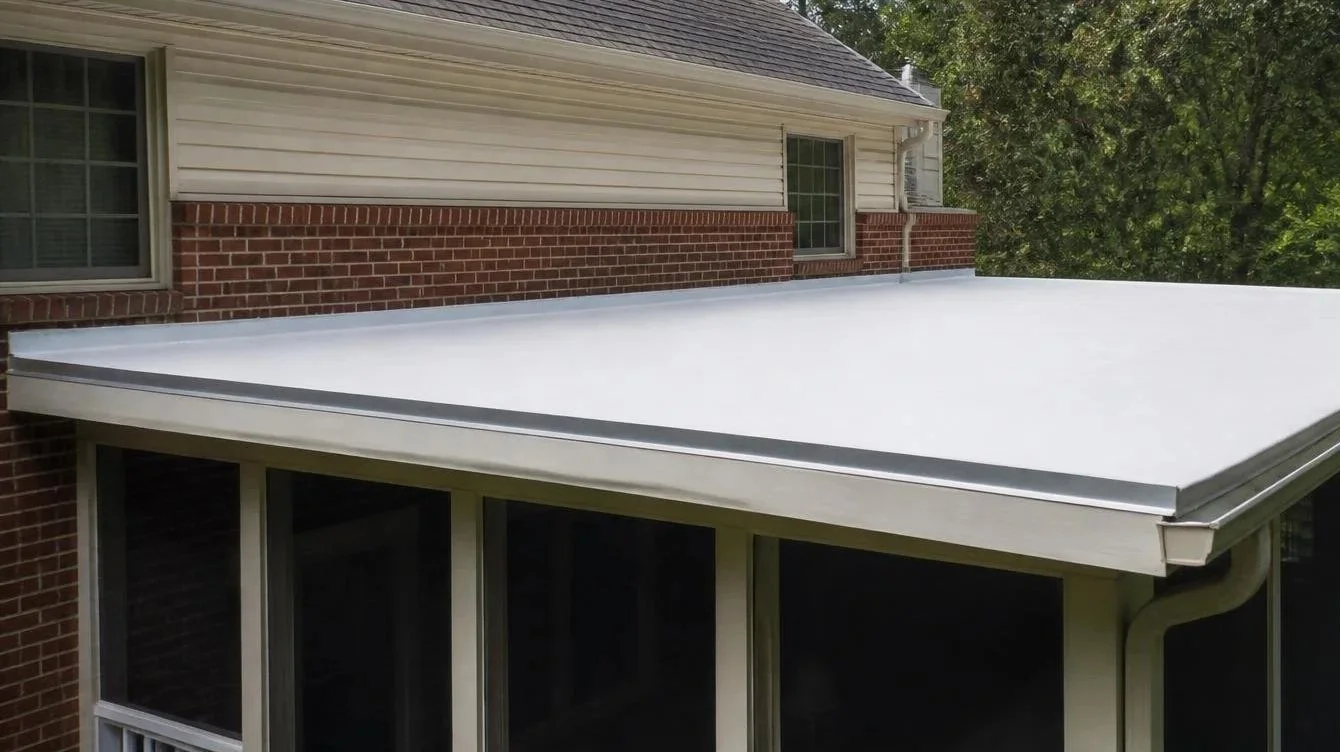
A white membrane flat roof over a screened-in porch on a Maryland home.
If you live in Maryland and part of your roof is flat or almost flat, you might be wondering something simple: why can’t they just put shingles there too? That’s a great question, and the short answer is; water doesn’t behave the same way on flat roofs. That’s why we have materials specifically made for flat roofs called roof membranes.
At Da' Roofers, our work encompasses all roofing types, guaranteeing you expert knowledge so you can understand your options.
So let’s walk through it together and explain what roof membranes are, why you may need to use it, and which type makes sense for homes in Maryland.
Why Flat and Low-slope Roofs Need Something Different
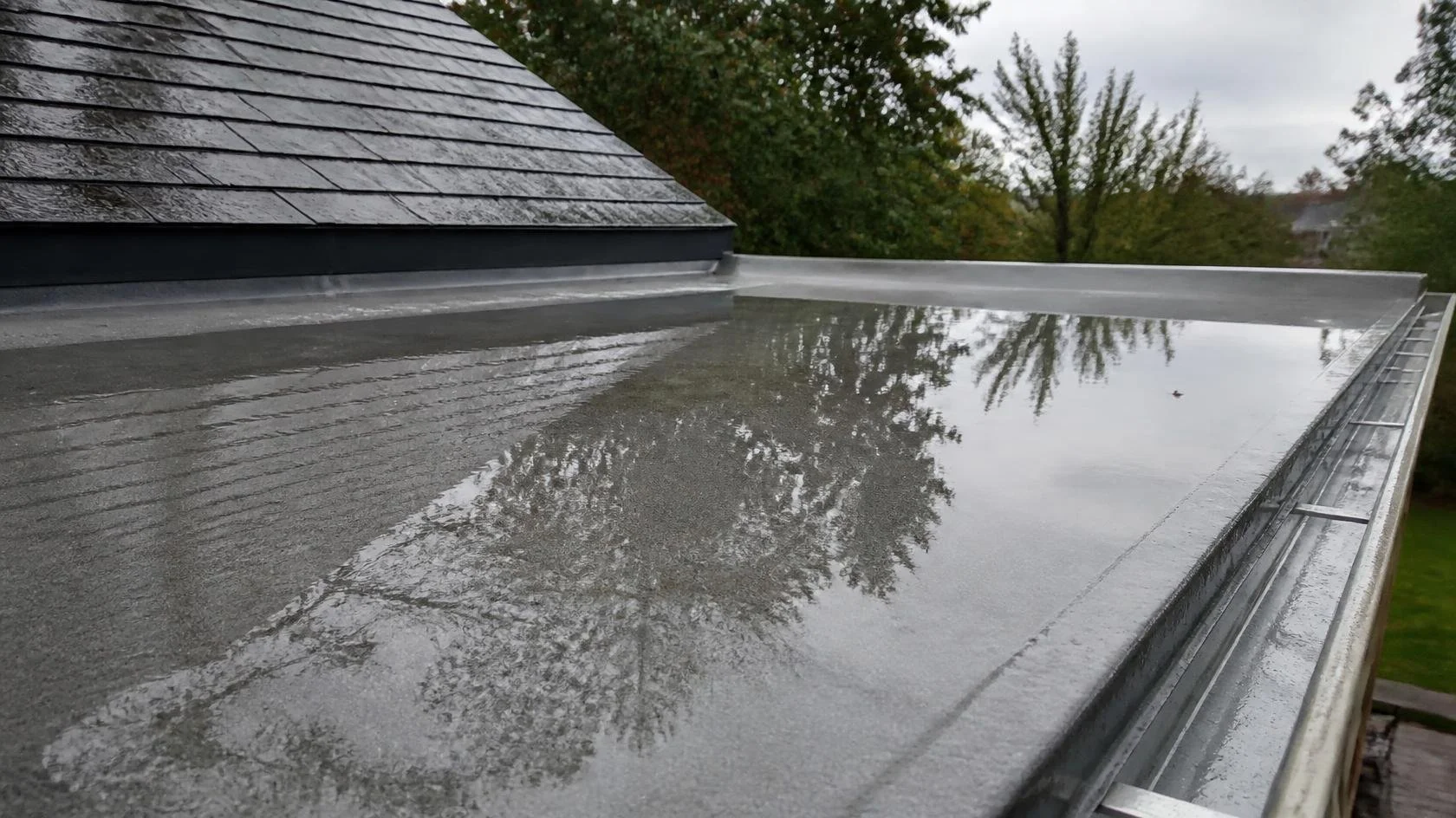
Standing water on a low-slope membrane roof after rain on a Maryland home.
Here’s the simple idea: Shingles work great on sloped roofs because water slides off quickly. On flat or low-slope roofs, water moves slowly and sometimes just sits there. Shingles aren’t made for that. If you use them anyway, leaks are almost guaranteed.
That’s why any roof with a slope below 2:12 must use a membrane or metal system instead of shingles. This isn’t just a preference, it’s part of building rules and manufacturer guidelines.
So if your home in Bethesda has a flat porch roof, or your Rockville home has a low-slope section, a membrane roof is one of the only ways to protect your home.
What is a Roof Membrane?
Think of a roof membrane like a big, thick, waterproof blanket that’s sealed tightly across the roof. Its job is simple:
Keep water out
Handle standing water
Stay flexible through hot summers and cold winters
Membranes are especially common on screened-in porches, flat dormers, and garage roofs.
The 3 Main Types of Roof Membranes Da’ Roofers Installs
There are three membrane systems that can be used on residential roofs. All of them can work well. The right one depends on what’s under the roof and how you use that space. They include:
1. EPDM – The Tough Rubber Roof
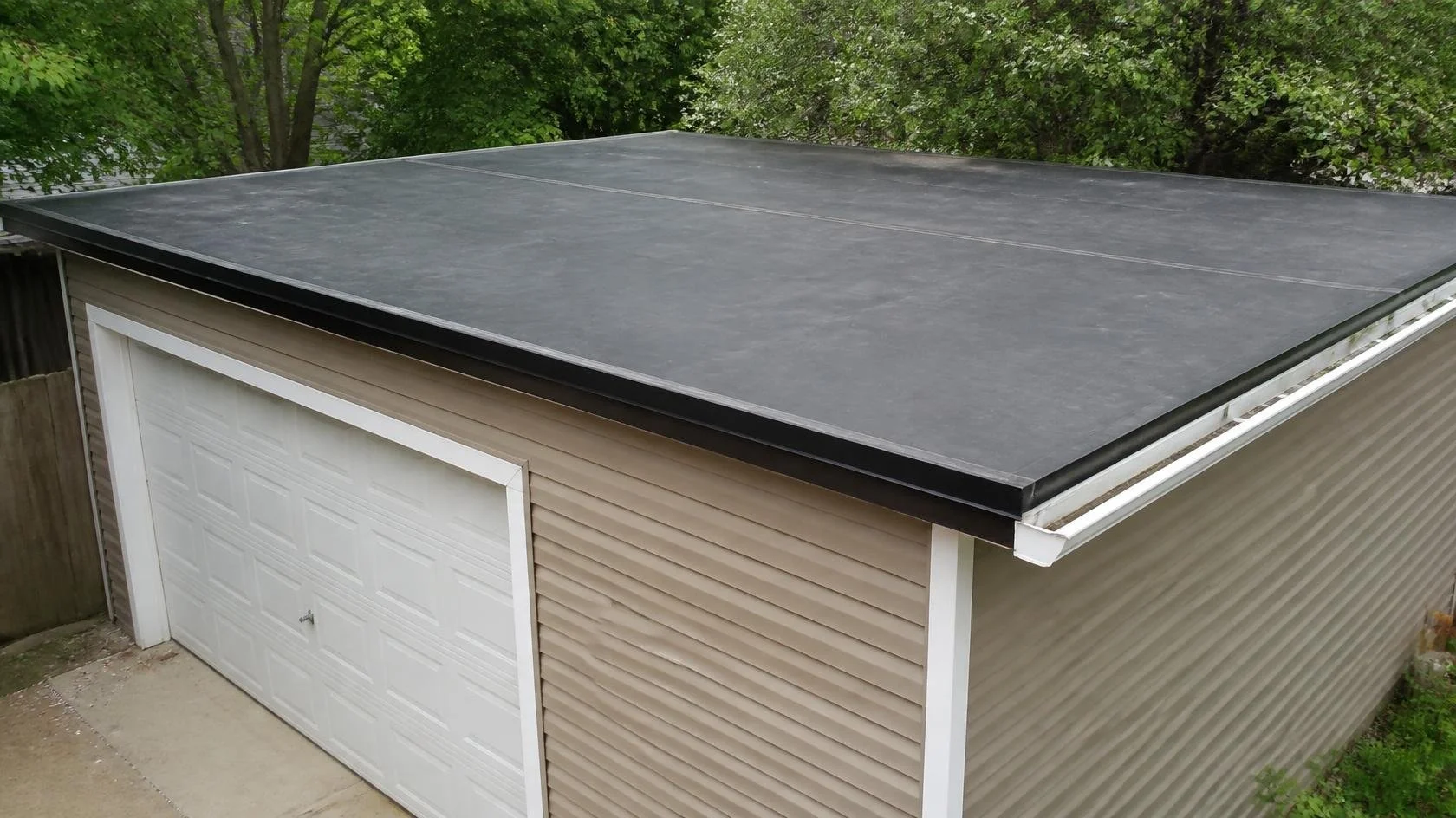
A black EPDM rubber membrane roof over a garage on a Maryland home.
EPDM is a black rubber membrane. It’s extremely strong and long-lasting. It also hides dirt well and can last 25–30 years when installed properly.
However, because it’s black, it absorbs heat. That’s why we usually don’t recommend it over bedrooms or living rooms in places like Silver Spring or Columbia. It's best used over:
Garages
Storage areas
Non-living spaces
2. TPO – The White, Heat-reflecting Option
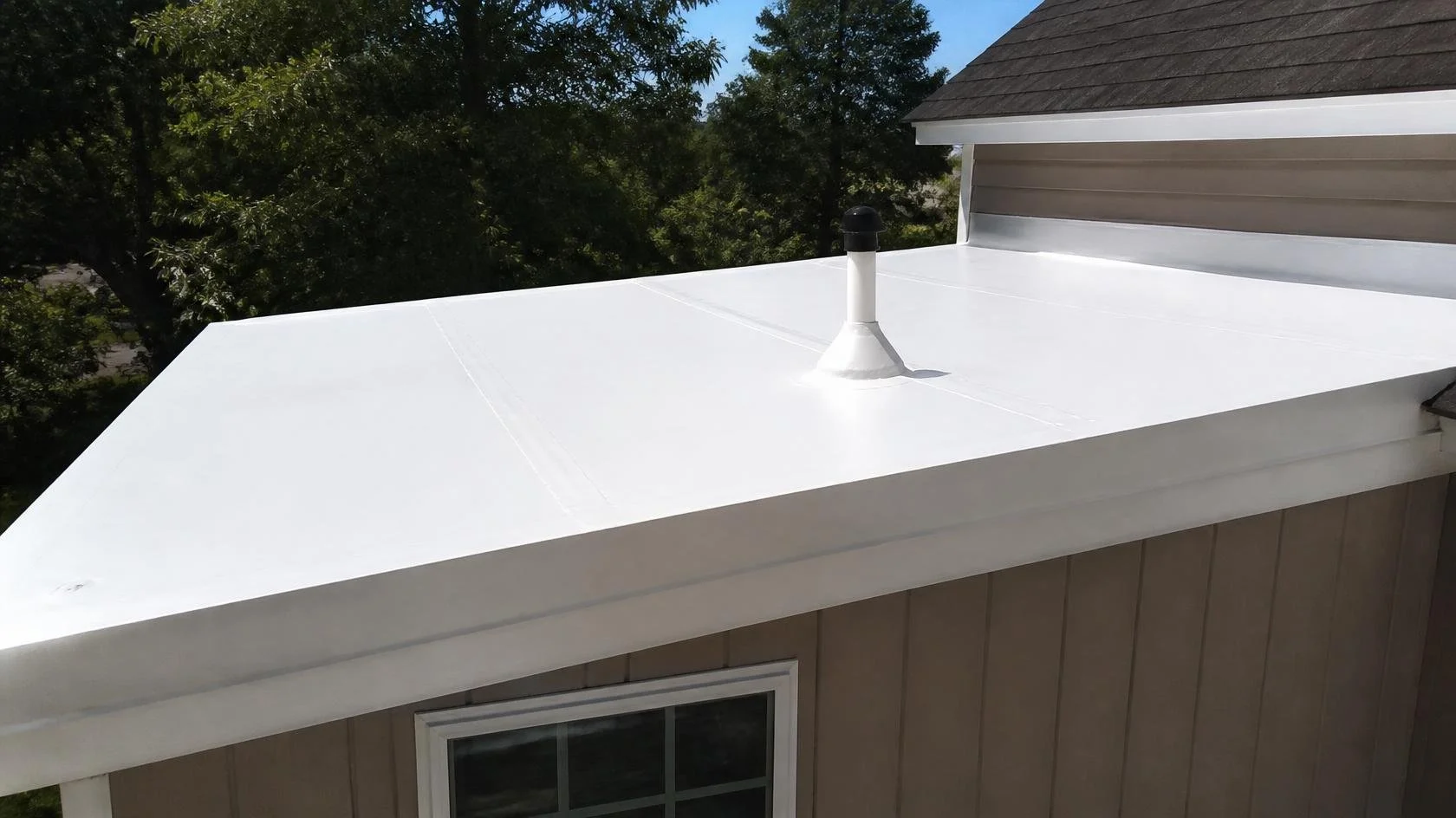
A white TPO membrane roof over a bedroom addition on a Maryland home.
TPO is a white membrane that reflects sunlight instead of soaking it in. With proper installation, it also lasts around 25 years.
However, white membranes show dirt faster. Functionally, that’s not a problem. But visually, it’s something to think about if you can see the roof from a window. It's best used over:
Bedrooms
Living spaces
Finished rooms
If you have a flat roof over a bedroom in Chevy Chase or a low-slope dormer in Maryland, TPO helps keep that room cooler in the summer.
3. PVC – Similar to TPO, With Extra Flexibility
PVC is another white membrane and works much like TPO. It’s been around longer and is a bit more flexible, which helps in areas where temperatures swing a lot, like Maryland winters and summers. PVC is a solid choice for:
Living spaces
Bedrooms
Areas where flexibility matters
Like TPO, you can expect around 25 years of life with good installation.
How Much does Membrane Roofing Cost in Maryland?
The price depends on a few things:
The type of membrane
The insulation underneath
The size of the roof
For most residential flat roofs in Montgomery County, Howard County, or Frederick County, a general budget range looks like this (based on 2026 numbers):
Smaller flat roofs: about $14–$17 per square foot
Slightly larger areas: around $12 per square foot
Insulation choice matters too. A fully insulated system costs more than a basic setup, but it can make room temperatures more comfortable year-round.
Why Proper Installation Matters More than the Material
Here’s something homeowners don’t always hear: A great membrane installed poorly will still fail. A decent membrane installed correctly will last. That’s why Da’ Roofers focuses so much on:
Seam welding
Proper drainage
Clean, tight flashing around edges and penetrations
Flat roofs don’t forgive shortcuts. One small mistake can turn into a leak months later.
How Da’ Roofers Helps Homeowners Choose the Right Membrane
Our approach is not to immediately promote a single product. Instead, our focus is on asking:
What room is under the roof?
Can you see the membrane from a window?
How old is the structure?
With this information, we'll be able to give you a great recommendation for your home. Whether you’re in Rockville or Columbia, the goal is the same; a leak-free roof that fits your home and budget.
Final Thoughts
If your roof is flat or low slope, membrane roofing isn’t optional — it’s what actually keeps water out. Shingles just aren’t designed for areas where water sits.
Da’ Roofers install membrane roofs all across Maryland, especially over porches, garages, and additions. Every roof is different, which is why a proper inspection always matters.
If you’re unsure what your roof needs, asking early is the best move. It’s much easier than dealing with leaks later.
FAQs
1. What is the best membrane roofing for residential homes?
It depends on the space below. EPDM works well over garages, while TPO and PVC are better over living areas and bedrooms.
2. How long do flat roof membranes last?
Most residential membrane roofs last around 25 years when installed correctly. EPDM can sometimes last even longer.
3. Can shingles be installed on a low-slope roof?
No. Roofs below a 2:12 pitch require a membrane or metal system. Shingles are not designed for standing water.
4. Is membrane roofing expensive?
It costs more than shingles per square foot, but flat roofs are usually smaller. The total price often balances out.
5. Does Da’ Roofers install membrane roofs in my area?
Yes. Da’ Roofers install membrane roofing across Maryland. That includes Montgomery, Howard, Frederick, and Anne Arundel counties.
