

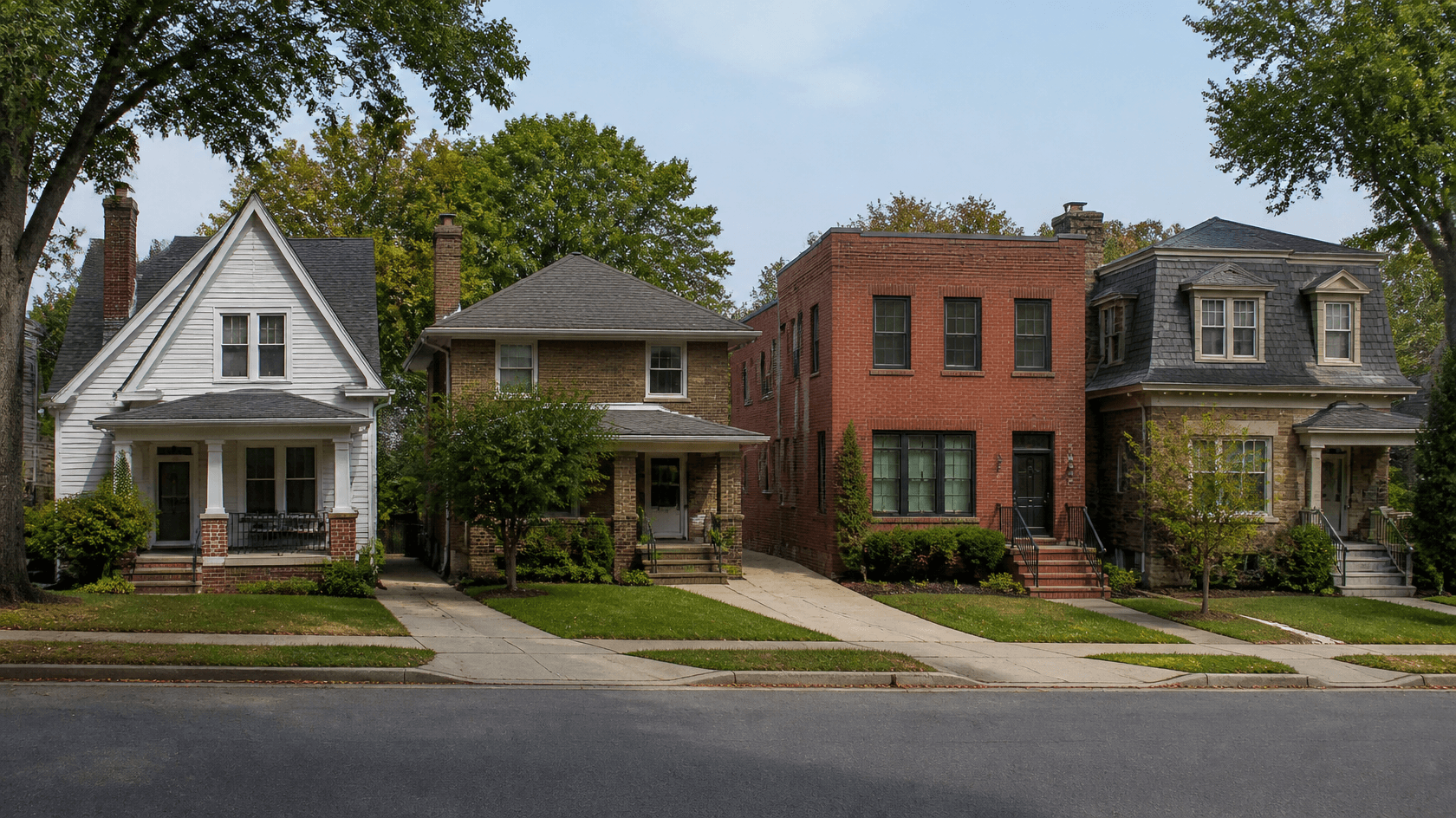
Maryland street with homes that have gable, hip, flat and mansard roofs.
When you drive through Maryland neighborhoods, you’ll notice something interesting — not all roofs look exactly the same. From the sharp peaks of gable roofs to the flat tops of rowhomes, every roof design has its own charm and purpose. But beyond looks, your roof’s shape affects how it handles rain, snow, heat, and even your energy bills.
The 7 most common roof designs in Maryland include:
Gable Roofs
Hip Roofs
Flat Roofs
Mansard Roofs
Shed Roofs
Gambrel Roofs
Combination Roofs
In this article, we'll break down these 7 roof designs and why each one might be a great fit for your home. Let's dig in!
1. Gable Roofs — Simple, Classic, and Cost-Effective
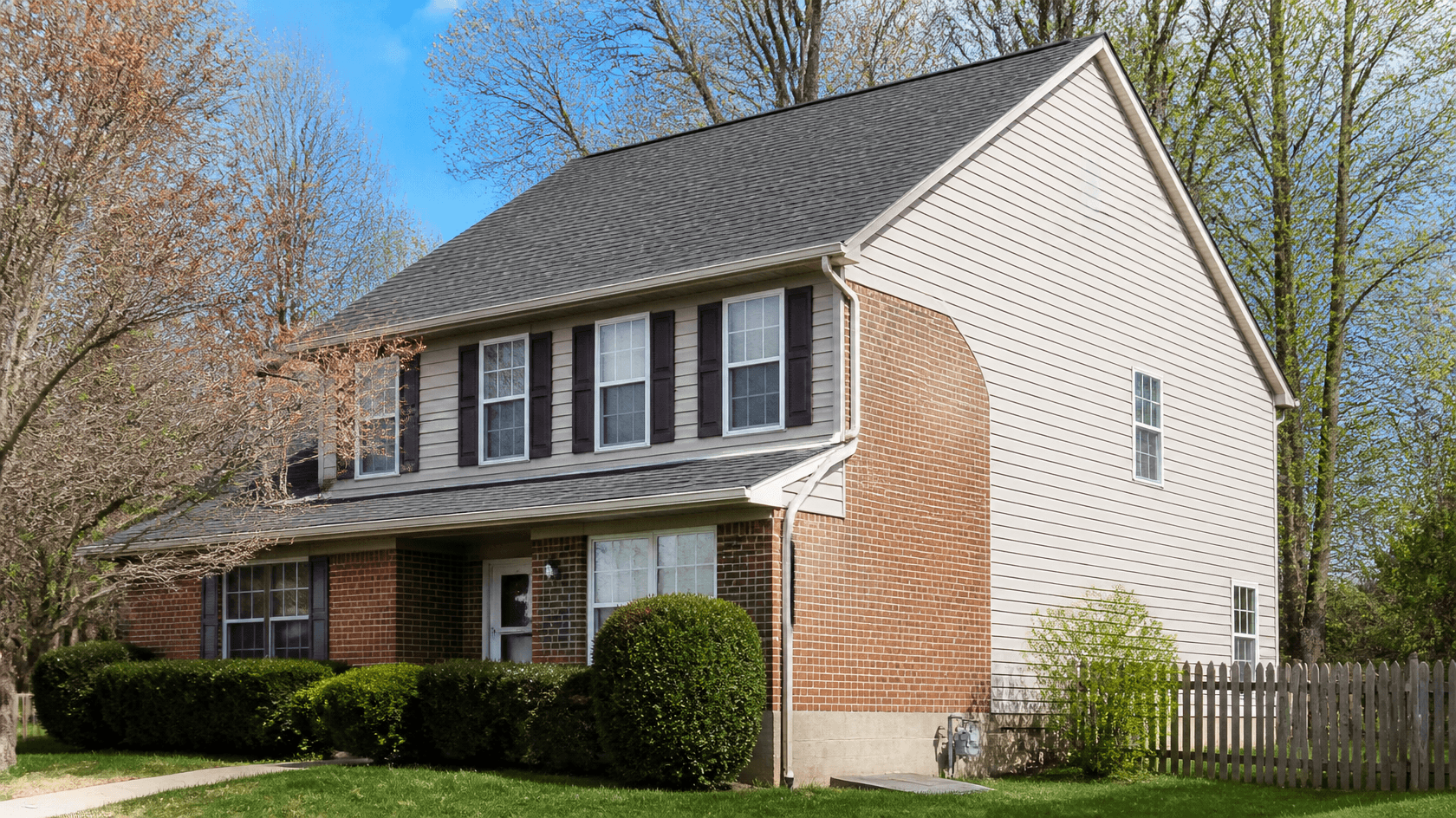
Maryland home with a gable roof and dark gray asphalt shingles.
You can’t go wrong with a gable roof. It’s the triangle-shaped one (two slopes at the side) that most people draw when they think of a “house.” Why homeowners love it:
Great for rain and snow: The steep slope lets water and snow slide right off, which helps prevent leaks and roof damage.
Affordable build: Because it’s a simple design, gable roofs are usually more budget-friendly to install and maintain.
Good ventilation: The design makes it easier to add attic vents and improve air circulation.
They're best for areas with moderate to heavy rain or snow; so yes, perfect for Maryland houses.
2. Hip Roofs — Stability Meets Style
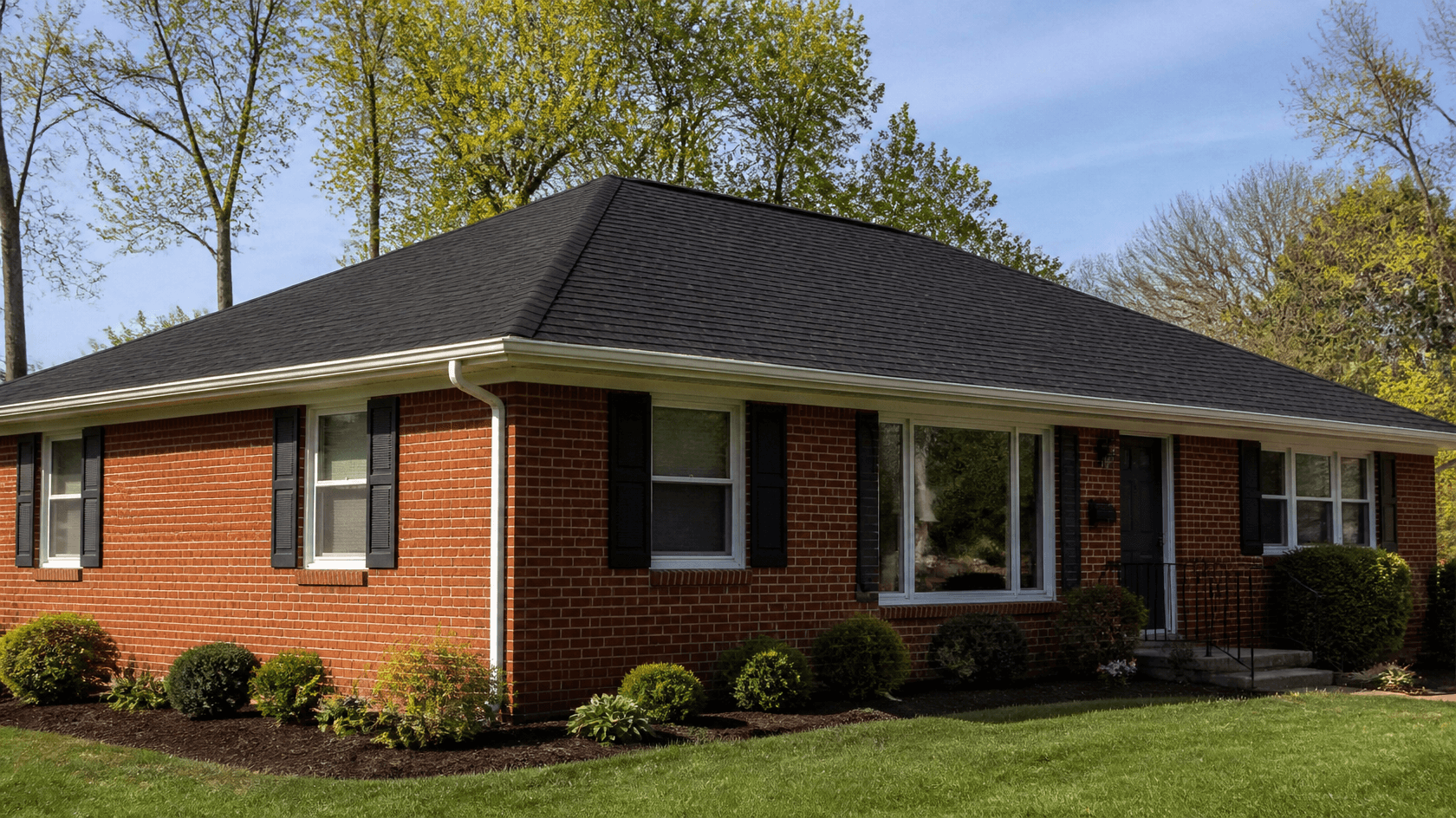
Maryland brick home with a hip roof that slopes on all four sides.
Hip roofs are so hip - LOL! So hip roofs have slope on all four sides, meeting neatly at the top. They’re popular in many Maryland suburbs because they handle our mixed weather really well. Their advantages:
Excellent wind resistance: Great for windy areas or open landscapes.
Even weight distribution: Snow loads are spread evenly, reducing stress on your roof.
Attractive, balanced look: They give your home a more polished, modern appearance.
Keep in mind that hip roofs are a bit more expensive than gable ones due to their complex framing, but the durability often makes up for it.
3. Flat Roofs — Modern and Functional
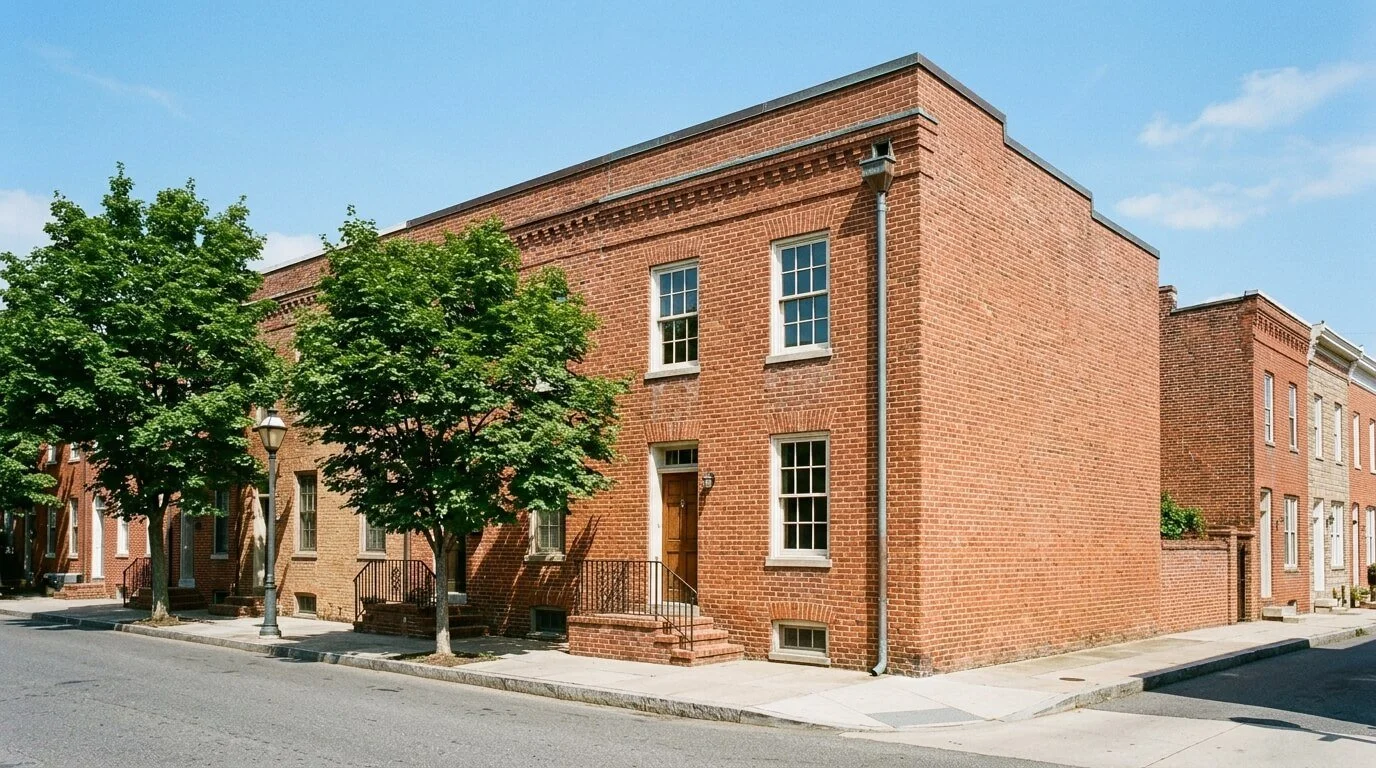
Brick row home in Maryland with a flat roof and a low parapet wall.
Despite the name, flat roofs aren’t completely flat. They have a very slight pitch so water can drain properly. You’ll often see these on row homes and contemporary designs across Maryland. Why they work well for Maryland homes:
Extra usable space: Many homeowners turn their flat roofs into rooftop patios, gardens, or solar panel stations.
Easy maintenance: It’s simpler (and safer) to walk on and inspect a flat roof.
Energy-efficient: The surface can be coated with reflective materials to reduce heat buildup.
However, you need to watch out for standing water. Regular maintenance and proper drainage systems are key if you have or are planning on getting a flat roof.
4. Mansard Roofs — The Classic French Touch
If you’ve ever admired a townhouse or older home with a fancy, double-sloped roof (like a “V” shape), that’s likely a mansard roof. It’s a style borrowed from French architecture and adds an elegant, historic look to many Maryland homes.
Perks:
Extra living space: The steep lower slope creates room for an attic or extra floor.
Beautiful, classic design: It’s eye-catching and timeless, perfect for older neighborhoods with character.
Versatile: Works well with dormer windows, making the space bright and usable.
The downside of this roof is that the design is complex and can cost more to repair, but it adds real charm and value to your home.
5. Shed Roofs — Simple Yet Modern
Shed roofs have a single slope, like a ramp. They’re becoming popular in Maryland’s newer builds and home additions. Why people choose them:
Modern style: Sleek, minimalist, and perfect for contemporary homes.
Easy drainage: The single slope lets rainwater flow off quickly.
Ideal for solar panels: The angled surface can be customized for maximum sunlight exposure.
Proper waterproofing is essential if you're going for this roof design, especially in areas with heavy rain.
6. Gambrel Roofs — The Barn-Style Favorite
If you’ve ever seen a classic red barn or colonial-style home, you’ve seen a gambrel roof. It has two slopes on each side — one steep and one shallow.
Advantages:
Lots of attic space: The shape gives more room for storage or even extra living space.
Efficient drainage: Rain and snow slide off the slopes easily.
Timeless look: Fits beautifully with the historic charm of Maryland homes.
However, because of its shape, it’s not ideal for high-wind zones without strong bracing.
7. Combination Roofs — Custom and Creative
Some Maryland homeowners like to mix it up. Combination roofs blend elements from different designs, such as a gable on one side and a hip or flat section on another. Sounds cool right? Here are the benefits:
Unique appearance: Gives your home standout curb appeal.
Functional flexibility: You can adapt sections to handle drainage, sunlight, or extra space as needed.
Custom comfort: Perfect for remodels and custom builds where no single style fits all.
Combination roofs cost more to design and maintain since each section may have different repair needs.
How Weather Affects Roof Design in Maryland
Maryland has four distinct seasons, and each brings unique challenges for your roof.
Rain: Heavy downpours are common, so sloped roofs (gable, hip, or gambrel) handle drainage best.
Snow: Roofs with moderate pitches prevent buildup and ice dams.
Heat & humidity: Reflective or ventilated roofs (flat or hip) help reduce energy costs and moisture damage.
Wind: Hip roofs tend to perform better under strong gusts than gables.
When choosing a roof design, always consider both aesthetics and practicality. What looks beautiful should also stand up to Maryland’s unpredictable weather.
Choosing the Right Roof for Your Maryland Home
Here’s a quick breakdown to help you decide:
| Roof Type | Best For | Key Advantage |
|---|---|---|
| Gable | Suburban homes | Simple, affordable, good drainage |
| Hip | Windy areas | Strong and balanced |
| Flat | Row homes or modern builds | Usable space, easy maintenance |
| Mansard | Historic homes | Extra living space |
| Shed | New builds | Modern design, solar-friendly |
| Gambrel | Colonial homes | Spacious attic area |
| Combination | Custom builds | Flexibility and style
If you’re unsure which roof fits your home best, talk to a local roofing contractor who understands the Maryland climate, like Da' Roofers. We can guide you on materials, slope angles, maintenance options, and get the job done smoothly. Final ThoughtsChoosing the right roof design isn’t just about looks; it’s about finding what works best for your home, your budget, and Maryland’s unpredictable weather. Whether you prefer the classic gable, the sturdy hip, or the sleek flat roof, each style has its own perks. The key is knowing what fits your lifestyle and how much upkeep you’re willing to handle. If you’re planning a new roof or thinking about a replacement, talk with a trusted local roofer who understands our area’s mix of rain, heat, snow, and humidity, like Da' Roofers. The right roof doesn’t just protect your home; it adds comfort, style, and long-term value you’ll notice every season. FAQs1. What is the most common roof type in Maryland?Gable and hip roofs are the most common because they handle the region’s rain and snow well while staying affordable. 2. Which roof design lasts the longest?Hip and metal roofing systems usually have the longest lifespan when properly installed and maintained. 3. Are flat roofs good for homes in Maryland?Yes, especially for row homes and modern designs. Just make sure the drainage and waterproofing are properly done. 4. Which roof style is best for energy efficiency?Flat and shed roofs are ideal for solar panels, while hip roofs offer natural ventilation that keeps attics cooler. 5. How do I choose the right roof for my area?Consider your home’s design, budget, and how much rain, snow, and heat your area gets. A local roofer can recommend the best match for you. Next
Next
Maryland Roof Upgrades That Actually Make a Difference |
