

Flat Roofs vs Sloped Roofs: Key Differences and Uses
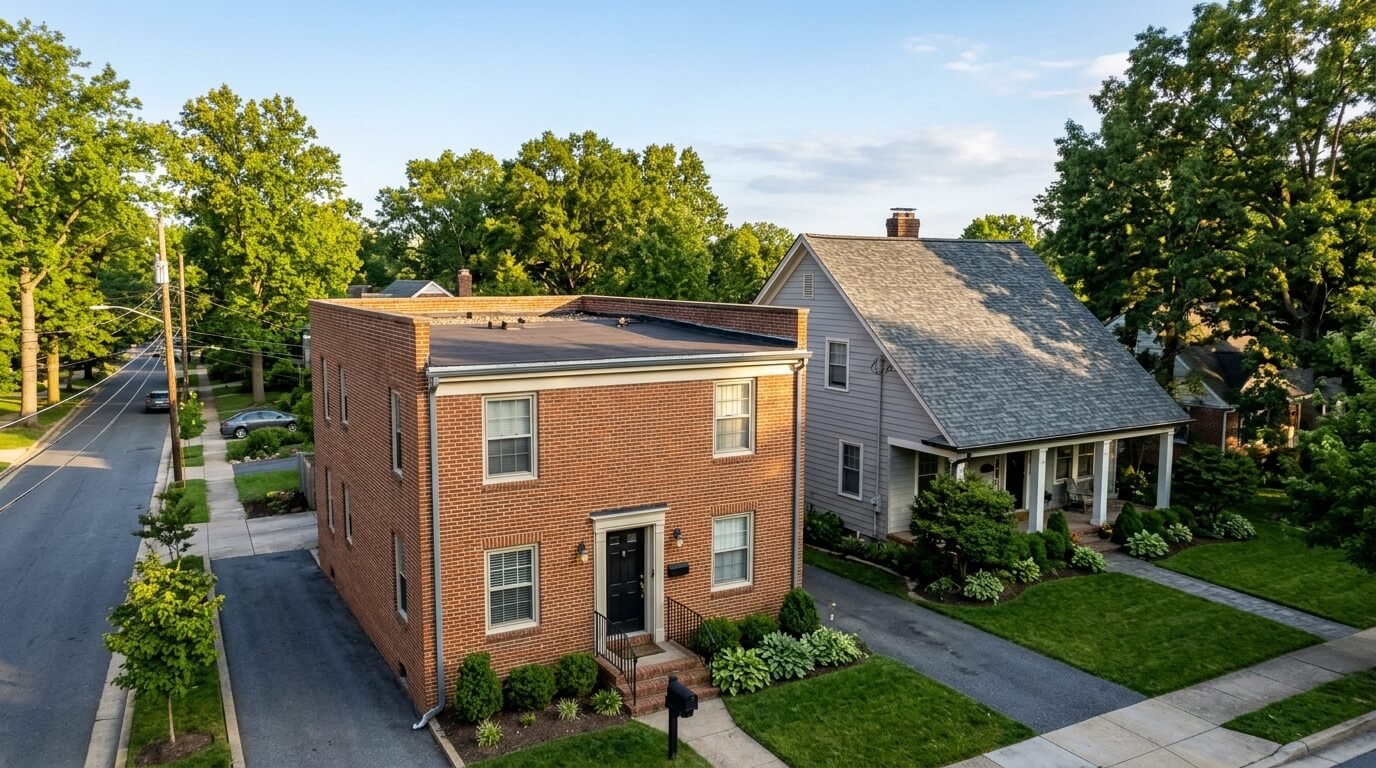
Brick townhome with a flat roof next to a house with a sloped gray shingle roof on a Maryland street.
When it comes to roofing, one size definitely doesn’t fit all — especially in Maryland. From townhomes in Rockville to newer homes in Howard County and country homes in Frederick County, the shape of your roof affects everything from energy use to maintenance and cost. So let’s break down the two main styles you’ll see around here: flat roofs and sloped roofs.
Flat roofs are modern, space-efficient, and budget-friendly but need more upkeep, while sloped roofs are classic, durable, and handle weather better with less maintenance — making them ideal for most Maryland homes.
In this article, we’ll go over what sets them apart, where each one works best, and what to think about before picking one for your home or building.
What Is a Flat Roof?
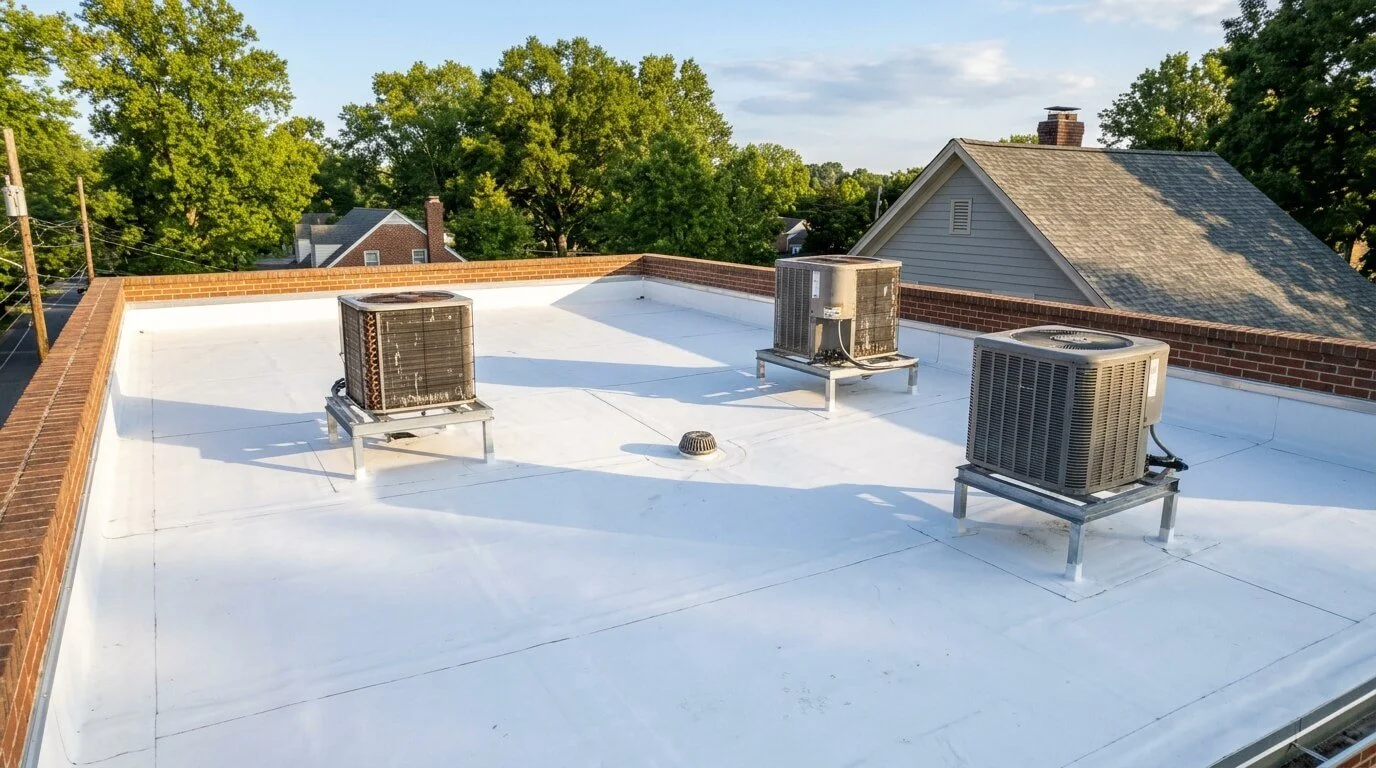
White membrane flat roof with a brick parapet, roof drain and rooftop air conditioners on a Maryland townhome.
A “flat” roof isn’t totally flat. It actually has a very slight pitch (usually around ¼ inch per foot) so water can drain off. You’ll find them mostly on commercial buildings, apartment complexes, some modern-style homes, and city townhomes.
Flat roofs are popular in busy areas like Silver Spring and Rockville, where space is tight. Some homeowners even use them as rooftop decks or green roofs, adding usable outdoor space in the middle of the city.
Advantages of Flat Roofs
Extra usable space – Perfect for AC units, solar panels, or rooftop gardens.
Easier to access – Cleaning gutters or fixing leaks is much simpler.
Cost-effective installation – When building flat roofs, they require less material, which could mean lower upfront costs.
Modern appearance – Clean lines give homes a sleek, contemporary look.
Disadvantages of Flat Roofs
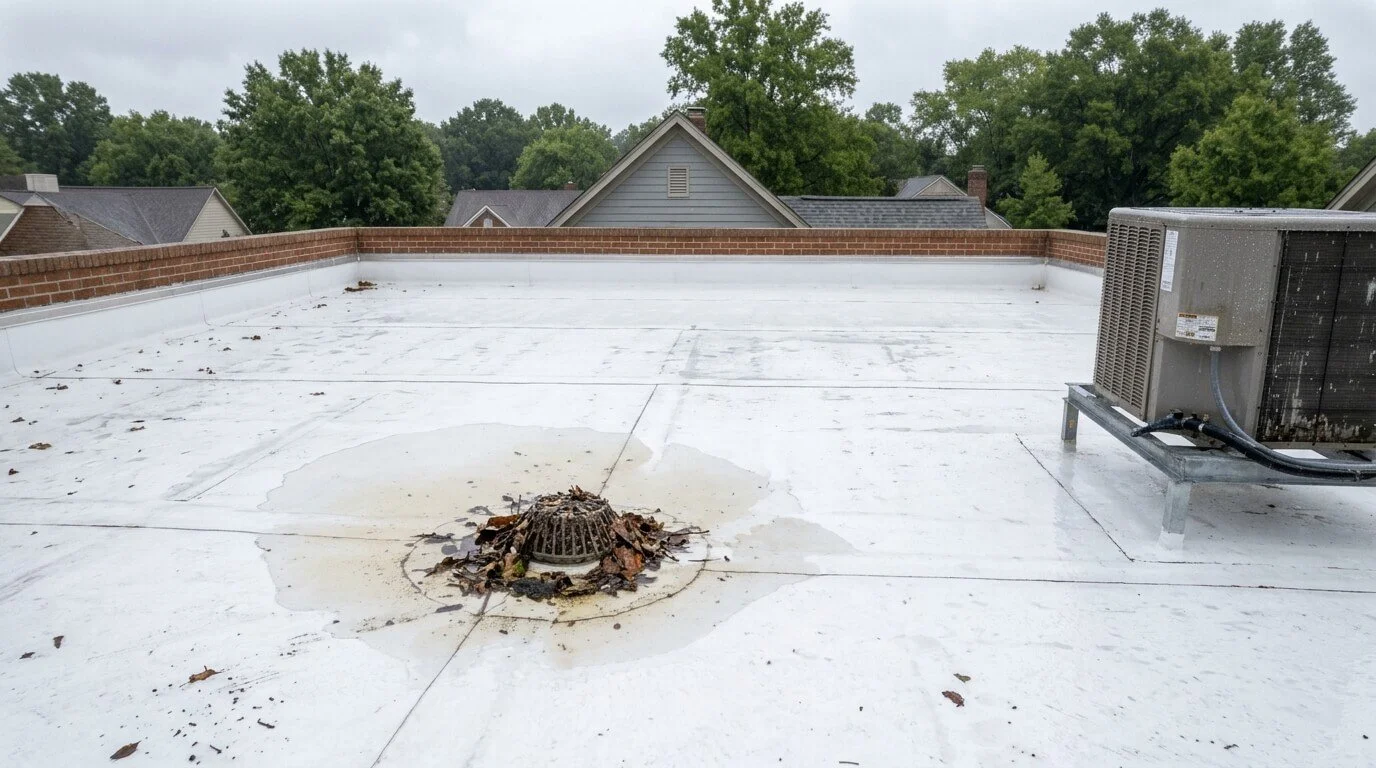
Standing water pooled around a clogged roof drain on a flat roof after rain in Maryland.
Drainage problems – Poor slope or clogged drains can lead to pooling water.
Maintenance required – Regular inspections are a must to catch cracks and leaks early.
What Is a Sloped Roof?
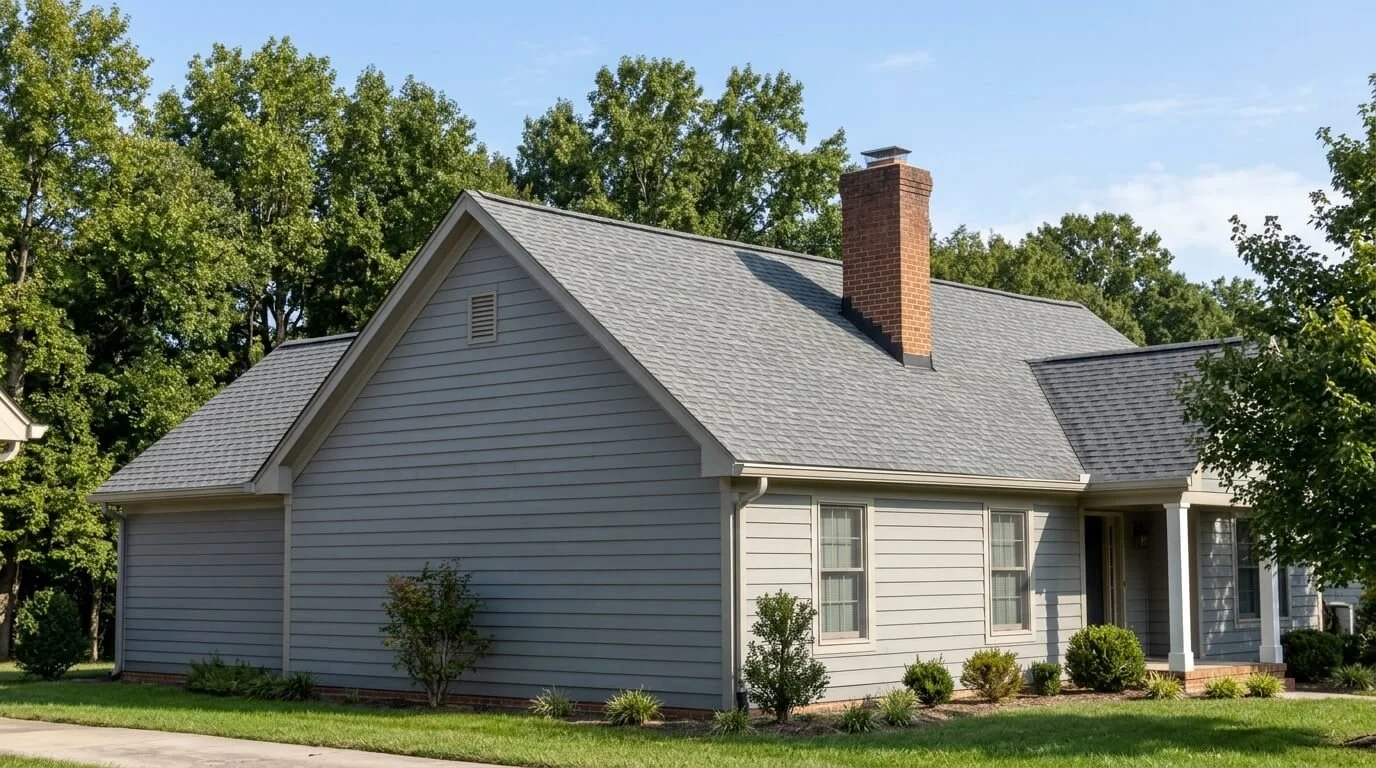
Maryland home with a sloped gabled roof covered in gray asphalt shingles and a brick chimney.
A sloped (or pitched) roof is what most homeowners picture when they think of a traditional roof. Sloped roofs have two or more sides that rise to a peak, creating a triangle shape.
They’re everywhere in Maryland’s residential neighborhoods because they handle rain, snow, and debris more naturally.
Advantages of Sloped Roofs
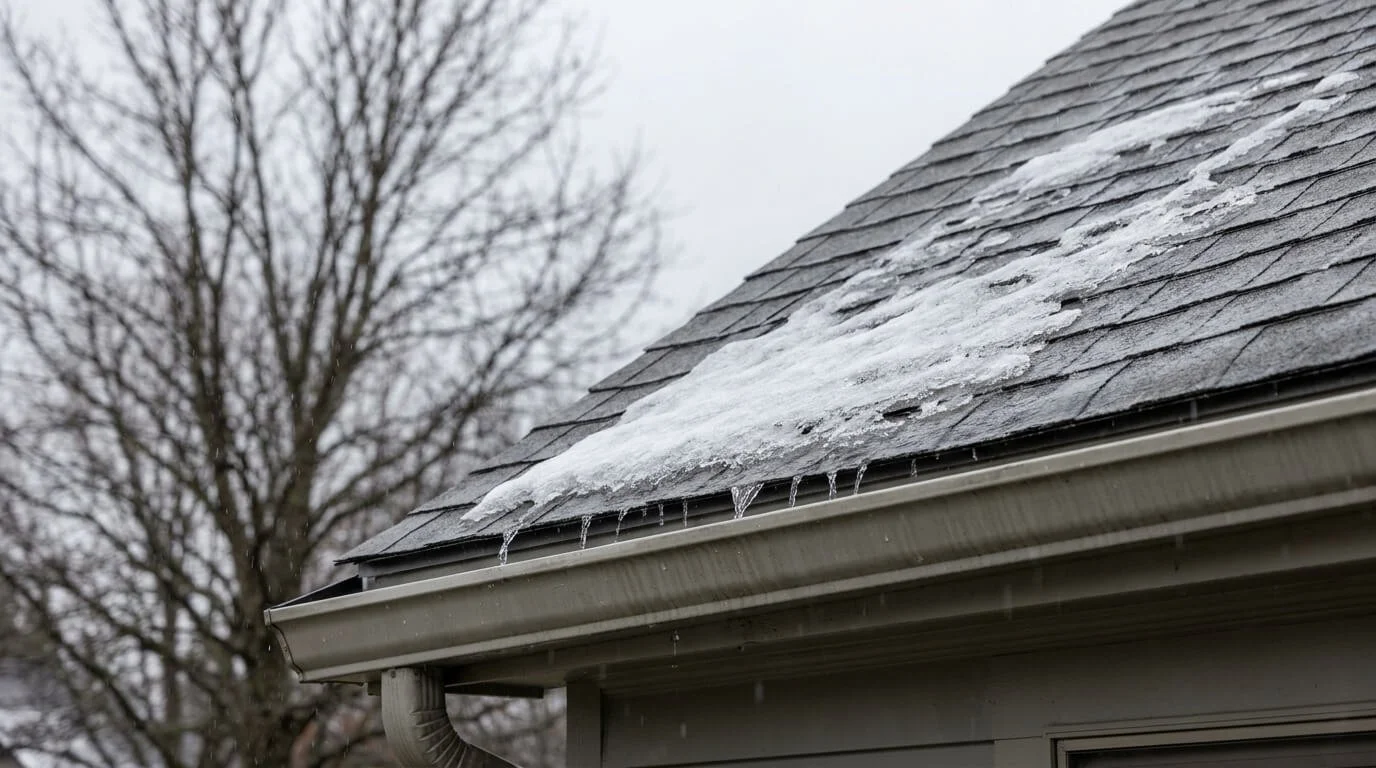
Rain and melting snow running off a sloped asphalt shingle roof into a metal gutter.
Excellent drainage – Water, snow, and debris slide right off.
Longer lifespan – Materials like asphalt shingles, metal, or tiles hold up for decades.
Classic curb appeal – Fits in well with traditional home designs.
Energy-efficient – Allows better insulation and attic ventilation.
Disadvantages of Sloped Roofs
More expensive upfront – When framing out your house or building, sloped roofs require more materials and labor which can drive up the cost.
Harder to access – Cleaning or repair work is trickier and sometimes dangerous.
Less usable roof space – No flat area for equipment or leisure use.
Key Differences Between Flat and Sloped Roofs
| Feature | Flat Roof | Sloped Roof |
|---|---|---|
| Design Style | Modern, minimal | Traditional, classic |
| Drainage | Slower, needs maintenance | Fast, self-draining |
| Cost | Lower installation cost | Higher installation cost |
| Maintenance | Needs frequent inspection | Less frequent, but harder |
| Durability | 20–25 years usually | 20–50+ years depending on material |
| Use Case | Commercial buildings, city homes | Residential homes, suburban areas |
| Energy Efficiency | Great for solar setup | Better natural insulation |
Best Uses in Maryland
Flat Roofs Work Best For:
City row homes or townhouses where space is limited.
Commercial buildings with HVAC or solar units on top.
Modern home designs that want that clean, sleek look.
Sloped Roofs Work Best For:
Suburban or rural homes where heavy rain and snow are common.
Traditional or colonial-style houses that fit Maryland’s architecture.
Homeowners that want low maintenance and long-term durability.
Which Roof Type Is Right for You?
It depends on what you need most.
If you want a practical, modern, and cost-effective design, a flat roof might fit the bill. But if you value longevity, classic style, and low maintenance, a sloped roof is the way to go.
Many Maryland homeowners go with sloped roofs because of the area’s variable weather. Heavy rain, snow, and humidity are easier to manage with that natural slope. But for city dwellers who want rooftop space, flat roofs have their perks too.
Either way, the most important thing is choosing a reliable roofing contractor who knows the local climate, like Da' Roofers. A good installer can make either roof type last for decades.
Final Thoughts
Whether your home sits on a quiet street in Maryland or in the middle of Silver Spring, the right roof shape makes all the difference. Flat roofs shine in urban setups and modern designs, while sloped roofs dominate for their reliability and timeless look.
The key is to match your roof to your home’s style, your maintenance comfort level, and Maryland’s unpredictable weather. When in doubt, talk to a local roofing professional — they’ll help you make the smart, long-term choice for your property.
FAQs
1. Which roof type lasts longer?
Sloped roofs generally last longer, especially if you use durable materials like metal or tile. Flat roofs usually need replacement sooner.
2. Are flat roofs good for homes in Maryland?
Yes, especially for city row homes or modern designs. But they require consistent maintenance to prevent leaks due to heavy rainfall or snow.
3. Can you put shingles on a flat roof?
No. Shingles are only suitable for pitched roofs. Flat roofs need materials like TPO, EPDM, or modified bitumen.
4. What’s more energy-efficient, flat or sloped?
Both can be energy-efficient if built right. Flat roofs are great for solar panels, while sloped roofs have better insulation and ventilation.
5. How often should flat roofs be inspected?
At least twice a year, usually spring and fall, and after heavy storms. Regular checks help prevent water damage and extend the roof’s life.
