

Flat Roof Replacement in Maryland: 4 Things You Need to Know Before You Commit
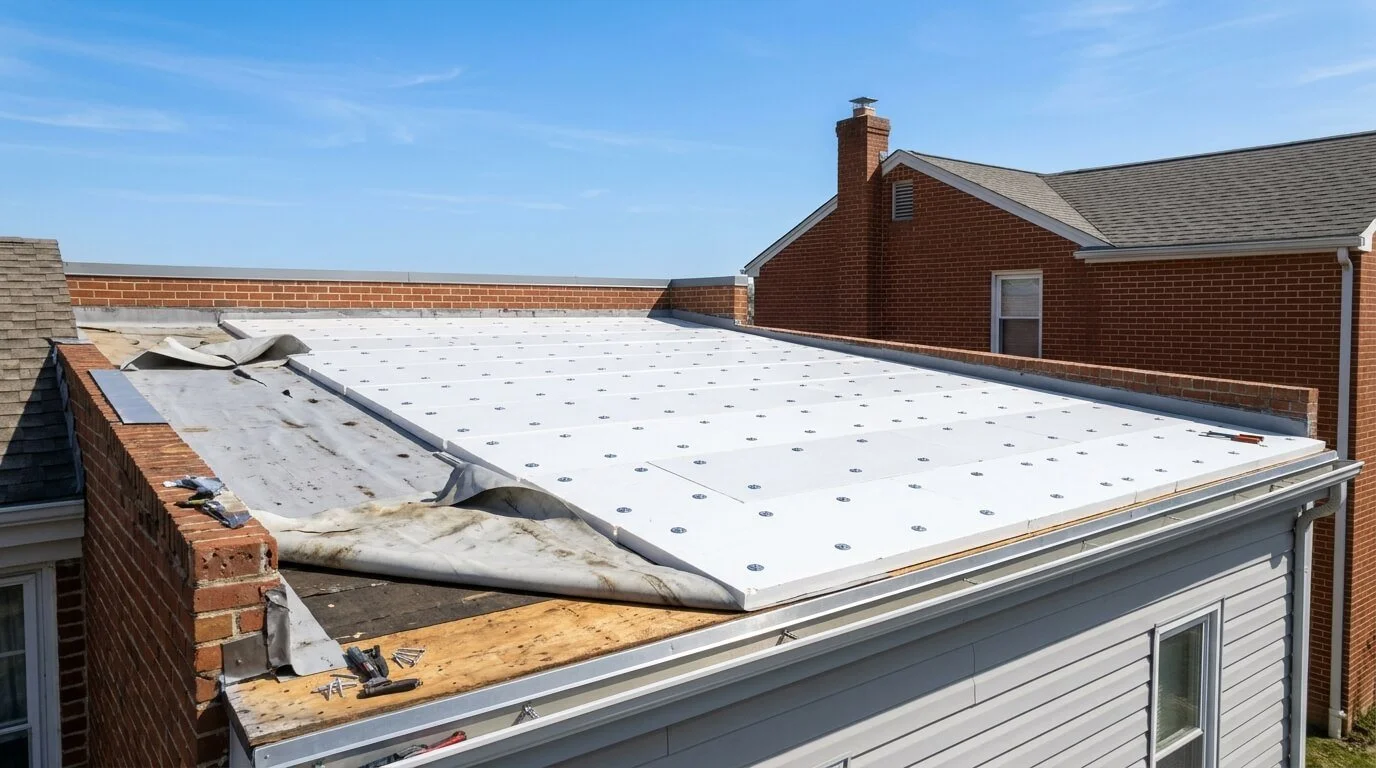
Finding a leak in a flat roof is already annoying. Then you hear the words “it needs to be replaced,” and suddenly you’re stressed, confused, and trying to Google things that don’t make much sense.
So let’s answer the big question early: what do you actually need to know before replacing a flat roof? You need to understand:
Your flat roof material options
The realistic cost for replacement in your area
How long the new roof should last
Why hiring the right contractor matters more than anything else.
Da’ Roofers works with homeowners across Maryland, so we definitely have the necessary expertise to explain things to you clearly.
Why Flat Roof Replacements Are Different From Regular Roofs
Flat roofs don’t shed water the way sloped roofs do. After it rains, water usually sits there for a while. That means your roof needs to be fully waterproof, not just water-resistant.
If one detail is done wrong, water finds its way inside. That’s why flat roofs aren’t the place for shortcuts.
1. Your Flat Roof Material Options (This Is a Big One)
Flat roofs use something called roofing membranes. Think of them like thick, waterproof sheets that seal the roof completely. The three most common flat roof membranes are:
TPO
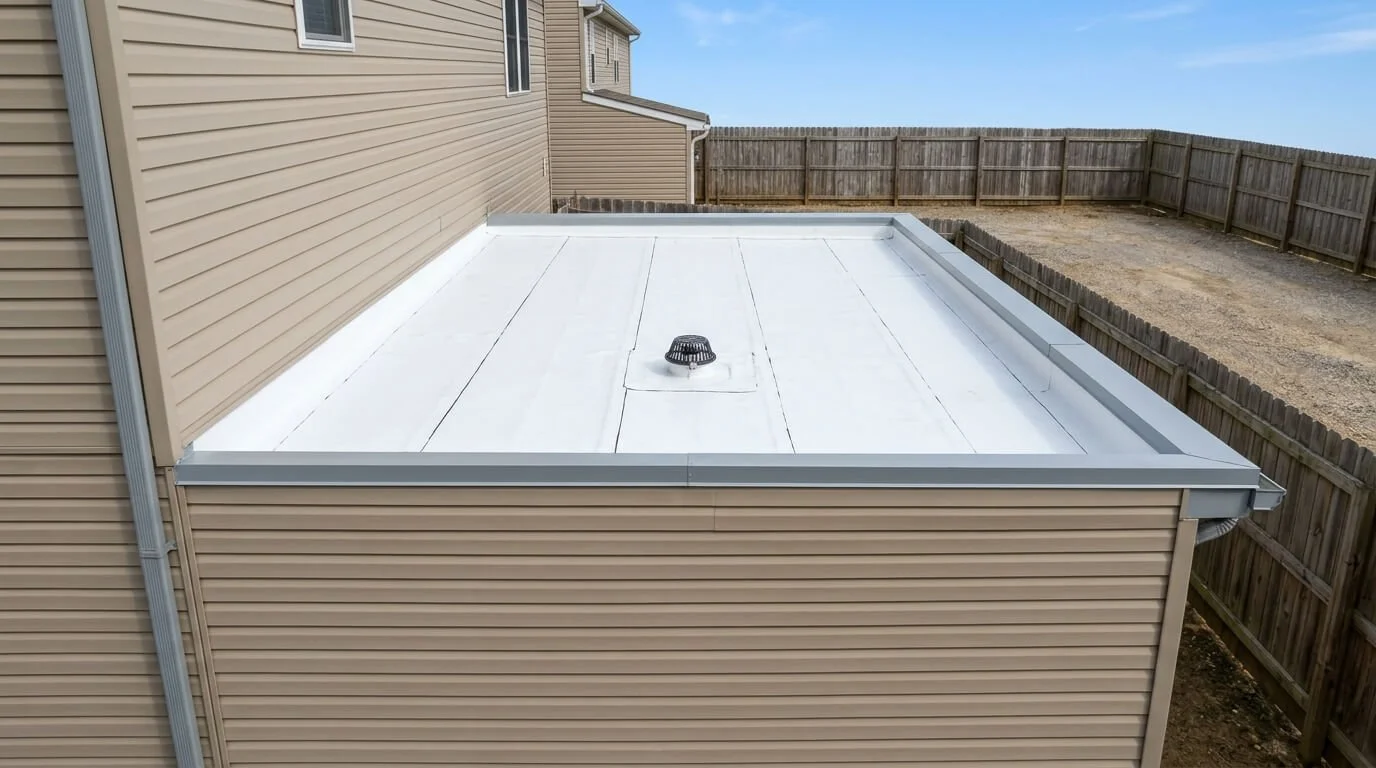
White TPO membrane flat roof with welded seams and a round roof drain over a rear addition on a Maryland home.
White membrane
Reflects sunlight
Keeps rooms below cooler
Popular for homes with bedrooms or living spaces underneath
PVC
Also white and reflective
Very similar to TPO
Slightly more flexible and chemical-resistant
EPDM
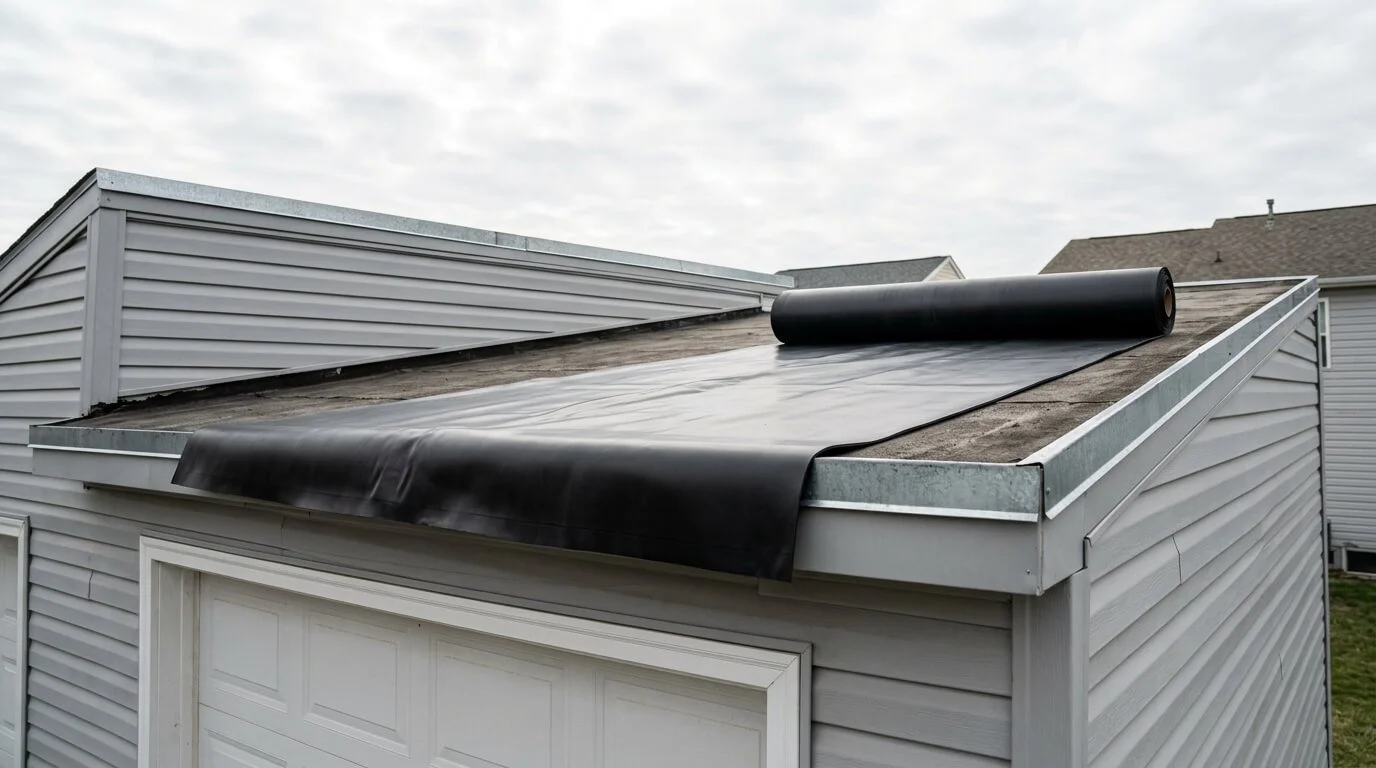
Black EPDM rubber membrane being unrolled over a flat garage roof on a Maryland home.
Black rubber membrane
Absorbs heat
Extremely durable
Often used when appearance isn’t a concern
Which one should you choose? It depends on two things:
What rooms are under the roof
Whether you can see the roof from inside your home
For example, if a bedroom sits under your flat roof in Silver Spring or Hyattsville, TPO or PVC usually makes more sense to keep the room cooler. If the roof is out of sight and durability is the priority, EPDM is often a solid choice.
No matter which membrane you choose, all three are designed to keep water out when installed correctly.
2. How Much a Flat Roof Replacement Really Costs in Maryland
This is usually the first thing homeowners ask, and it’s a fair question. While no contractor can give an exact number without seeing your roof, here’s a realistic budget range for Maryland:
Smaller flat roofs: $14–$17 per square foot
Larger flat roofs: around $12 per square foot
These numbers are just an estimate based on what we see locally.
Why Prices Vary so Much
Two major factors affect the price of a flat roof:
1. Insulation underneath the membrane
Full insulation systems cost more
Fabric-backed systems cost less
2. Roof size
Smaller roofs cost more per square foot
Larger roofs bring the price down
So if you have a small flat roof over a porch in Chevy Chase, expect a higher per-foot cost than a larger roof over a townhome in Rockville.
3. How Long a Flat Roof Replacement Should Last
Once you’re spending this kind of money, you want to know how long it’ll last. That’s completely fair. The expected lifespan of flat roofs by material are:
TPO or PVC: about 25 years
EPDM: about 25–30 years (sometimes longer)
These lifespans assume:
Proper installation
Good drainage
Normal yearly inspections
A flat roof isn’t something you install and forget forever. But when done right, it should quietly protect your home for decades.
4. Why Hiring the Right Roofing Contractor Matters Most
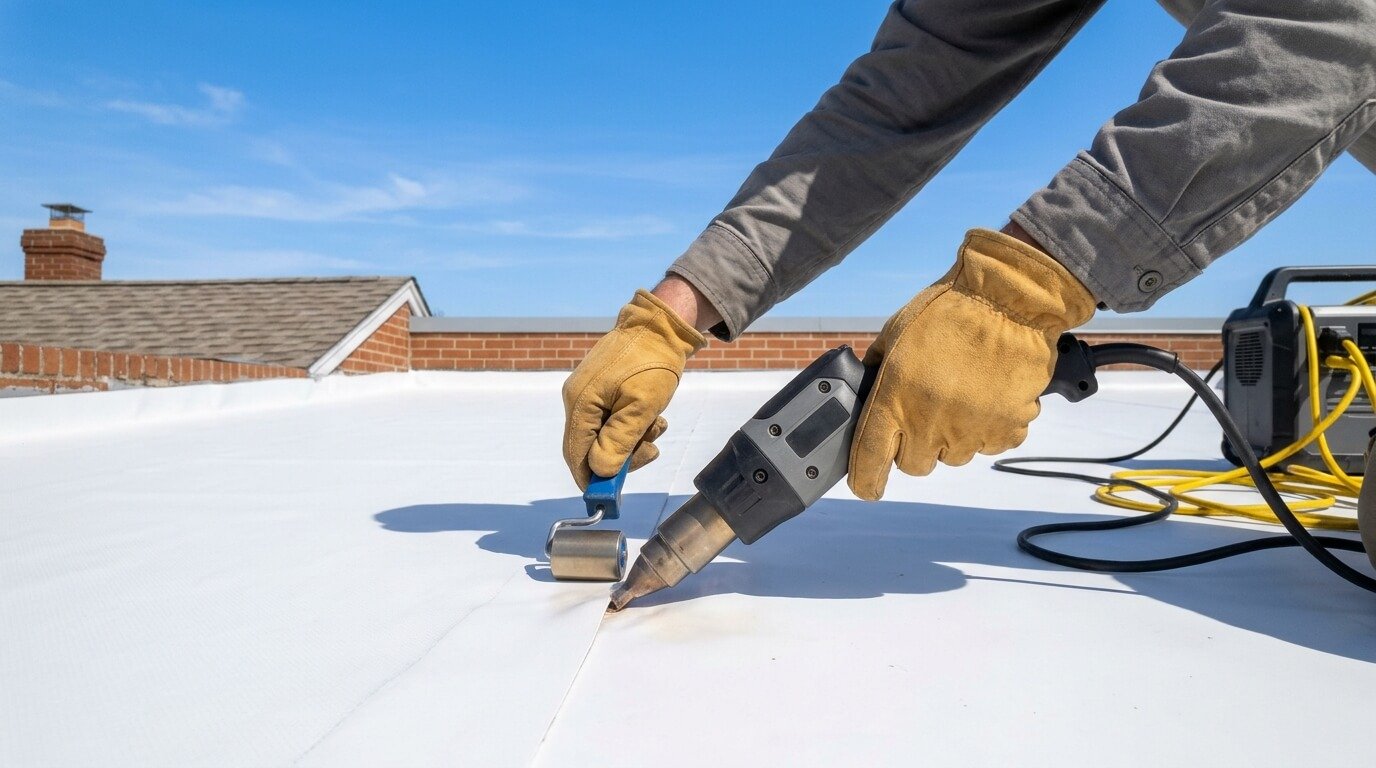
Roofer’s gloved hands using a hot-air welder to seal a seam on a white flat roof membrane in Maryland.
This part is critical. Flat roofs are less forgiving than sloped roofs. A contractor who isn't that experienced with flat roofs can cause a few problems. Here's what you should look for:
Proven flat roof experience on homes
Proper membrane installation methods
Strong workmanship warranties
No “cheapest price” shortcuts
At Da’ Roofers, flat roofing isn’t an afterthought. We regularly replace residential flat roofs across Rockville, Potomac, and Clarksville, and we treat them like the specialized systems they are.
The wrong contractor can ruin even the best membrane. The right one protects your investment from day one.
How Da’ Roofers Approaches Flat Roof Replacements
We don’t rush. We inspect. We explain. We don’t upsell. We focus on waterproofing, drainage, and long-term performance.
That’s how flat roofs should be handled — especially in Maryland, where weather swings can be tough on roofing systems.
Final Thoughts
A flat roof replacement doesn’t have to be scary or confusing. Once you understand the four key things: materials, cost, lifespan, and contractor choice, everything else falls into place.
If your flat roof in Montgomery County, Howard County, or Frederick County needs replacing, the goal isn’t just a new roof.
It’s a roof that lasts, stays dry, and doesn’t give you stress every time it rains. That’s what Da’ Roofers is here for.
FAQs
1. What is the best material for a flat roof replacement?
TPO, PVC, and EPDM are all good options. The best one depends on heat control, durability, and visibility.
2. How long does a flat roof replacement take?
Most residential flat roofs take a few days, depending on size and complexity.
3. Why are flat roofs more expensive per square foot?
They require waterproof membranes, insulation, and precise installation to prevent leaks.
4. Can you walk on a flat roof?
Yes, but foot traffic should be limited and controlled to avoid damage.
5. How often should a flat roof be inspected?
You should get your flat roof inspected at least once a year and after major storms.
