

Roof Decking: Types, Materials, and Common Problems
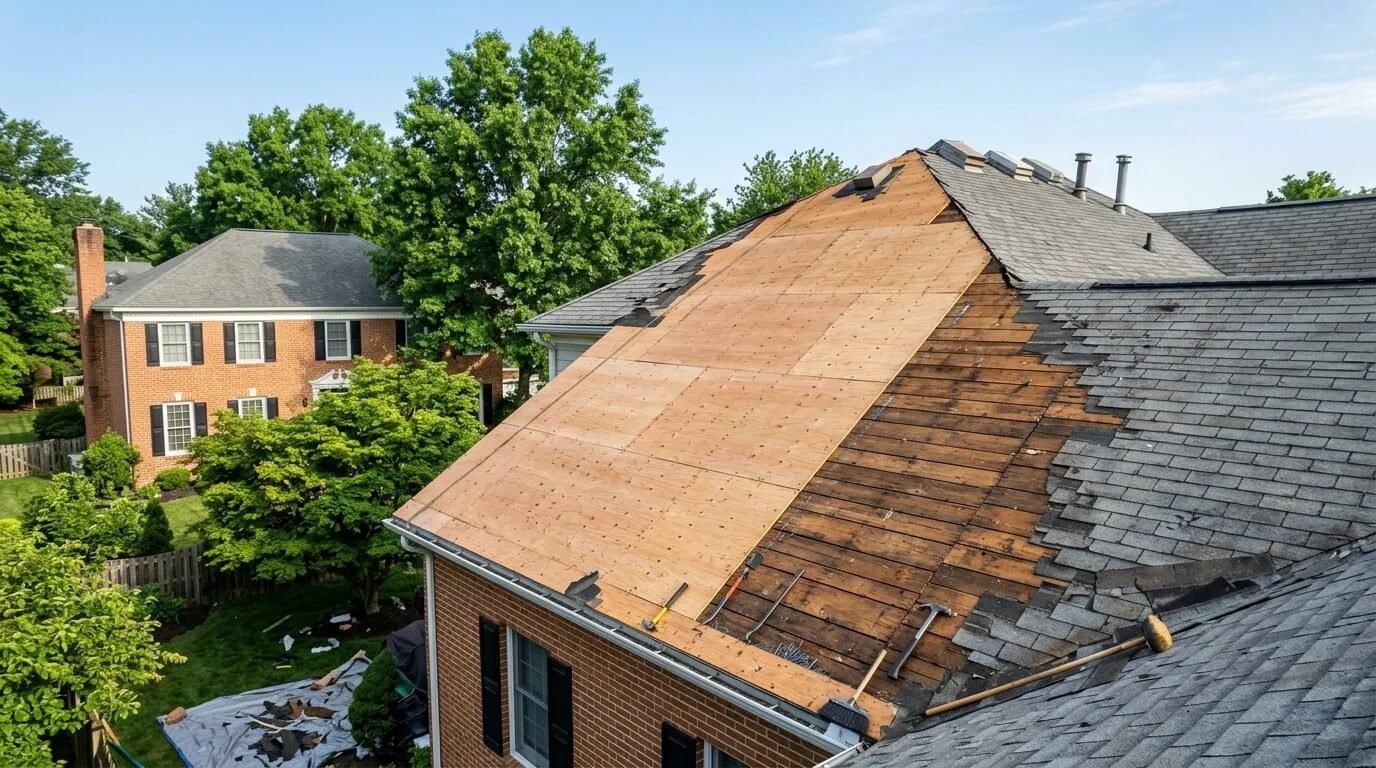
Roof replacement on a Maryland brick home with old shingles removed, showing the plywood and plank roof decking underneath.
When most people look at a roof, they see shingles, gutters, or maybe flashing around the edges. But the real backbone of your entire roof sits underneath — and it’s called roof decking.
Roof decking (also called roof sheathing) is what every layer of your roof rests on. It’s the flat surface that supports your underlayment, shingles, and every other component that protects your home from the elements. Without good decking, even the best shingles won’t last long.
If you’re a homeowner in Maryland, understanding roof decking can help you spot early issues, avoid costly replacements, and make sure your home stays protected year-round. Let's get into it.
What Exactly Is Roof Decking?
Think of roof decking as the wooden floor beneath your shingles. It’s a layer of strong boards that attach directly to your roof’s frame (the trusses or rafters). Decking keeps your roof stable and provides a solid surface for the rest of your roofing system.
Roofers install materials like underlayment, shingles, or metal panels directly onto the decking. It’s basically the base that holds everything together.
Most homes in Maryland use wood-based decking because it’s affordable, strong, and easy to work with. There are two main types: plank decking and sheet decking.
Types of Roof Decking
1. Plank Decking
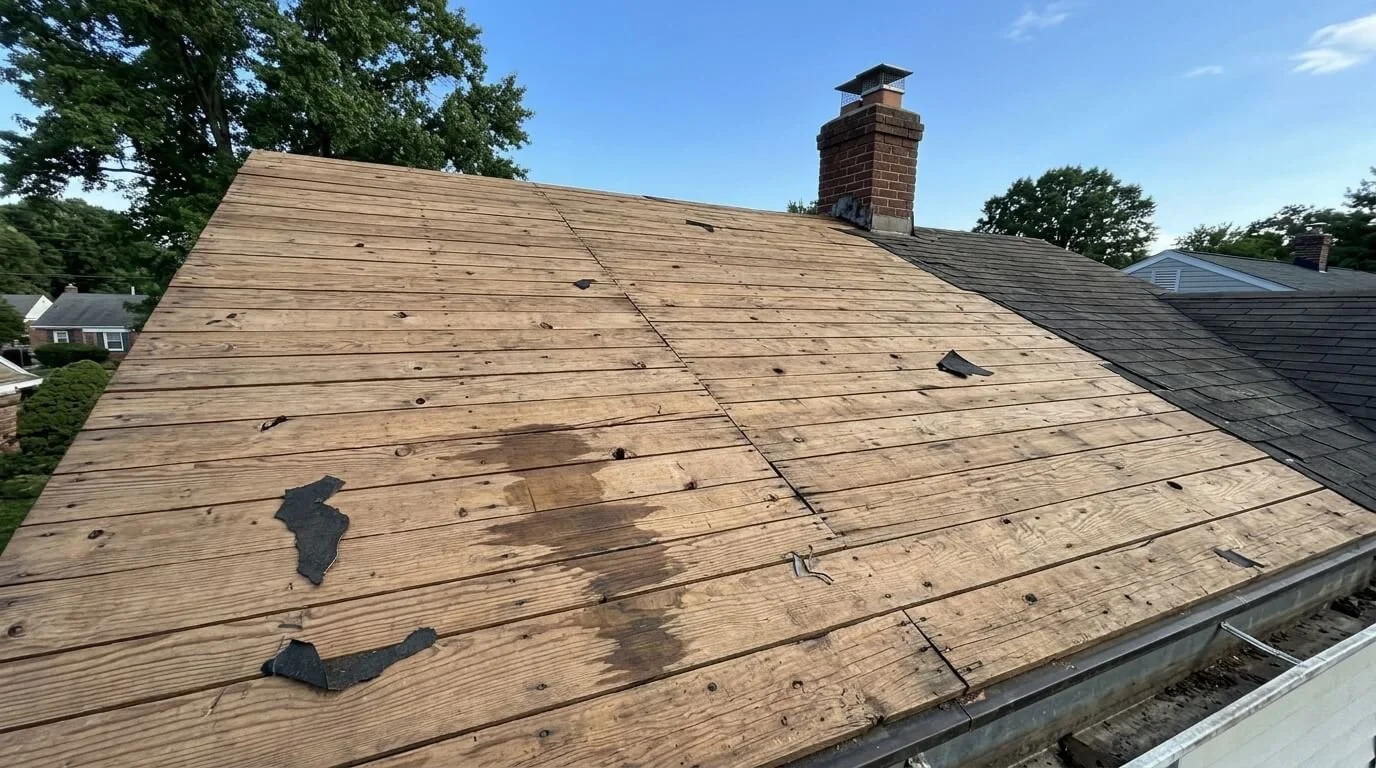
Old wood plank roof decking exposed during a roof tear-off on an older Maryland home.
This is the older, more traditional type of roof decking. Plank decking uses long wooden boards (usually 1x6 or 1x8) nailed side by side.
You’ll still see plank decking in older homes across Maryland, including many Baltimore rowhouses, especially those built before plywood became common in the 1950s and 1960s. While it’s sturdy, a plank decking usually has gaps between boards, which can lead to issues if you’re installing modern shingles.
In many cases, when roofers replace an old roof, they’ll either replace rotten planks or lay new oriented strand board (OSB) or plywood sheathing over the existing boards for better stability.
2. Sheet Decking
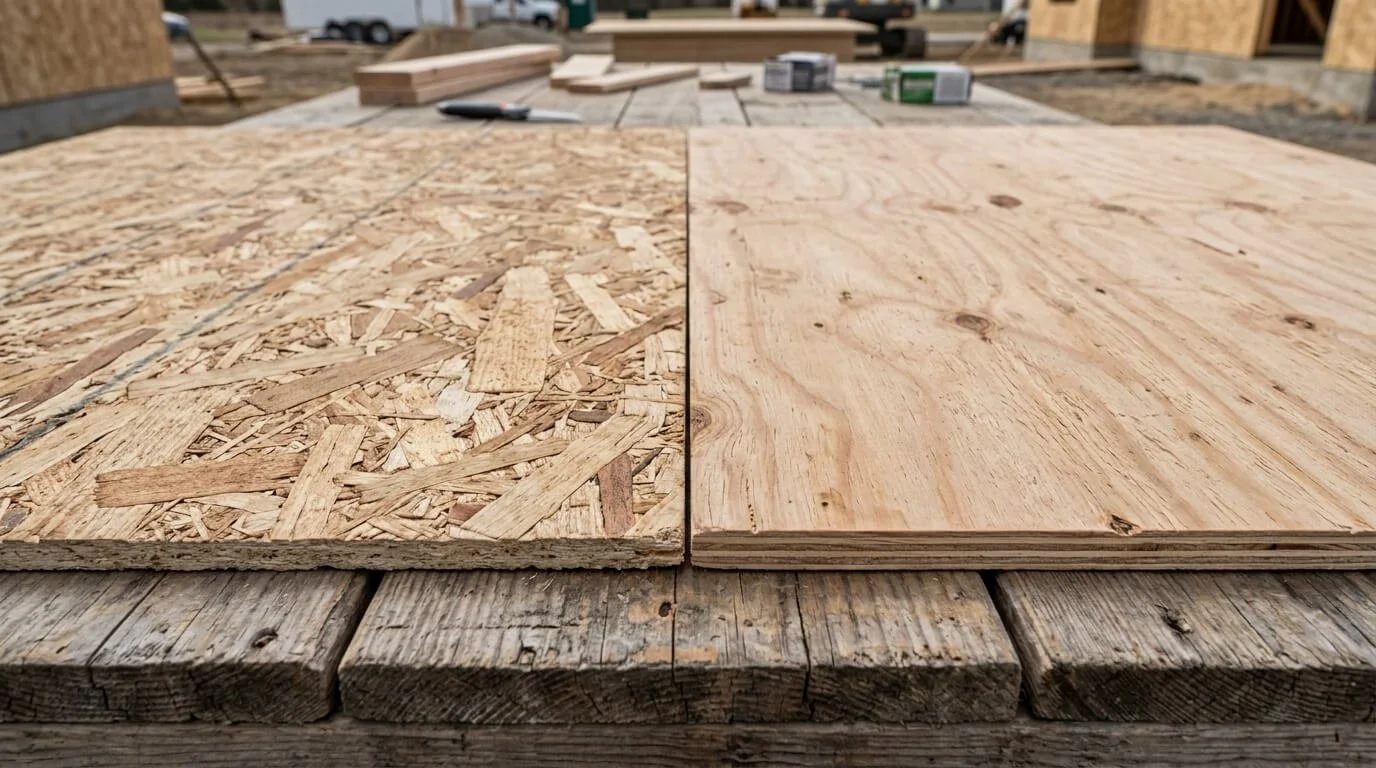
A sheet of OSB next to a sheet of plywood, the two most common types of roof decking used on Maryland homes.
Sheet decking (also called sheathing sheets) became popular once plywood and OSB hit the market. These come as large, flat panels that cover a bigger area and make installation faster and more uniform.
There are two main types of sheet decking used today:
OSB (Oriented Strand Board)
Made from layers of wood strands pressed together with adhesives.
Very common because it’s cheaper and lighter than plywood.
Standard thickness: around 7/16”.
Performs well under most conditions, but can absorb water if exposed too long.
Plywood
Made from thin layers of wood veneer glued together.
Slightly more expensive than OSB but stronger and more water-resistant.
Available in various thicknesses (⅜”, ½”, ⅝”, and ¾”).
Preferred for homes in humid or coastal areas around the Chesapeake Bay.
Both are solid choices. Most times, your contractor will recommend one based on your home’s design, local climate, and budget. At Da’ Roofers, we make use of plywood decking - specifically ½ thick or thicker.
Common Roof Decking Materials
While wood-based panels are standard, not all wood is equal. Here’s a quick breakdown of materials you might encounter:
CDX Plywood: Commonly used and durable, perfect for asphalt shingle roofs.
OSB (7/16”): Affordable, consistent, and widely available.
Tongue-and-Groove Planks: Older but reliable, found in some older Maryland homes.
When replacing or repairing decking, roofers often match the material to your existing setup to keep your roof structure even and strong (unless it's not suitable).
When Should Roof Decking Be Replaced?
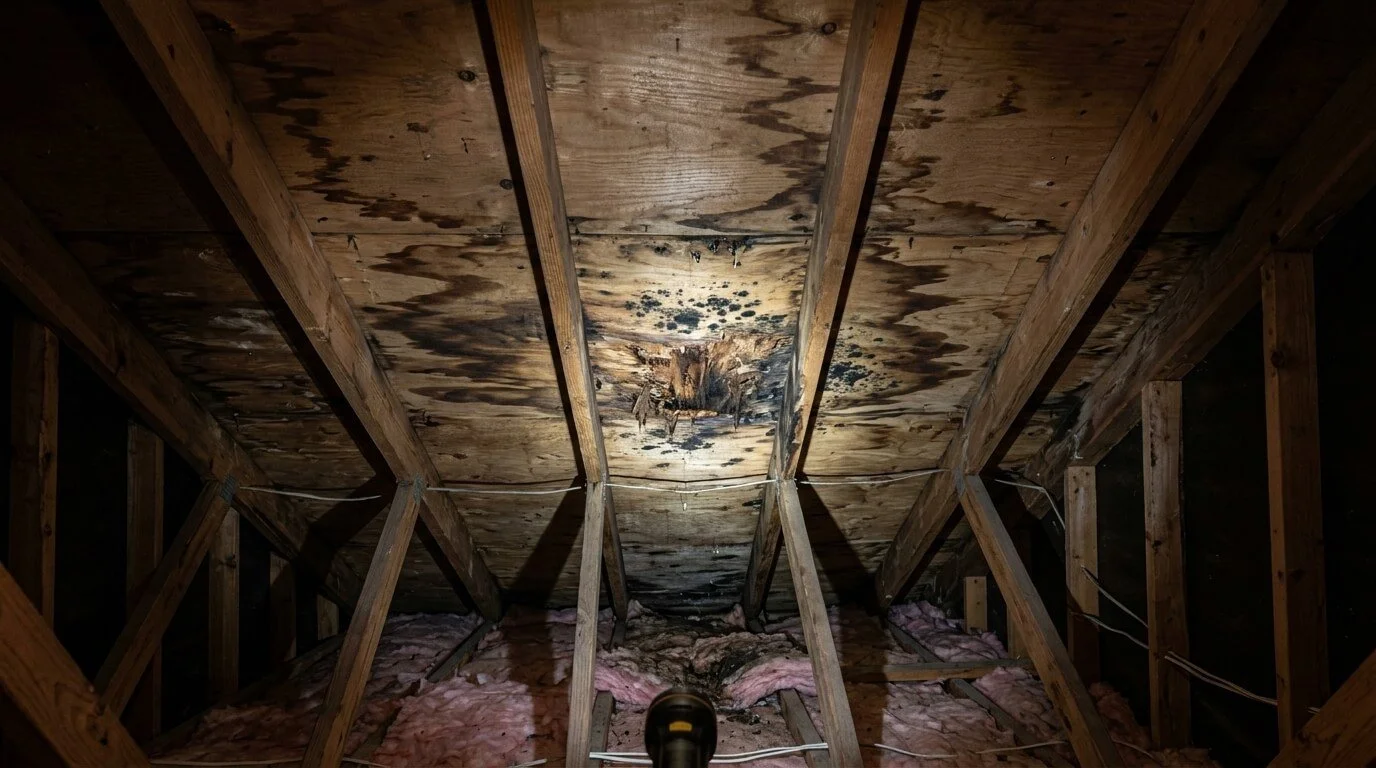
Water stains, rot and mold on the underside of the roof decking inside a Maryland attic.
Roof decking isn’t something homeowners see every day since it's hidden under layers of roofing material. But just because it’s out of sight doesn’t mean it’s out of mind.
Your decking should be replaced whenever it’s weak, rotted, or water-damaged. During a roof replacement, roofers tear off old shingles and inspect the decking underneath. If they spot soft or decayed areas, those boards must be replaced before the new roof goes on.
Here are a few signs of bad roof decking to watch for:
Water stains or dark spots in your attic.
A musty or damp smell near the ceiling.
The roof sags or feels soft when walked on.
Mold growth or visible rot.
Leaks that persist even after patching shingles.
Sometimes only a few boards need replacing. But if large sections are damaged, you might need a full deck replacement.
Common Roof Decking Problems
Even solid decking can develop issues over time — especially in Maryland’s mix of hot, humid summers, freezing winter nights, and wet, changeable springs. Here are the most common decking problems:
1. Water Damage and Rot – Caused by leaks, clogged gutters, or poor ventilation.
2. Warping or Buckling – Happens when moisture gets trapped under shingles.
3. Delamination – In plywood or OSB, layers can separate due to moisture.
4. Mold or Mildew – A sign of chronic moisture and poor attic airflow.
5. Sagging or Weak Spots – Often from age or structural stress.
Once damage spreads, it affects not only your decking but also your shingles and insulation.
Roof Decking Cost
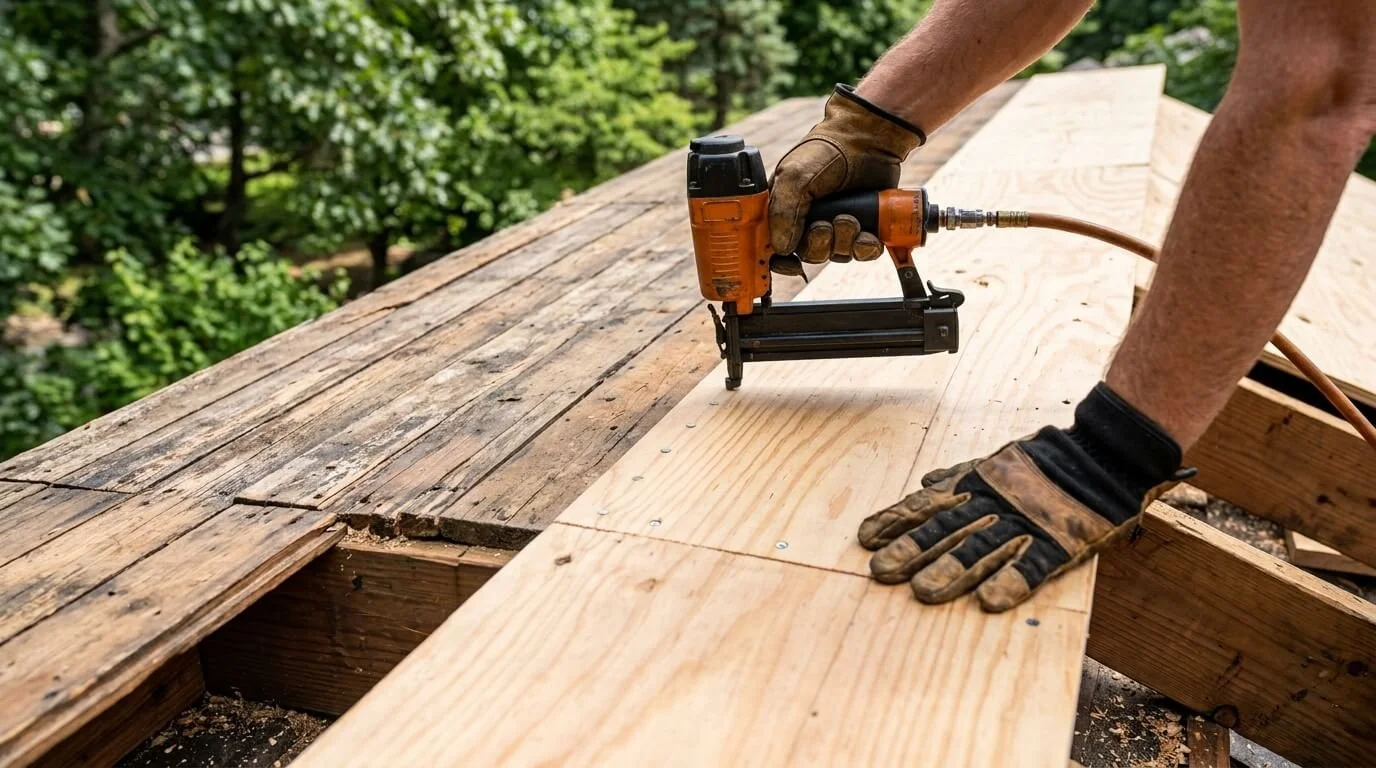
Roofer nailing a new sheet of plywood roof decking next to older plank boards during a Maryland roof replacement.
The cost of replacing roof decking depends on three main things:
Material type (OSB vs. plywood)
How much needs to be replaced
Current wood prices (which fluctuate often)
On average, OSB panels are cheaper and usually sold per sheet, while plank decking is priced per linear foot and costs more overall.
If you have old plank decking that needs major replacement, it’s usually more affordable to install new OSB or CDX plywood over it instead of redoing everything.
Because every roof is different, your roofer can confirm the cost after tearing off your old shingles and inspecting the wood underneath.
Roof Decking and Building Codes in Maryland
Roofing codes exist to make sure your home meets safety standards. Maryland’s building code (International Residential Code, Section R905.2.1) says asphalt shingles must be fastened to a solidly sheathed deck.
That means your decking can’t have rot, large gaps, or weak spots before a new roof is installed.
In some areas, codes also require replacing plank decking if the boards have more than an 1/8-inch gap between them. This ensures your roof can properly support new shingles or materials.
Cutting corners might save money short-term but will fail inspections or lead to bigger problems later.
Why Good Roof Decking Matters
Roof decking isn’t something you can show off to your neighbors, but it’s one of the most important parts of your home’s structure.
Here’s why it matters:
It keeps your roofing system solid and secure.
It prevents leaks by giving underlayment a stable base.
It improves your roof’s lifespan.
It helps your home meet local building codes.
Skipping proper decking work can lead to sagging, leaks, and early roof failure. These are problems that cost much more than replacing a few sheets of wood.
Maintaining and Inspecting Your Roof Decking
You don’t need to tear off your shingles to keep your decking healthy. Just make sure you:
Check your attic for moisture or discoloration.
Clean your gutters regularly to avoid water pooling.
Ventilate your attic to prevent heat and humidity buildup.
Get annual roof inspections, especially after big storms.
Catching small issues early can save you thousands later on.
Final Thoughts
Roof decking may not get much attention, but it’s the real hero holding your roof together. Whether you have OSB, plywood, or older plank decking, keeping it dry and strong ensures your roof lasts for decades.
If your roof is due for replacement or showing signs of age, have a local Maryland roofing contractor, like Da’ Roofers, inspect your decking. We can tell you whether it’s still solid or if it’s time for a few new boards. That peace of mind is worth every penny.
FAQs
1. What is the purpose of roof decking?
Roof decking acts as the foundation of your roof, giving shingles and underlayment a solid surface to attach to.
2. What are the most common roof decking materials?
Most homes use plywood or OSB. Older houses might have plank-style decking made of long wooden boards.
3. How do I know if my roof decking is bad?
Look for sagging spots, musty smells, or ceiling stains. A roofer can confirm damage during an inspection.
4. Can roof decking be repaired instead of replaced?
Small sections within the plywood board can be patched, but rotted or soft wood usually needs full replacement to stay safe. It's usually best to go for the entire board to be replacement.
5. How long does roof decking last?
Well-maintained decking can last 50+ years, depending on weather and ventilation.
