

What Is a Roofing Square and How Do Roofers Use It?
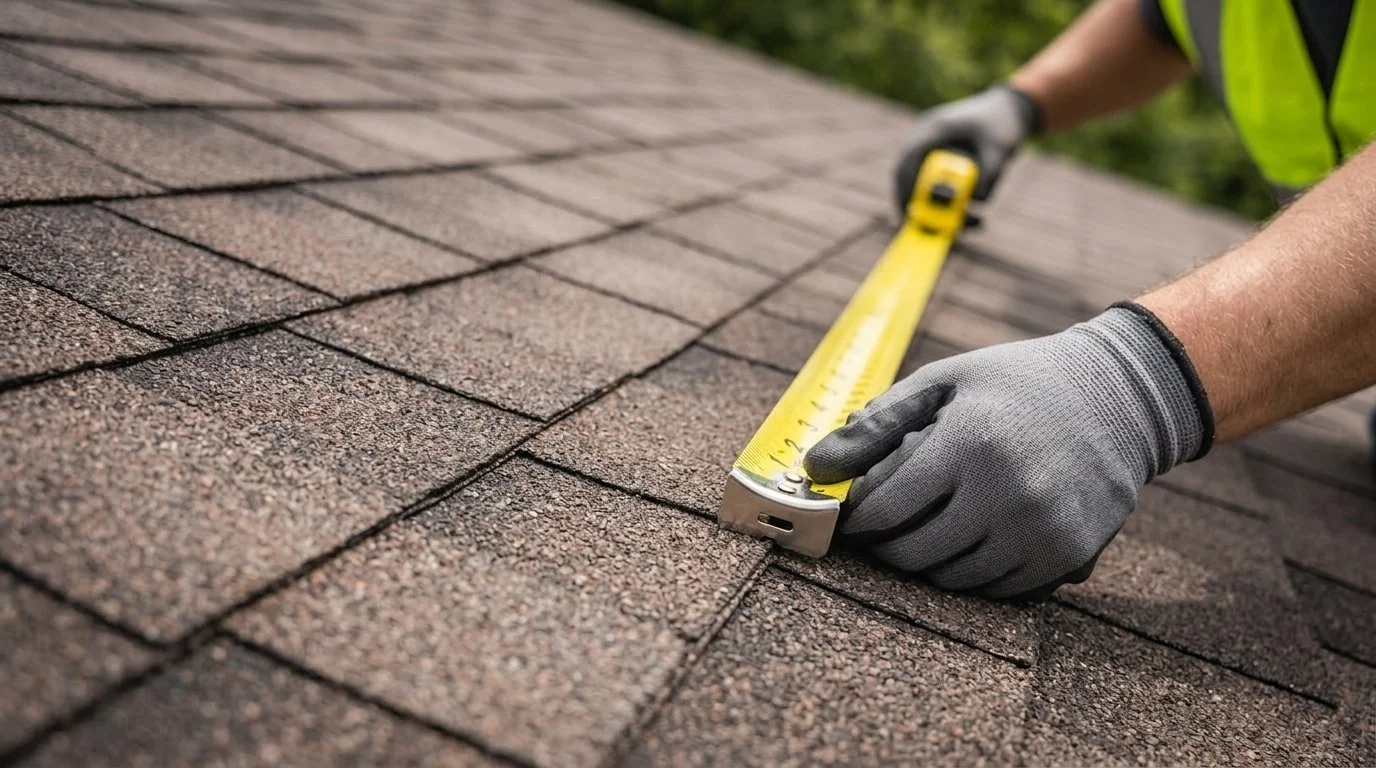
Maryland roofer measuring roof square using a measuring tape
If you’ve been getting roof quotes lately, you’ve probably heard the word “square” thrown around a few times. “Your roof is about 25 squares,” or “We charge per roofing square.” But what does that even mean?
In simple terms, a roofing square is a unit of measurement that equals 100 square feet of roof area. It’s how roofers talk about size, materials, and cost. So if your roof covers 2,000 square feet, that’s the same as 20 roofing squares. Easy, right?
Using “squares” just makes life simpler for roofers when they order materials or give estimates. Instead of saying, “You’ll need 2,300 square feet of shingles,” they’ll say “23 squares.” Let's get into it!
Why is it Called a Roofing Square?
The idea of measuring roofs in “squares” started back when roofing materials began to be mass-produced. Before that, roofers usually cut materials by hand on-site and just estimated how much they needed based on the roof’s size.
However, once asphalt shingles, clay tiles, and other ready-made materials hit the market, manufacturers began packaging them to cover exactly 100 square feet. That simple change made life easier, and the “roofing square” quickly became the go-to standard.
How Roofers Use Roofing Squares
For roofing companies in Maryland, the roofing square is a go-to measuring tool. It helps with:
Estimating material needs: How many bundles of shingles, rolls of underlayment, and nails are required.
Calculating labor costs: Bigger roofs = more squares = more time and crew.
Ordering supplies efficiently: Most materials like shingles are sold per square.
Pricing the project: Many roofers price work based on the number of squares multiplied by a per-square rate.
For example, if a roofer charges $500 per square and your roof is 22 squares, you can expect a total around $11,000 (depending on materials and other factors).
How to Calculate Roofing Squares
Even though pros use measuring tools and aerial reports, you can still get a rough idea of your roof’s size yourself. Here’s how:
Step 1: Find Your Home’s Footprint
Measure or estimate your home’s length and width. Multiply them together to get the footprint. For instance, a 40 ft x 50 ft home = 2,000 square feet.
Step 2: Add Roof Pitch and Complexity
Not all roofs are flat. The steeper or more complex your roof is, the more surface area it has. You’ll need a multiplier to adjust for that:
| Roof Type | Example Pitch | Multiplier |
|---|---|---|
| Simple, low slope | 4/12 or less | 1.3 |
| Medium slope, moderate design | 5/12 – 8/12 | 1.4 |
| Steep or complex roofs | 8/12 or higher | 1.6 |
Now multiply your footprint by the multiplier.
So, 2,000 sq. ft x 1.4 = 2,800 sq. ft of roof area.
Step 3: Convert to Roofing Squares
Finally, divide the total by 100 to get the number of squares.
2,800 ÷ 100 = 28 roofing squares.
That’s your rough estimate — close enough to understand your roof size before calling in the pros.
How Many Bundles of Shingles per Roofing Square?
For asphalt shingles (the most common roofing material in the Maryland), you’ll usually need three bundles per square. So, a 28-square roof will take about 84 bundles of shingles.
However, heavier or luxury shingles might need 4–6 bundles per square. Your roofing contractor will know exactly what’s required.
Can You Use Home Square Footage Instead?
It might seem logical to use your home’s total square footage to estimate roof size, but it doesn’t work that way. Here’s why:
Roof pitch: A steep roof adds surface area.
Overhangs: Eaves and edges extend beyond your walls.
Dormers and valleys: Roof details make the total area more complex.
In short, your home’s square footage and your roof’s square footage are not the same thing. That’s why professional roofers use tools like drones or laser measurements for accuracy.
Why Roofing Squares Matter for Pricing
Maryland roofer estimating roofing square for pricing
When it comes to roof replacement costs, the number of roofing squares determines nearly everything:
Material cost: More squares mean more shingles, nails, flashing, and underlayment.
Labor time: Roofers price per square to reflect workload and time.
Disposal fees: Tear-off and dump costs are also based on the number of squares.
For example, if your Maryland roofing contractor quotes $400–$700 per square, a 25-square roof could range from $10,000 to $17,500, depending on materials and roof type.
Common Mistakes Homeowners Make
Guessing roof size based on living area.
Forgetting steep or complex sections.
Not rounding up (roofers always add a little extra to avoid running short).
Ignoring attic or garage roofs that add surface area.
A professional inspection always gives the most accurate number of roofing squares, and can save you money in the long run.
How Roofers in Maryland Measure Roofs
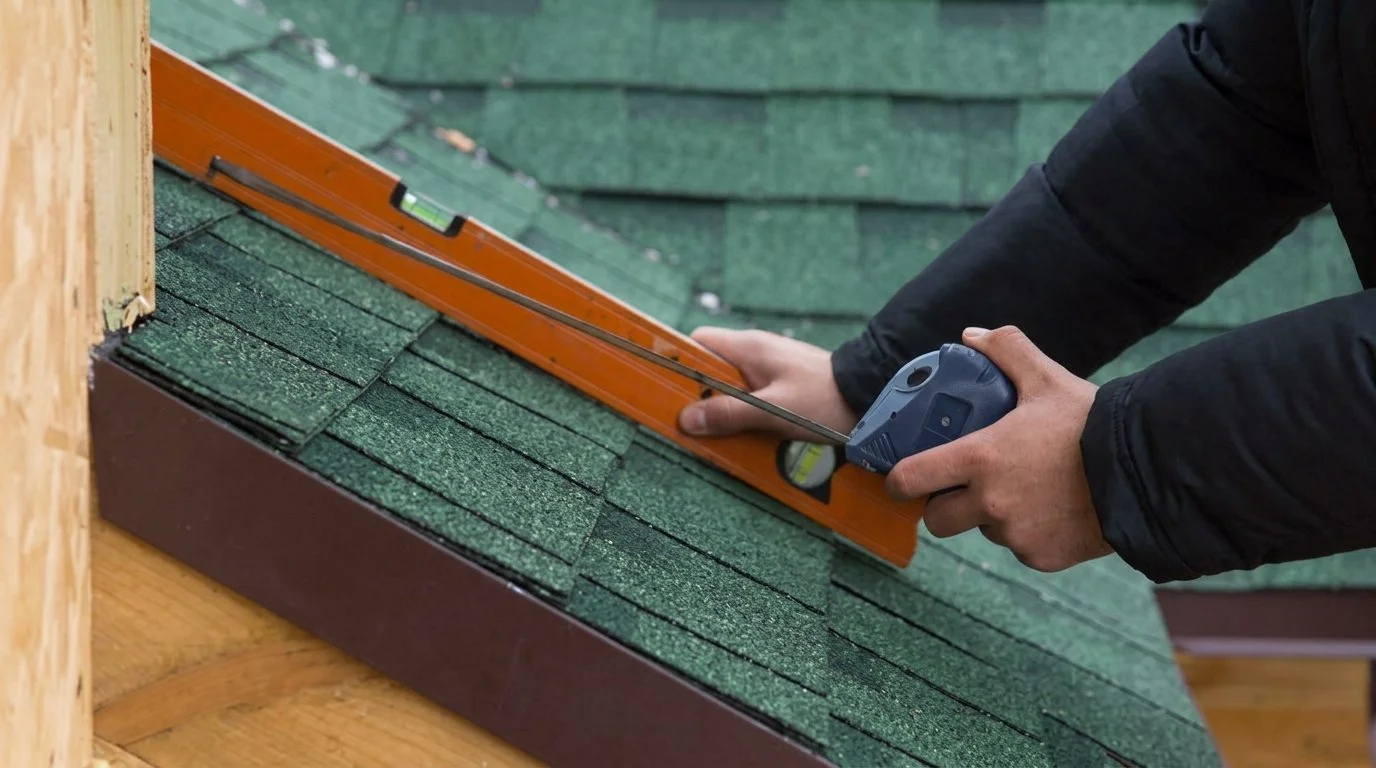
Maryland roofer using bubble leveler and measuring tape
In the Maryland region, roofers often use one of these methods:
1. Drone or satellite imagery: Fast and accurate, especially for large or steep roofs.
2. Manual measuring: Traditional but reliable (measuring every plane of the roof).
3. Blueprint calculations: For new builds or additions.
They’ll also factor in local weather conditions (like snow load in Northern Virginia or heavy rain near the Chesapeake) when estimating materials.
Why Understanding Roofing Squares Helps Homeowners
Knowing what a roofing square is makes you a more informed homeowner. You’ll:
Understand your roofing estimate better.
Know whether a quote is fair.
Avoid being overcharged for materials or labor.
Communicate clearly with your contractor.
It’s one of those small bits of knowledge that make a big difference when investing in your home.
Final Thoughts
A roofing square might sound like insider lingo, but now you know it’s really simple; it’s just 100 square feet.
Roofers in Maryland, like DA Roofers, use it daily to estimate costs, order the right materials, and ensure every inch of your home is properly covered.
If you’re planning a roof replacement, understanding this term will help you make smart, confident decisions. You might even impress your contractor when you ask the right questions.
FAQs
1. What does 1 roofing square equal?
One roofing square equals 100 square feet of roof surface area.
2. How do roofers measure a roof in squares?
They calculate the total roof area (in square feet) and divide by 100.
3. How many bundles of shingles are in a square?
Usually three bundles per square for standard asphalt shingles.
4. Can I use my home’s square footage to find roof squares?
No, because your roof has a slope, overhangs, and complex shapes that increase the total surface area.
5. Why is knowing roof square footage important?
It helps estimate costs, order materials, and plan for accurate labor and time.
