

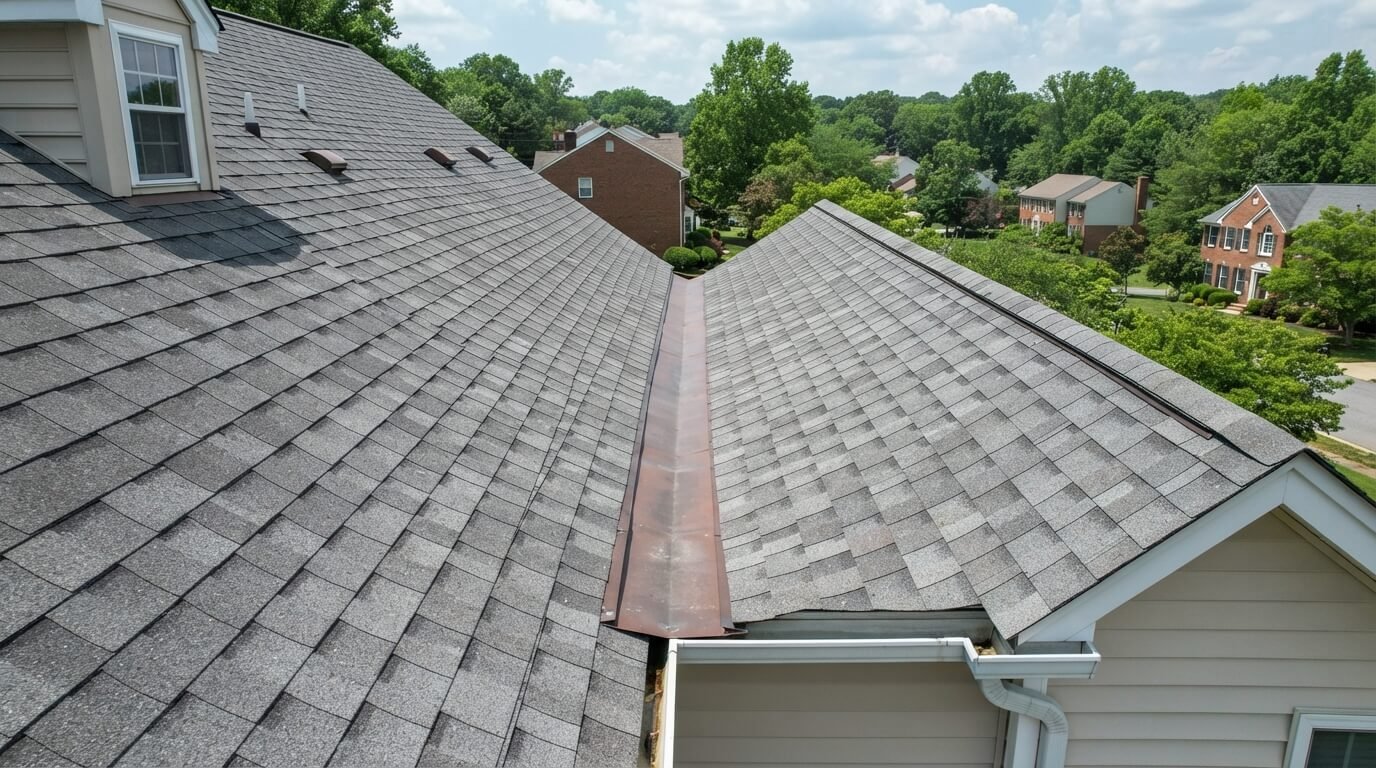
Metal open valley between two shingle roof slopes on a Maryland home.
When most homeowners think about leaks, they picture missing shingles or damaged flashing. But the truth is, some of the most common leaks in Maryland homes start in a place many people overlook — the roof valley.
This is the channel where two roof slopes meet, and because it handles a heavy amount of water flow, it’s one of the most vulnerable parts of the entire roof.
Da’ Roofers treat roof valleys as a priority during every installation. Done right, they help manage rainwater efficiently and protect the home. Done wrong, they become the first spot where leaks show up after storms. Let’s break down why valleys leak and how Da’ Roofers keep them sealed and secure.
Why Roof Valleys Leak in the First Place
1. Heavy Water Flow
Maryland gets its fair share of storms, and valleys collect and funnel all that water into a single drainage path. If the valley isn’t designed or sealed correctly, water can sneak under shingles and soak the decking.
2. Improper Installation
A poorly cut shingle, a bad overlap, or incorrect underlayment can create weak spots that fail over time. Valleys need precise workmanship. It’s not an area where shortcuts survive.
3. Old or Failing Underlayment
If the ice-and-water shield or felt is worn out, aged, or missing, water can easily penetrate during heavy rains.
4. Debris Buildup
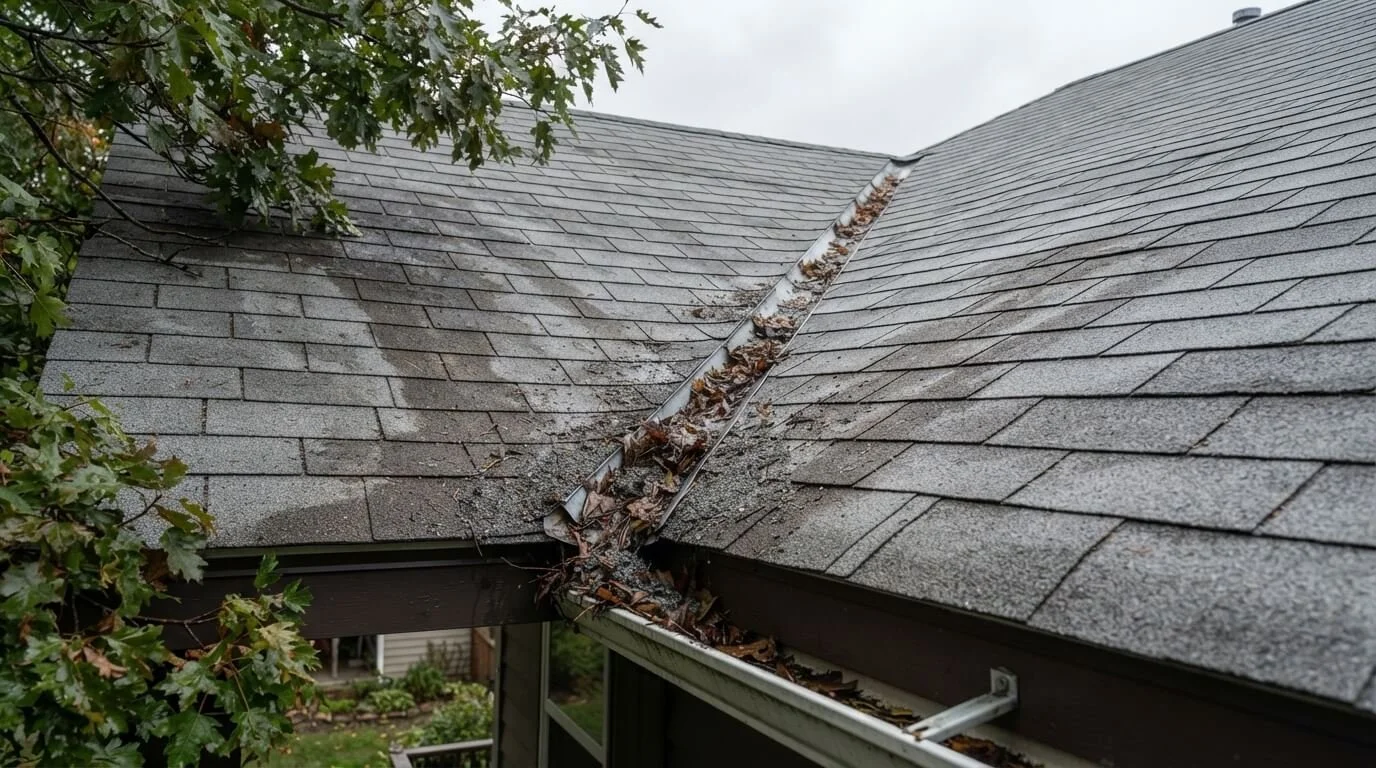
Roof valley clogged with leaves and debris after rain on a Maryland home.
Twigs, leaves, and granules collect in roof valleys faster than any other part of the roof. This slows drainage and pushes water sideways under the shingles.
5. Wrong Valley Type for the Roof
Some roofs need open valleys, some need closed, and others need woven. Using the wrong style can cause early wear or water misdirection.
6. Shingle Wear and Tear
Because valleys see more movement and pressure, shingles age faster here. Cracked granules or curling edges quickly turn into leaks.
How Da’ Roofers Keep Roof Valleys Protected
1. Full Removal of Old Materials
We start by removing all old shingles, nails, underlayment, and debris from the valley to expose a clean deck. Any damaged wood underneath is replaced right away.
2. Installing Ice-and-Water Shield
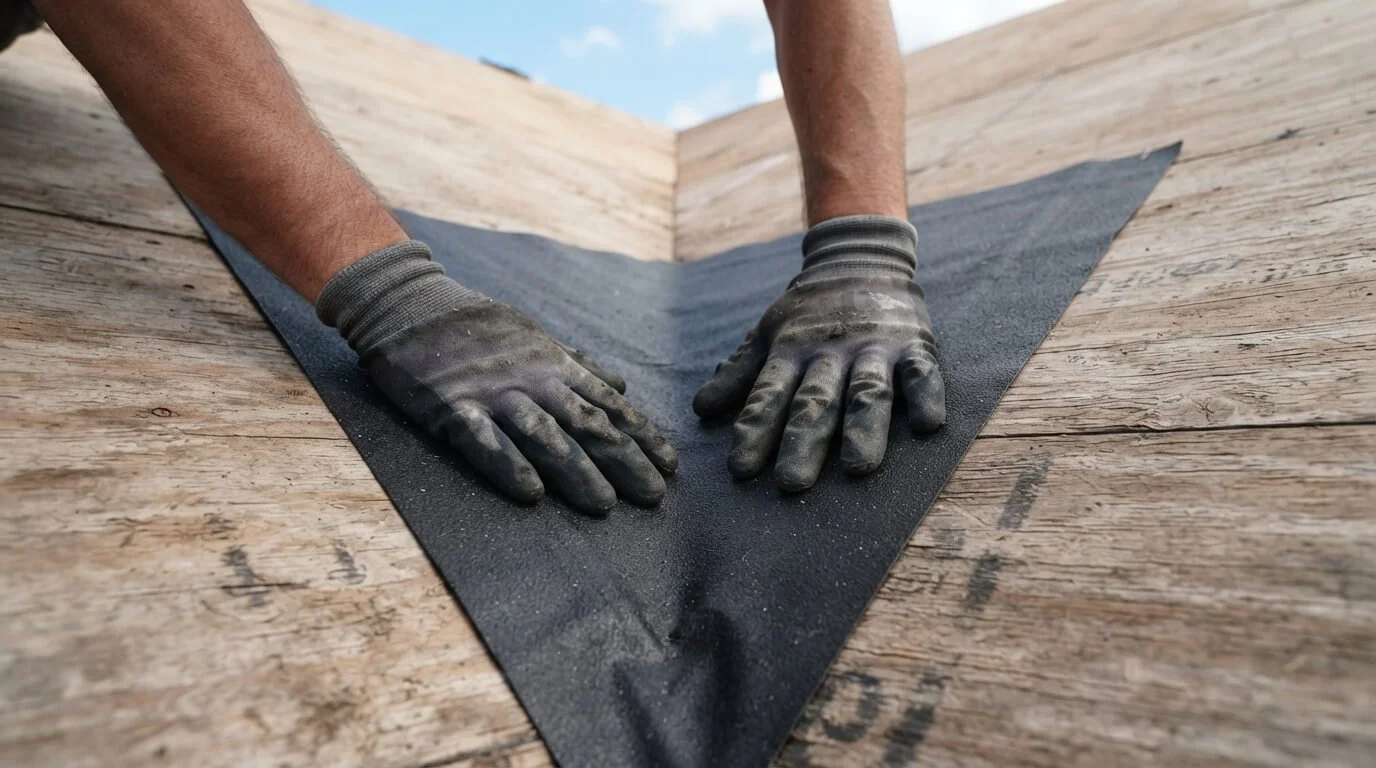
Gloved hands pressing black ice-and-water shield into a roof valley on a Maryland roof deck.
A thick, self-adhering ice-and-water shield is applied directly to the valley. This is the waterproof layer that acts as the primary defense against leaks.
3. Choosing the Right Valley Style
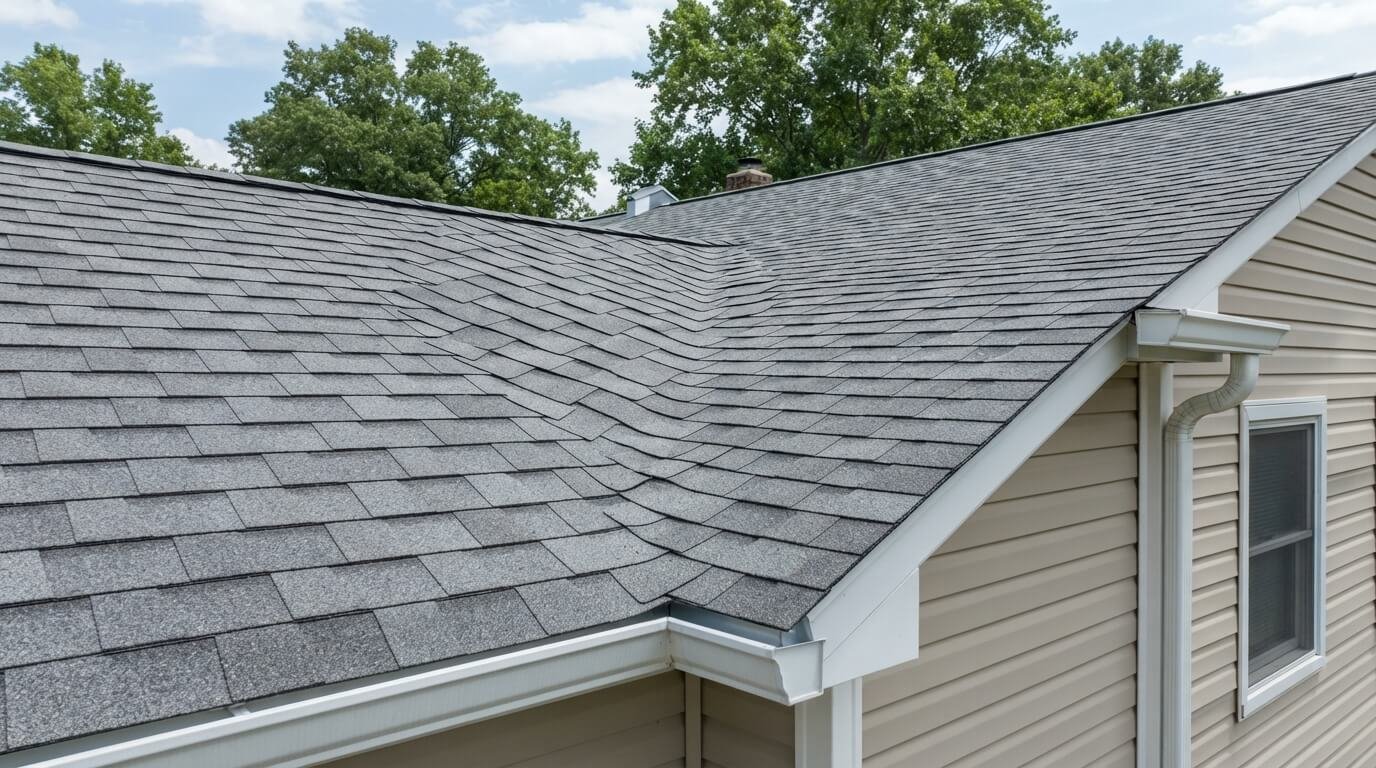
Closed roof valley with shingles cut tightly together on a Maryland home.
Da’ Roofers determine whether the home needs:
Open valley (metal down the center)
Closed valley (shingles cut tightly together)
Woven valley (shingles interlaced)
Each style is selected based on roof pitch, shingle type, and water flow needs.
4. Precision Shingle Cutting
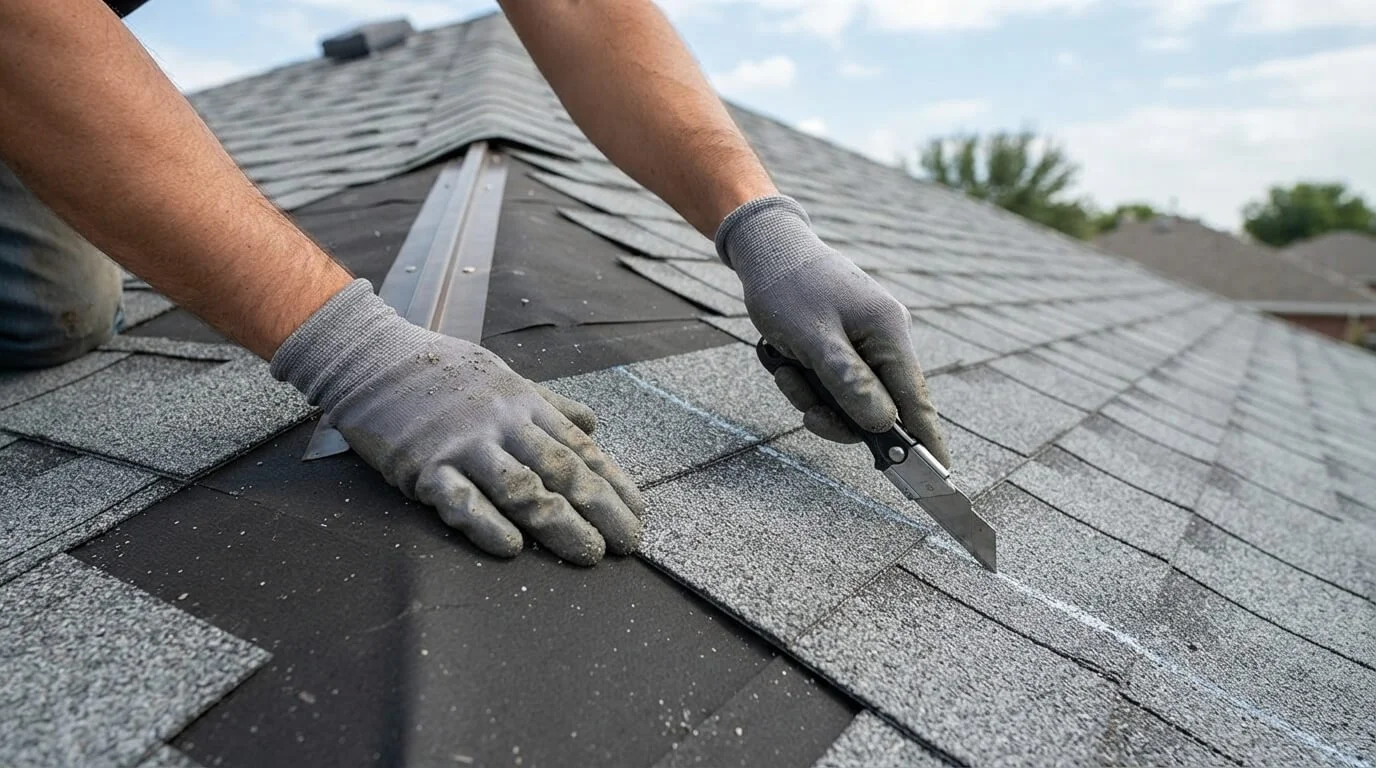
Roofer’s gloved hands cutting a shingle along a chalk line at a roof valley on a Maryland home.
Valley shingles are cut with clean, straight lines to ensure proper drainage. This is one of the most detailed parts of the roof install and has to be done carefully.
5. Installing Metal Flashing (When Needed)
For open valleys, a metal flashing (usually aluminum or steel) is installed and secured tightly. This helps guide water and prevents shingle edges from lifting.
6. Proper Nailing Technique
Shingles are nailed outside the “no-nail zone” of the valley to prevent punctures in high-water areas. This alone prevents many future leaks.
7. Ensuring Smooth Water Flow
Before moving on, the crew checks the valley for bumps, loose shingles, or uneven cuts. If water can catch on anything, it’s fixed immediately.
8. Keeping Debris Clear
As part of customer guidance, Da’ Roofers advise homeowners to keep the valley clean throughout the year to maintain smooth drainage.
Why Roof Valleys Matter So Much in Maryland
With heavy rainstorms, winter freezes, and plenty of older homes across Maryland, homes here rely on solid valley protection more than most people realize. A weak valley can create leaks inside bedrooms, hallways, and attic insulation long before you notice the problem.
That’s why we at Da’ Roofers put extra attention into sealing and reinforcing this part of the roof. When valleys are installed correctly, they last for decades and help the entire roof perform better through storms and winter freezes.
Conclusion
Roof valleys may look simple, but they do some of the hardest work on your entire roof. They manage water flow, protect weak intersections, and prevent leaks during Maryland’s heaviest storms.
When Da’ Roofers install a new roof, sealing and reinforcing every valley is a major step, not an afterthought. With the right underlayment, the right valley style, and precision installation, your roof stays strong, watertight, and ready for decades of protection.
FAQs
1. How long do roof valleys last?
With proper installation and high-quality materials, roof valleys can last just as long as the shingles. That's often 25–30 years or more.
2. What’s better: closed valleys or open valleys?
Both work well. The best choice depends on your roof’s pitch, shingle style, and how much water flow the valley handles.
3. Can clogged valleys really cause leaks?
Yes. Debris buildup slows drainage and allows water to creep under shingles. Keeping valleys clean is essential.
4. Why do some roofs have metal in the valley?
Metal flashing is used in open valley systems to guide water smoothly and protect high-flow areas.
5. Should roof valleys be replaced during a re-roof?
Absolutely. A new roof should always include new valley underlayment, fresh cutting, and, if needed, new metal flashing.
