

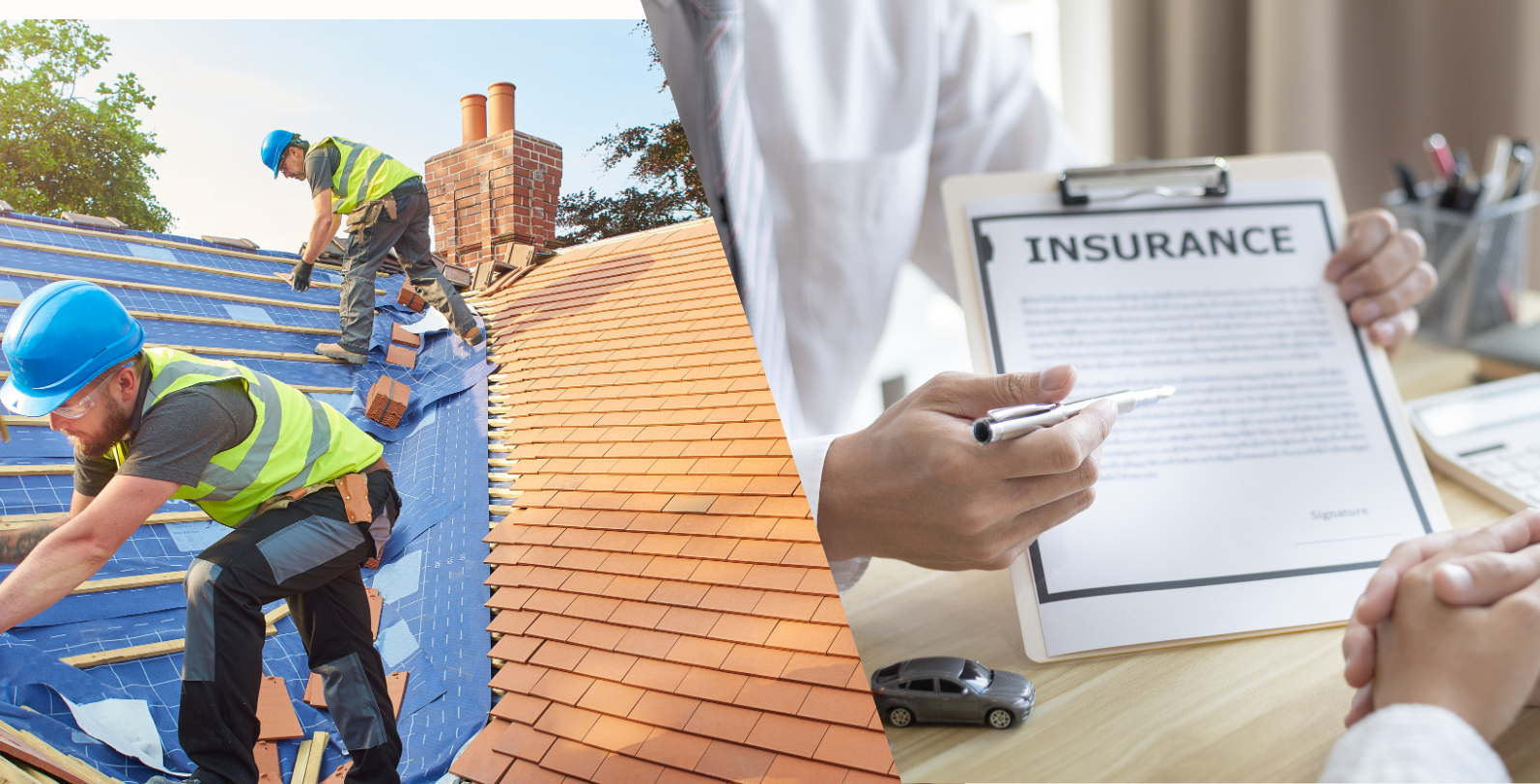
Professional roofers & Insurance claims paperwork.
Let's imagine a storm just hit Maryland, and now you're staring at your roof wondering what to do about possible damage. Maybe you noticed some shingles on the ground. Or maybe you spotted a leak inside your house. Either way, you know it’s going to be stressful, and finally a big question pops up in your head: “Do I call my insurance company first, or should I call a roofer?”
This is a good question and the answer is pretty simple once you understand how it all works. In short, you should call your roofer first. Why should you call your roofer first? Let’s walk you through the details so you know exactly what to do next time a storm messes with your roof.
Who Should You Call First?

Homeowner panicking at home with a leaky roof.
The first call should go to your roofer. It's pretty simple actually; a roofer can assess the situation and let you know if there is real damage or not. If there is damage, then you can call your insurance company.
BUT if there is no damage, your roofer just saved you from the unnecessary process and time of talking to your insurance company. In addition, calling your roofer first will save time with your insurance company.
Sometimes the insurance company will send an insurance adjuster to check your roof right away. Other times, they’ll ask you to contact a roofer first and get an inspection before they send someone out. But if you've already called your roofer first, you'll already have all the evidence you need. Your roofer is the one who looks out for you during the whole process.
Roofing contractors are the real experts, so they see things an adjuster might miss. They also make sure the repairs actually get done the right way. So think of it like this: your roofer confirms the damage on your roof, you start the insurance claim process, then your roofer makes sure you don’t get stuck with a half-fixed roof because an adjuster missed some of the damage.
3 Things Maryland Homeowners Should Know Before Filing A Claim

Insurance paperwork for roofing claims.
1. Insurance Adjusters Don’t Always Catch Everything
The adjuster works for the insurance company, and while many of them do a good job, they’re not roofing experts. They might walk around the roof, take a few notes, and then say there’s “not enough damage” for a claim.
That’s where your roofer comes in. The roofer can meet the adjuster at your house, point out the problem spots, and explain why it needs to be covered by the insurance company. Without a roofer, there’s a chance something important gets overlooked, which could cause your claim to get denied.
2. Your Policy Sets The Payout, But Your Roofer Helps You Use It To the Max
When you file a claim, how much you get depends on your policy. There are two main types of policies:
Actual Cash Value (ACV): This type of policy will pay you what your old roof is worth today, which usually isn’t enough for a full replacement.
Replacement Cost Value (RCV): This type of policy will pay to replace your roof with a brand-new one, minus your deductible. You’ll get part of the money up front and the rest once the job is finished.
This is why it’s important to include your roofer because they'll explain what your payout covers and help you stretch every dollar. If the insurance company lowballs the estimate, your roofer can step in with proof of what the job really costs.
3. You’ll Always Have To Pay Your Deductible
We understand; nobody likes paying the deductible, but it’s required by law. Some shady roofers might say they’ll cover it for you, and that might sound tempting at the moment, but it’s actually insurance fraud.
A good roofer won’t put you in that position. Instead, they’ll work hard to make sure the rest of your costs stay as low as possible by getting insurance to pay their fair share.
What If The Insurance Estimate Is Too Low?
This happens quite often, unfortunately. The insurance company might decide your roof only needs a few repairs, but your roofer knows it really needs a full replacement.
When something like this happens, a reputable roofer won’t just shrug it off and leave you hanging. They’ll gather photos, reports, and details to push back against the low estimate. Sometimes it takes a little back and forth, but with the right roofer fighting for you, you’ve got a much better chance of getting what you need paid for by insurance
Final words
So here’s the bottom line: when storm damage hits your roof, your first call should go to a roofer with insurance expertise. Calling your insurance company first may get your claim approved, but it may not cover all the costs associated with the repair or replacement.
Here in Maryland, storms are a normal thing. If you’ve got a reliable local roofer who's got your back, like Da’ Roofers, the whole process is bound to be a lot less stressful. And the best part? Your home stays safe no matter what the weather throws at it.
FAQs
1. Can a roofer help me deal with my insurance company?
Yes. A good roofer and roofing company can meet the insurance adjuster, show them the damage, and provide photos and reports to support your claim. This will help you avoid a low payout and makes the process much smoother.
2. What happens if the insurance payout isn’t enough to cover the roof?
This happens more often than anyone would like. If the payout from the insurance company happens to be too low, your roofer can push back with proof of the actual repair and replacement costs.
3. Is it true some roofers pay your deductible?
Some roofers might say they’ll “waive” your deductible, but that’s actually insurance fraud. A trustworthy roofer will never put you at risk like that. They’ll focus on getting the maximum payout from your insurance company instead. So, no! Roofers don't pay your deductibles.
