

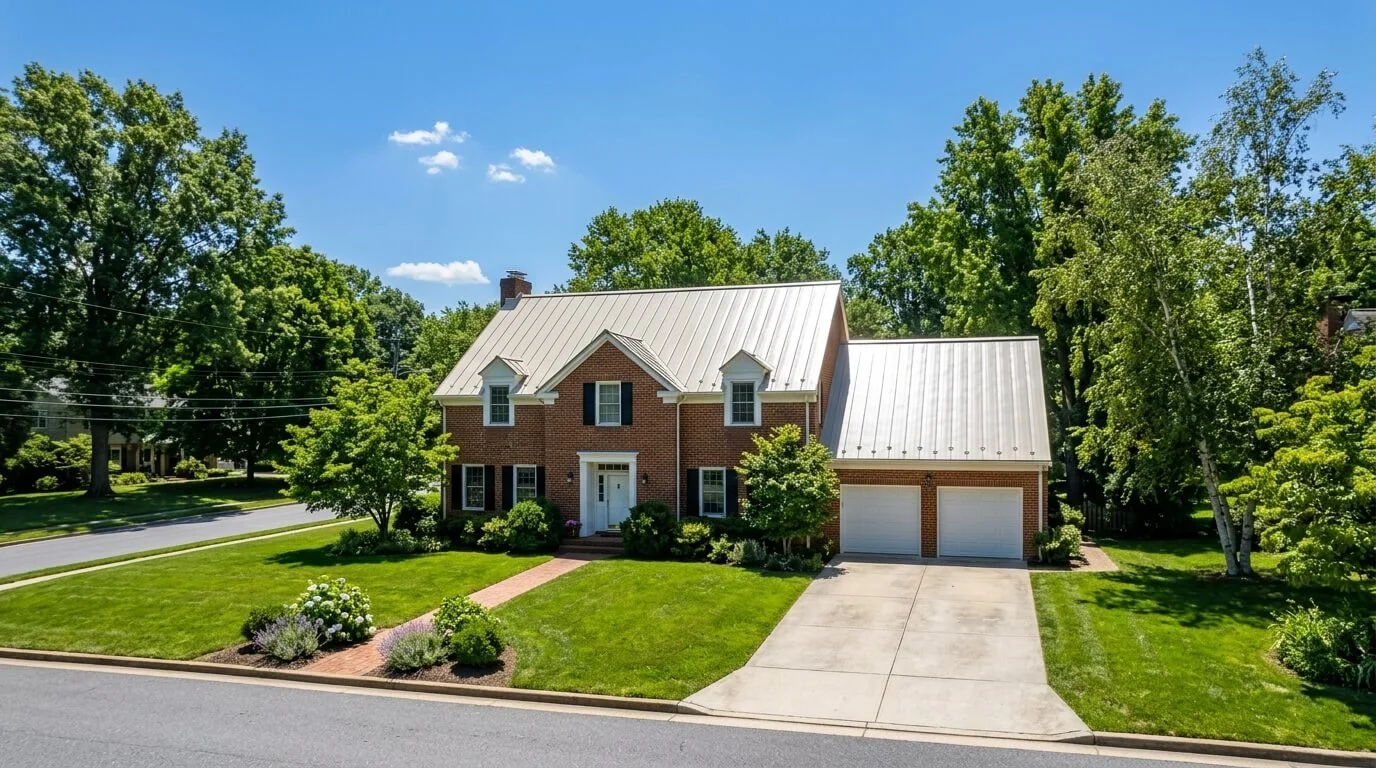
Brick home with a light colored roof on a sunny summer day in Maryland.
If you’ve ever stepped onto a dark roof in the middle of a hot Maryland summer, you know how quickly it can turn into a frying pan. The roof soaks up sunlight, the attic bakes, and the air conditioner runs nonstop.
But what if your roof could actually reflect that heat instead of absorbing it — or better yet, use plants to cool your home naturally? That’s where green roofing and cool roof technologies come in.
Let’s break down what they are, why they matter, and why they’re becoming so popular across Maryland.
What Is a Cool Roof?
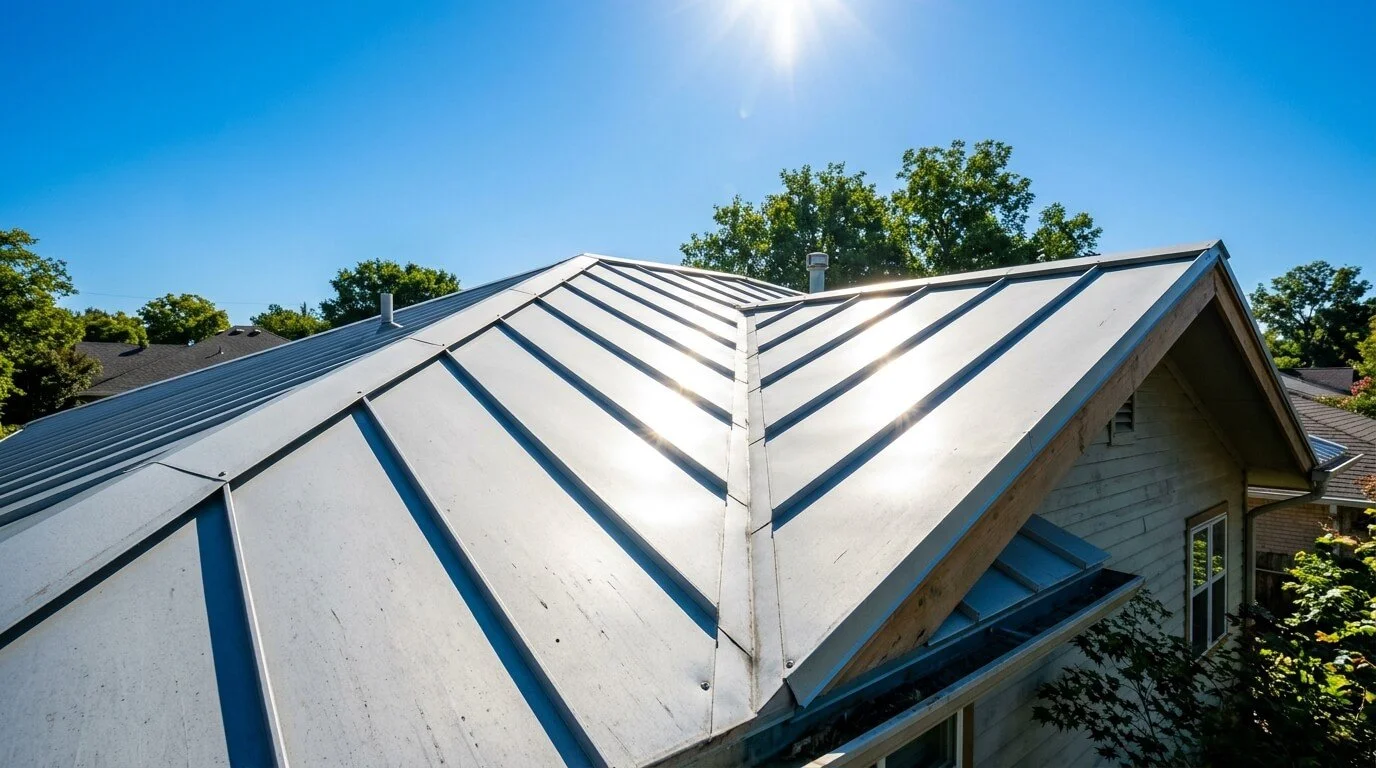
Light colored metal roof reflecting bright sunlight on a Maryland home.
A cool roof is designed to reflect sunlight instead of absorbing it like a regular dark roof. The goal is simple — to keep your home cooler and reduce the need for air conditioning during hot weather.
Instead of black shingles that soak up the sun, cool roofs use light-colored materials or special reflective coatings. These materials bounce sunlight back into the atmosphere and help the roof stay up to 50°F cooler than a standard one.
Types of Cool Roofs
There are several ways to make a roof “cool.” Here are a few popular options:
Reflective Roofs: These use bright materials like white shingles, tiles, or metal that reflect most of the sun’s rays.
Cool Roof Coatings: Think of this as a sunscreen for your roof. A reflective coating is applied on top of existing roofing materials to increase solar reflectance.
Evaporative Roofs: Made from materials that cool as water evaporates, perfect for hot and dry climates (though less common in humid Maryland).
Cool Roof Granules: Used in shingles, these tiny reflective beads help keep your roof temperature down.
According to the U.S. Environmental Protection Agency (EPA), a cool roof can reduce peak cooling demand in air-conditioned homes by 11% to 27%. That’s a noticeable difference on your monthly energy bill, especially during those long, humid Mid-Atlantic summers.
What Is a Green Roof?
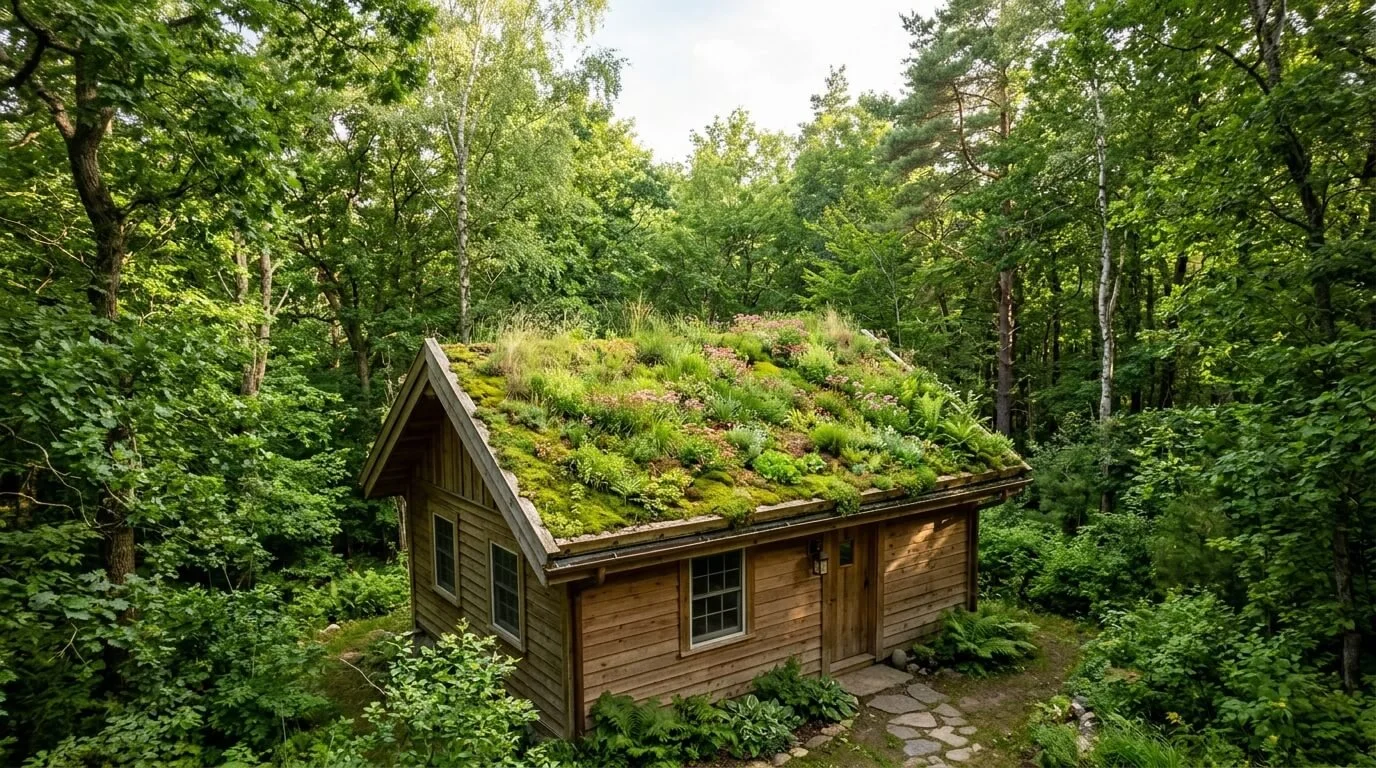
Green roof covered in plants and grass on a small house, a rooftop garden option for Maryland homes.
A green roof, sometimes called a “living roof,” is exactly what it sounds like — a roof covered with vegetation. It includes layers of waterproofing, soil, and plants, turning what would normally be a heat-absorbing surface into a natural cooling system.
There are two main types of green roofs:
Extensive Green Roofs: Shallow soil and low-maintenance plants like grasses or succulents.
Intensive Green Roofs: Thicker soil that can support shrubs, flowers, or even small trees.
How Green Roofs Work
The plants and soil act as insulation. They absorb sunlight, cool the air through evaporation, and keep the space below much cooler. During winter, the same layers help hold in heat, improving your home’s year-round efficiency. Plus, green roofs don’t just look good, they do good. They:
Reduce stormwater runoff (the plants absorb rain before it reaches your gutters).
Improve air quality by capturing dust and pollutants.
Support pollinators and local wildlife.
Extend roof life by protecting it from direct sunlight and harsh weather.
A few cities like New York, Chicago, and Seattle already have green roofs on new buildings.
Why These Roofs Matter in Maryland
Maryland deals with hot summers, high humidity, and sudden storms. Traditional dark roofs absorb all that heat, making homes uncomfortable and energy bills skyrocket.
By switching to a cool or green roof, you can fight back against what’s called the urban heat island effect; the way city surfaces like asphalt and black roofs trap heat and raise local temperatures.
In busier parts of Montgomery County, like Silver Spring, where every degree matters, cool and green roofs help lower indoor temperatures, reduce strain on air conditioners, and make neighborhoods more comfortable.
Cool Roofs vs. Green Roofs: What’s the Difference?
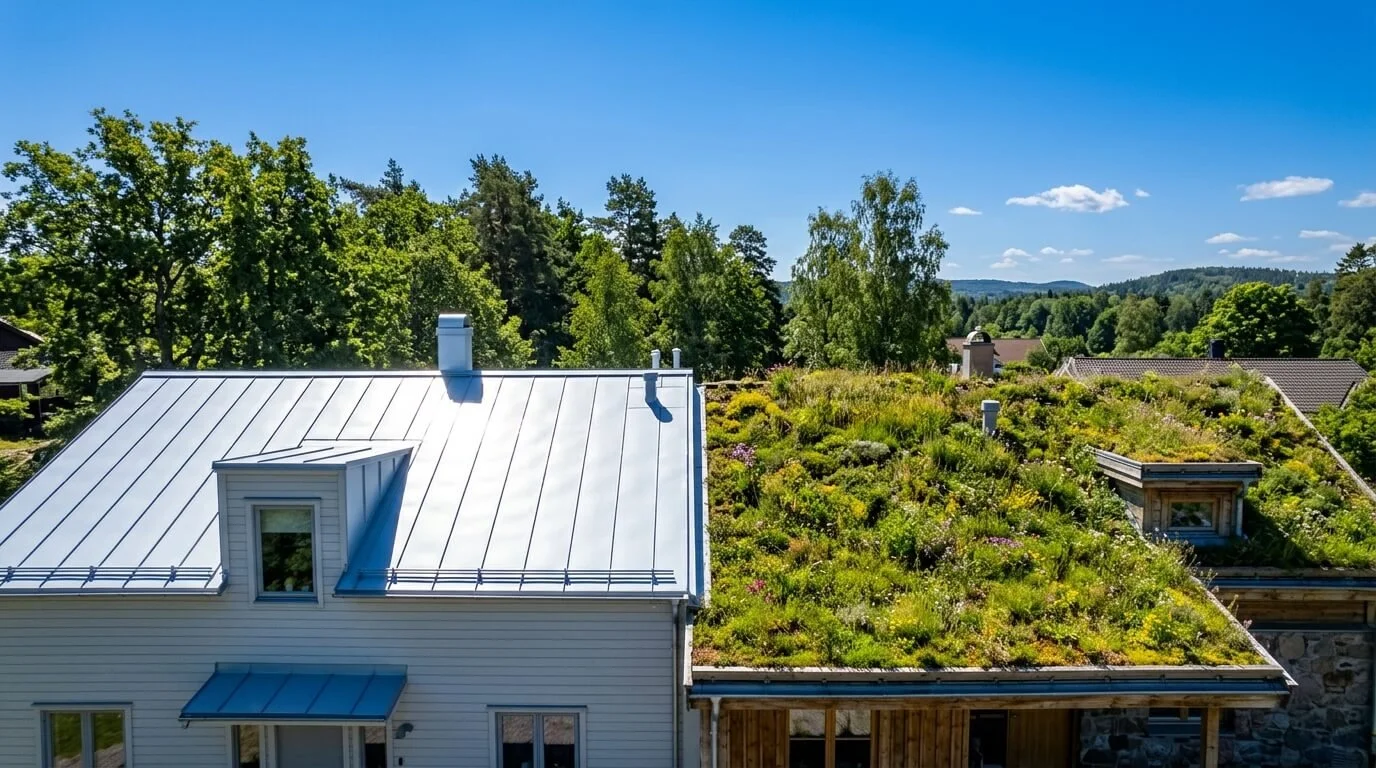
Light colored cool roof next to a green roof covered in plants on a sunny day in Maryland.
While both roofs are designed to reduce heat and improve efficiency, they work differently.
| Feature | Cool Roof | Green Roof |
|---|---|---|
| Main Function | Reflects sunlight to reduce heat | Uses plants and soil to insulate and cool |
| Best For | Hot, sunny climates | Urban areas, energy-conscious homeowners |
| Maintenance | Low (mainly cleaning) | Moderate (watering, trimming, drainage checks) |
| Lifespan | 25–40 years | 30–50 years with proper care |
| Bonus Benefit | Saves on energy bills | Creates green space and supports local wildlife |
Both types can be adapted to residential and commercial buildings, and both qualify for energy efficiency incentives in some states.
Installation & Maintenance Tips
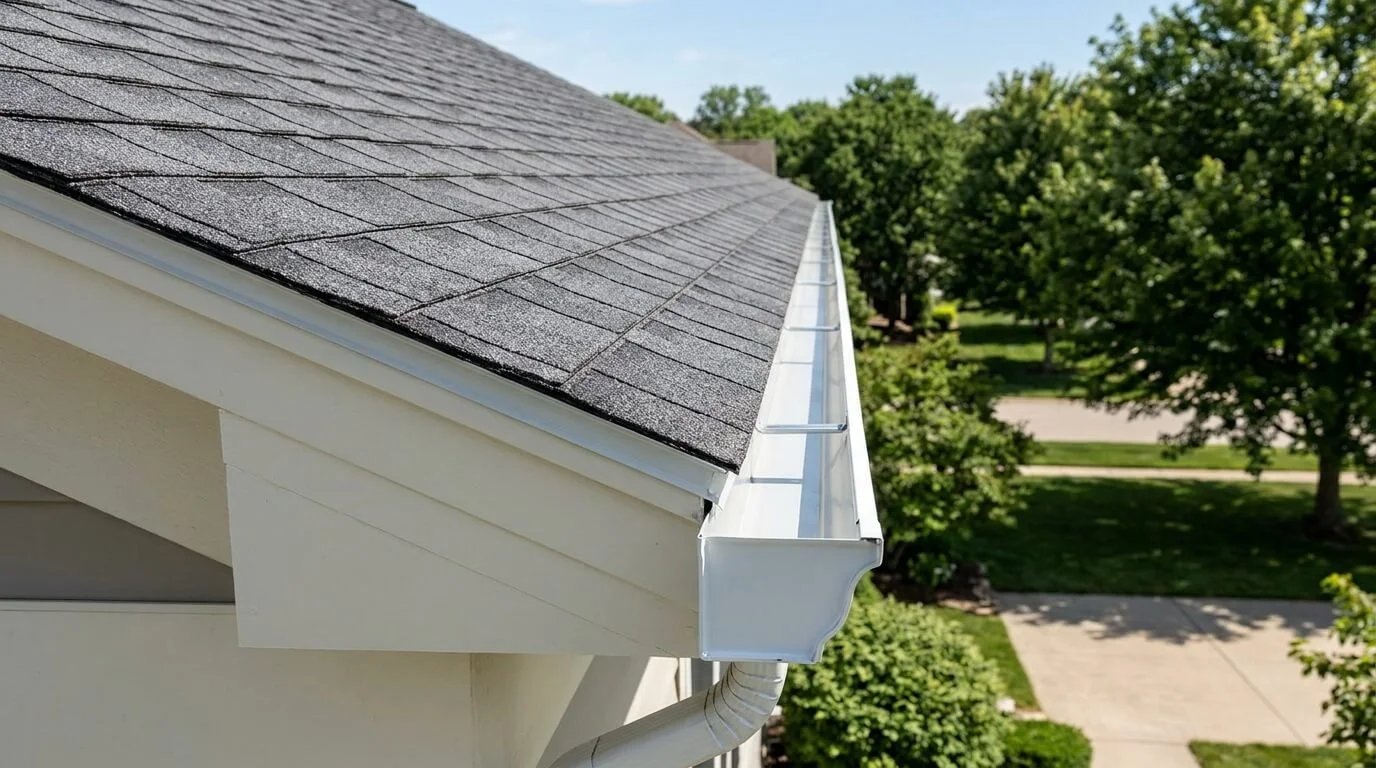
Clean asphalt shingles and a clean white rain gutter on a Maryland home.
If you’re thinking about upgrading your roof to a more sustainable one, here’s what to keep in mind:
1. Check the Structure
Green roofs are heavier because of the soil and plants. Have a local roofer inspect your home’s structure first to make sure it can handle the load.
2. Waterproofing Is Key
Whether you’re going green or cool, use a high-quality waterproof sealant underneath. It protects against leaks and ensures your system lasts for decades.
3. Plan Drainage Carefully
A proper gutter and drainage system is critical. Standing water can damage reflective coatings or flood plant layers. A roofer can design a setup that channels rain safely off the roof.
4. Choose the Right Materials
For cool roofs, go for light-colored or reflective shingles or coatings with titanium dioxide. For green roofs, pick native plants that thrive in Maryland’s weather. Plants like sedum, grasses, or small perennials.
5. Schedule Regular Inspections
Cool roofs need cleaning to stay reflective. Green roofs need plant care and seasonal maintenance. Regular roof inspections can catch small issues before they become expensive problems.
Energy Savings and Environmental Impact
Cool roofs reflect much more sunlight than dark roofs, reducing indoor temperatures by several degrees. This means less air conditioning, less strain on your HVAC system, and fewer greenhouse gas emissions.
Green roofs go even further; they store carbon in the plants and soil, capture rainwater, and create small ecosystems in the middle of the city.
In short, with cool and green roofs, you get:
Lower energy bills
Cleaner air
Less stormwater runoff
Longer roof lifespan
It’s a win for your wallet and the environment.
Why Homeowners Are Making the Switch
Homeowners across Maryland are realizing that green and cool roofs aren’t just trendy, they’re practical. Between lower energy bills, longer roof life, and environmental benefits, these technologies make real sense.
If you’re tired of your attic turning into an oven every summer or you’re looking for ways to make your property more sustainable, a cool or green roof might be the best home improvement you’ll ever make.
Final Thoughts
As Maryland continues to grow and urban areas heat up, green roofing and cool roof technologies are becoming more than just eco-friendly options. They're smart investments in comfort, savings, and even the planet.
Whether you go for reflective shingles or a rooftop garden, upgrading your roof is one of the easiest ways to make your home cooler, cleaner, and greener. However, here in Maryland, it's best to talk with a local roofer, like Da' Roofers, to know if it's a good option for your home.
FAQs
1. Are cool roofs only for hot climates?
Not at all. Even in a mixed climate like Maryland’s, cool roofs help regulate indoor temperatures and extend your roof’s lifespan.
2. Do green roofs attract pests?
When properly maintained, no. The plants chosen are typically not ones that attract rodents or insects, and a well-sealed roof prevents access underneath.
3. Can I install a cool or green roof on my existing home?
Yes. Cool roofs can easily go on your existing home. However, green roofs may need added structural support, so always get a professional inspection first.
4. How long do cool roofs last?
A high-quality cool roof can last 25–40 years, depending on materials and maintenance.
5. Are there local incentives for energy-efficient roofing?
Maybe. Programs change, so check with your county and utility company before you start.
