

How Proper Drainage Protects Your Roof and Foundation in the DMV
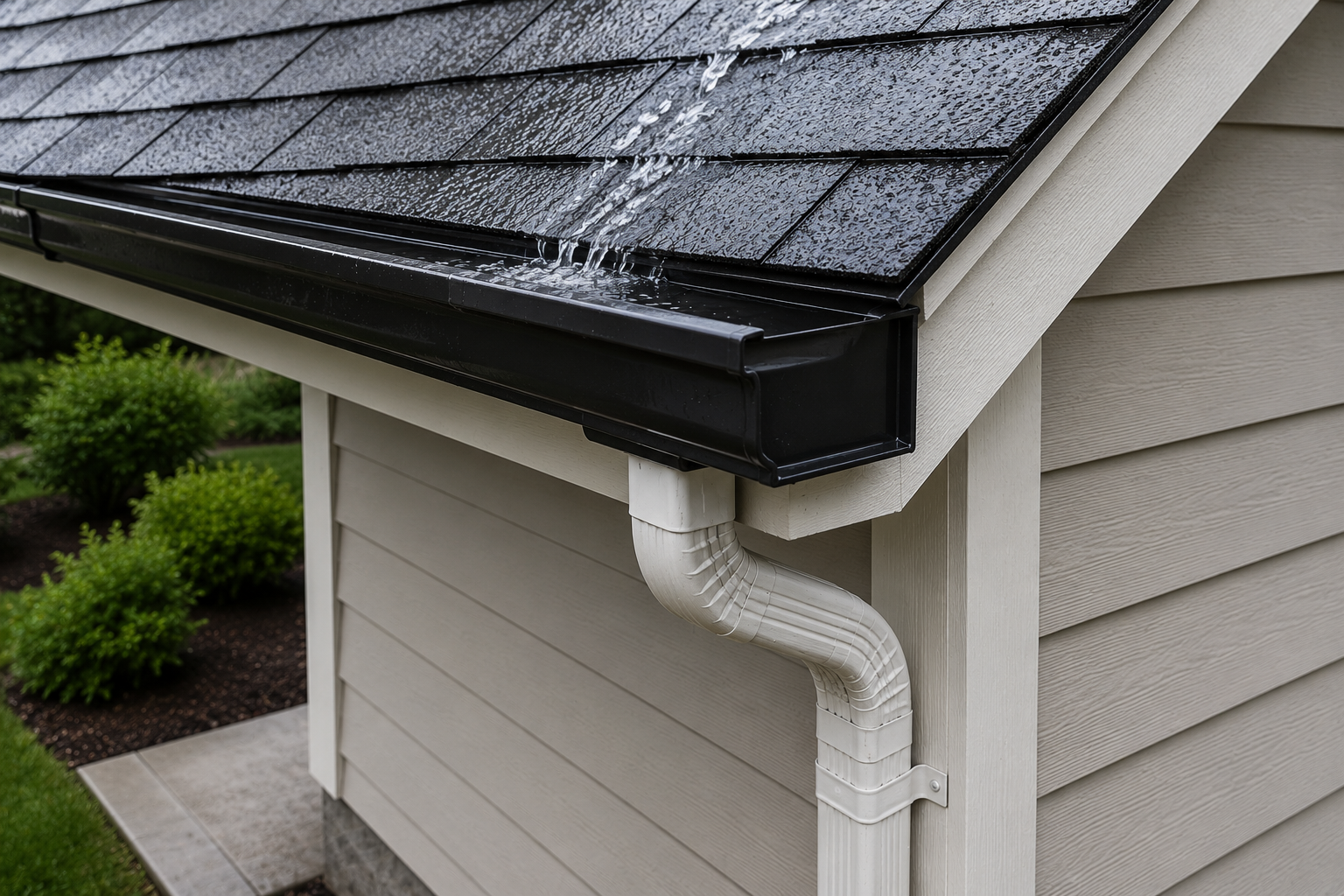
Proper roof drainage protecting the roof and foundation from water damage.
If you’ve lived in the DMV area for a while, you already know how unpredictable the weather can be. One minute it’s sunny, and the next, you’re dealing with heavy rain or melting snow. That’s why having proper drainage around your home isn’t just a bonus, it’s a must. Good drainage protects both your roof and your foundation, preventing leaks, cracks, and expensive repairs down the road.
Proper drainage protects your roof and foundation by directing rainwater and melting snow safely away from your home. When water can’t drain correctly, it seeps into shingles, fascia boards, and even the ground around your foundation. Over time, that moisture leads to roof leaks, mold, and foundation cracks.
With good gutters, downspouts, and grading, your home stays dry, stable, and protected year-round — no matter how unpredictable DMV weather gets. Let’s break it down some more.
Why Roof Drainage Matters
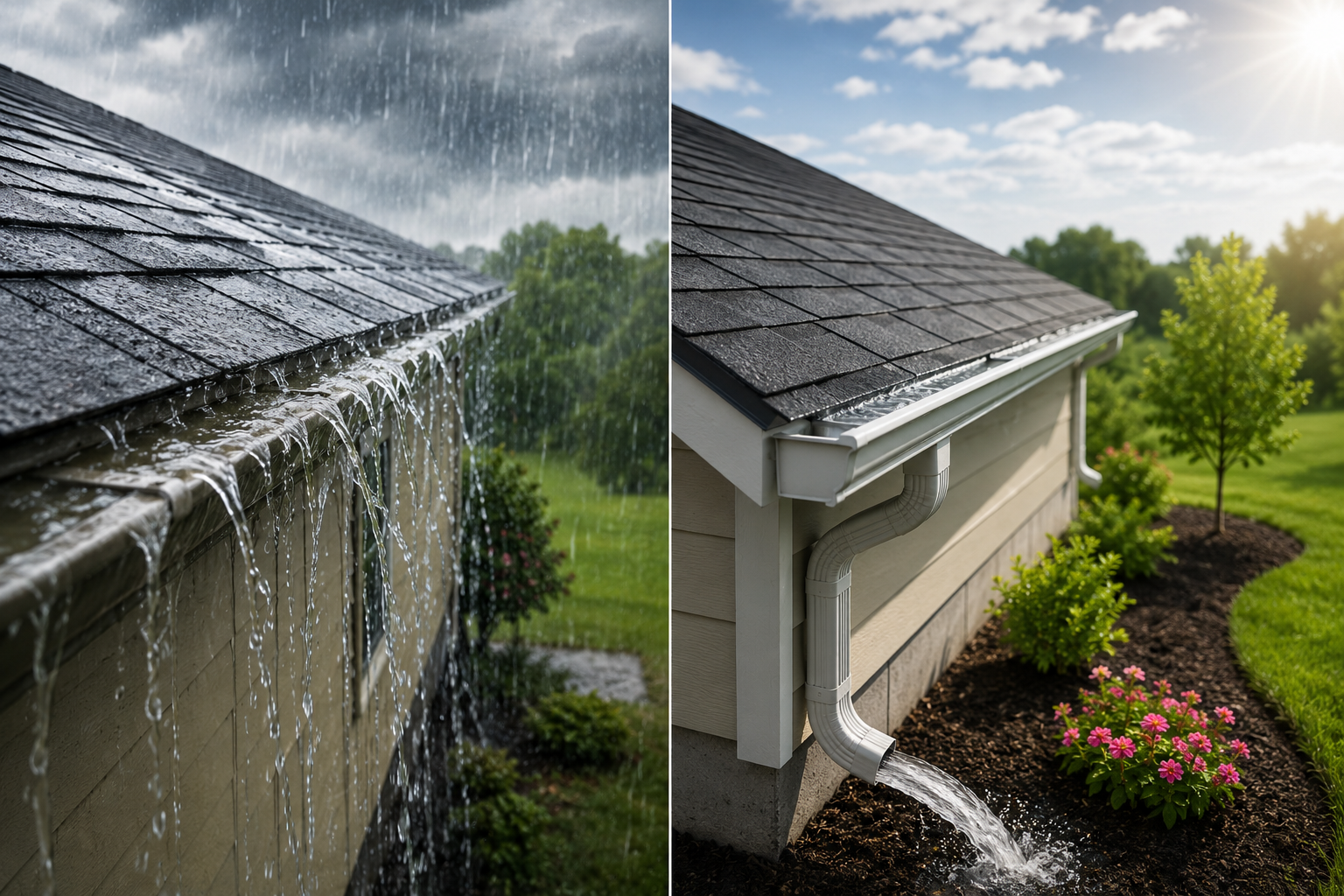
Roof drainage comparison showing water overflowing from clogged gutters versus water flowing safely through a downspout
When rain falls on your roof, it needs somewhere to go. Without an efficient drainage system, that water can linger and start causing trouble. Here’s what happens when your roof drainage isn’t up to par:
Pooled water weakens roofing materials: Flat or low-slope roofs are especially prone to water pooling, which can break down shingles, membranes, and flashing.
Leaks can form over time: Water finds even the smallest cracks, slowly seeping into the roof deck and attic.
Ice dams in winter: In colder DMV months, poor drainage can cause ice dams that trap melting snow and force water under the shingles.
Now imagine this happening repeatedly after every storm. It’s definitely a recipe for roof failure.
Gutters: Your Roof’s First Line of Defense
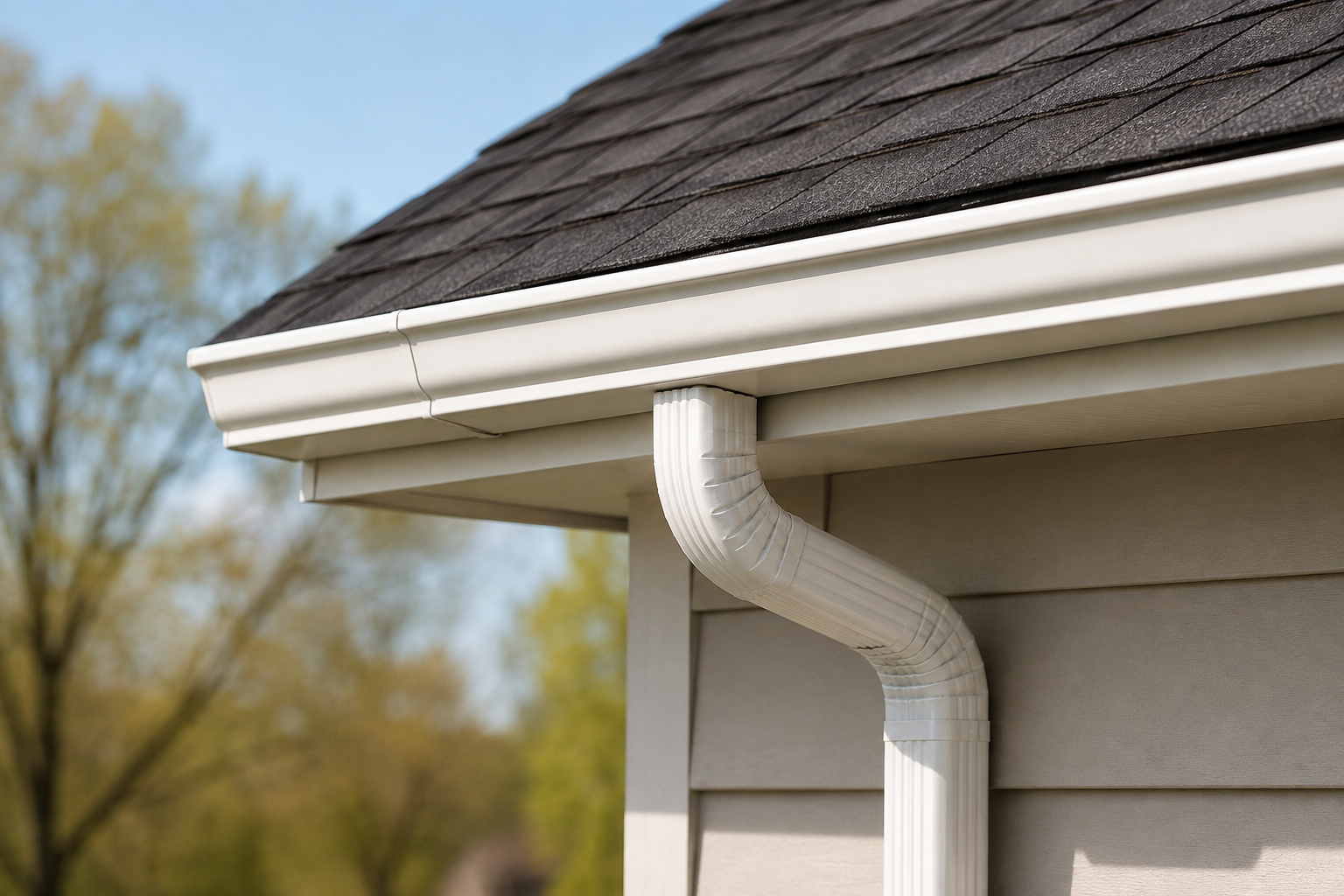
Residential roof gutter and downspout system.
Your gutters and downspouts are your roof’s undercover heroes. They collect rainwater and guide it safely away from your home. But when they’re clogged or damaged, water has nowhere to go. Common signs your gutters aren’t doing their job include:
Overflowing water during rain
Sagging or pulling away from the fascia
Water stains on siding or soffits
Erosion or puddles around the base of your home
Keeping gutters clear and downspouts extended at least a few feet from your foundation can prevent thousands in water damage repairs.
Protecting the Foundation
Your foundation is like the backbone of your home. Even a small drainage issue can threaten its strength.
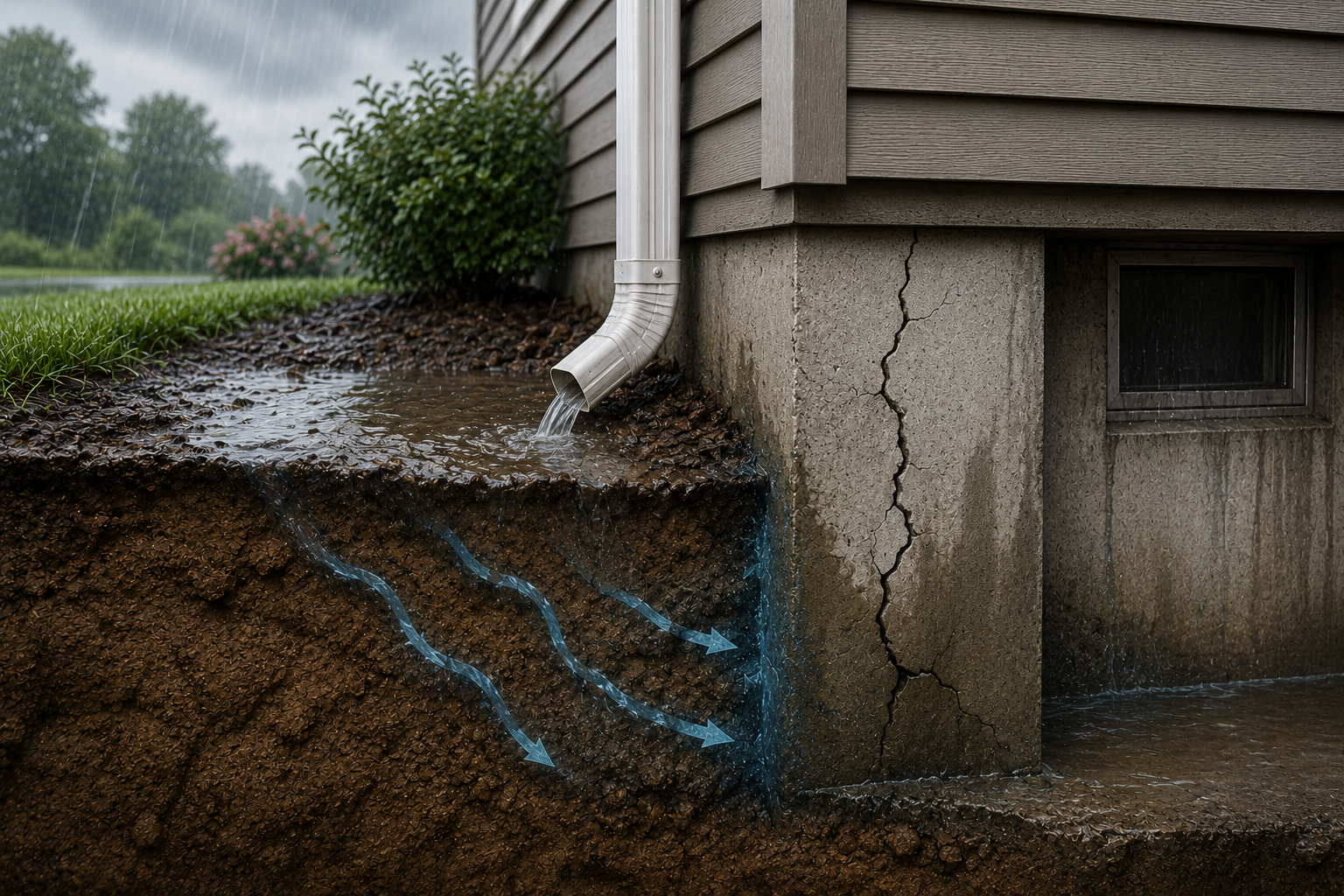
Rainwater pooling near a home’s foundation, causing soil saturation and foundation cracks.
When rainwater or melted snow isn’t properly diverted, it seeps into the soil surrounding your home. Over time, this can:
Cause soil erosion that exposes or shifts your foundation
Create hydrostatic pressure that pushes water through basement walls or floors
Lead to foundation cracks or uneven settling
The DMV area’s mix of clay-heavy soil and fluctuating weather makes this risk even higher. Clay expands when wet and shrinks when dry, which puts pressure on your foundation walls over and over again.
Signs of Drainage Problems Around the Foundation
Keep an eye out for these early red flags:
Damp basement or crawl space
Water pooling near the home’s base after rain
Cracks in basement walls or concrete slabs
Mold or musty odors indoors
If you notice any of these, it’s time to check your grading, gutters, and downspouts before the problem worsens.
How to Improve Roof and Foundation Drainage
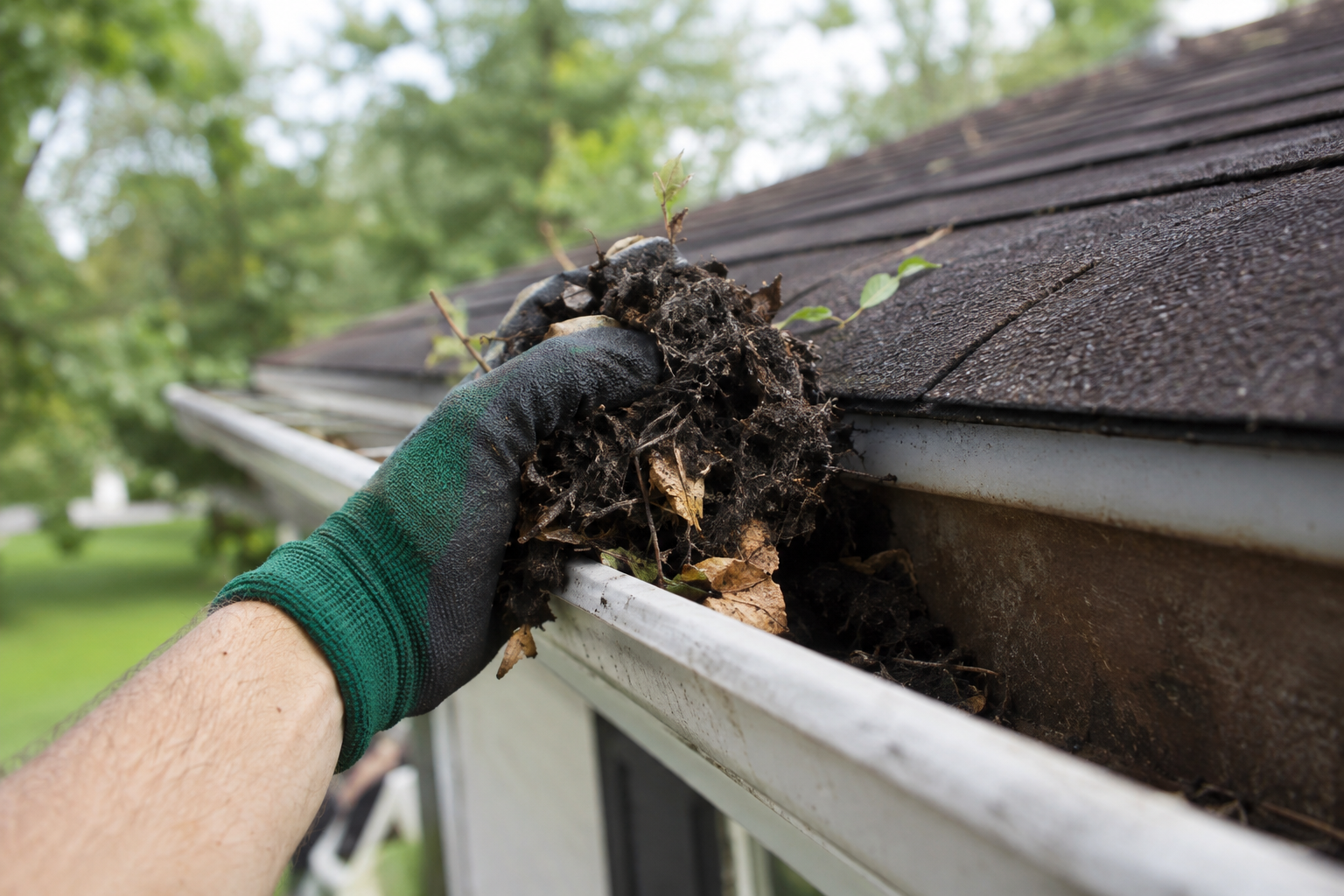
Cleaning debris from a roof gutter.
Fortunately, protecting your home from poor drainage doesn’t have to be complicated. A few smart fixes go a long way:
1. Clean gutters regularly: Clear them at least twice a year (more often if trees are nearby).
2. Check downspout extensions: Make sure they direct water 4–6 feet away from your home.
3. Inspect roof slopes: Water should always flow toward gutters or drains, not pool in one spot.
4. Grade the landscape properly: The ground should slope away from your foundation, ideally 5–6 inches over 10 feet.
5. Install French drains or yard drains: These systems help move excess water away efficiently.
6. Seal foundation cracks early: Don’t ignore small cracks. They can grow with each season.
7. Maintain roof flashing and valleys: Proper sealing ensures water doesn’t sneak into weak spots.
Why Drainage Is Extra Important in the DMV
The DMV’s weather and soil make drainage especially crucial. With humid summers, sudden storms, and freeze-thaw winters, local homes face constant moisture changes. Water doesn’t just fall from above; it rises from the ground, too.
Homes in low-lying or wooded areas of Maryland, Virginia, and D.C. are even more vulnerable to poor runoff. That’s why local roofing and foundation experts often recommend annual inspections to stay ahead of hidden water issues. Check out our article on the 7 most common roof leaks to find out more.
The Cost of Ignoring Drainage
Ignoring poor drainage might not cause immediate damage, but over time it can snowball into major issues:
Roof rot or premature shingle replacement
Basement flooding and mold
Cracked foundation walls
Sagging or uneven floors
Costly structural repairs
A little maintenance now can save thousands later, and help your home handle every DMV storm like a champ.
Final Thoughts
Proper drainage is more than just keeping water out; it’s about keeping your home solid, safe, and dry year-round. Your roof, gutters, and foundation work together as one system. When one part fails, the others eventually feel it too.
If you live in the DMV, don’t wait until you see leaks or cracks to act. Get your gutters cleaned, check your grading, and schedule a roof and foundation inspection. Simple repairs by a local roofer, like Da’ Roofers, today can prevent a serious headache tomorrow.
FAQs
1. How often should I clean my gutters in the DMV?
At least twice a year; typically in spring and fall. If you have lots of trees nearby, consider checking them more often.
2. Can poor drainage cause roof leaks?
Yes. When gutters overflow or roof slopes aren’t correct, water can pool and seep into the roofing layers, eventually causing leaks.
3. What’s the best way to redirect water away from the foundation?
Use downspout extensions, French drains, or regrade the soil so water flows away instead of pooling near your home.
4. Does clay soil make drainage problems worse?
It can. Clay soil, common in the DMV, holds water longer and expands when wet. This puts extra pressure on your foundation.
5. How do I know if my yard needs better drainage?
If you see puddles that linger for days, have a damp basement, or notice soil erosion near your foundation, it’s time to fix your drainage.
