

Soffits and Fascias: The Heroes of Roof Ventilation
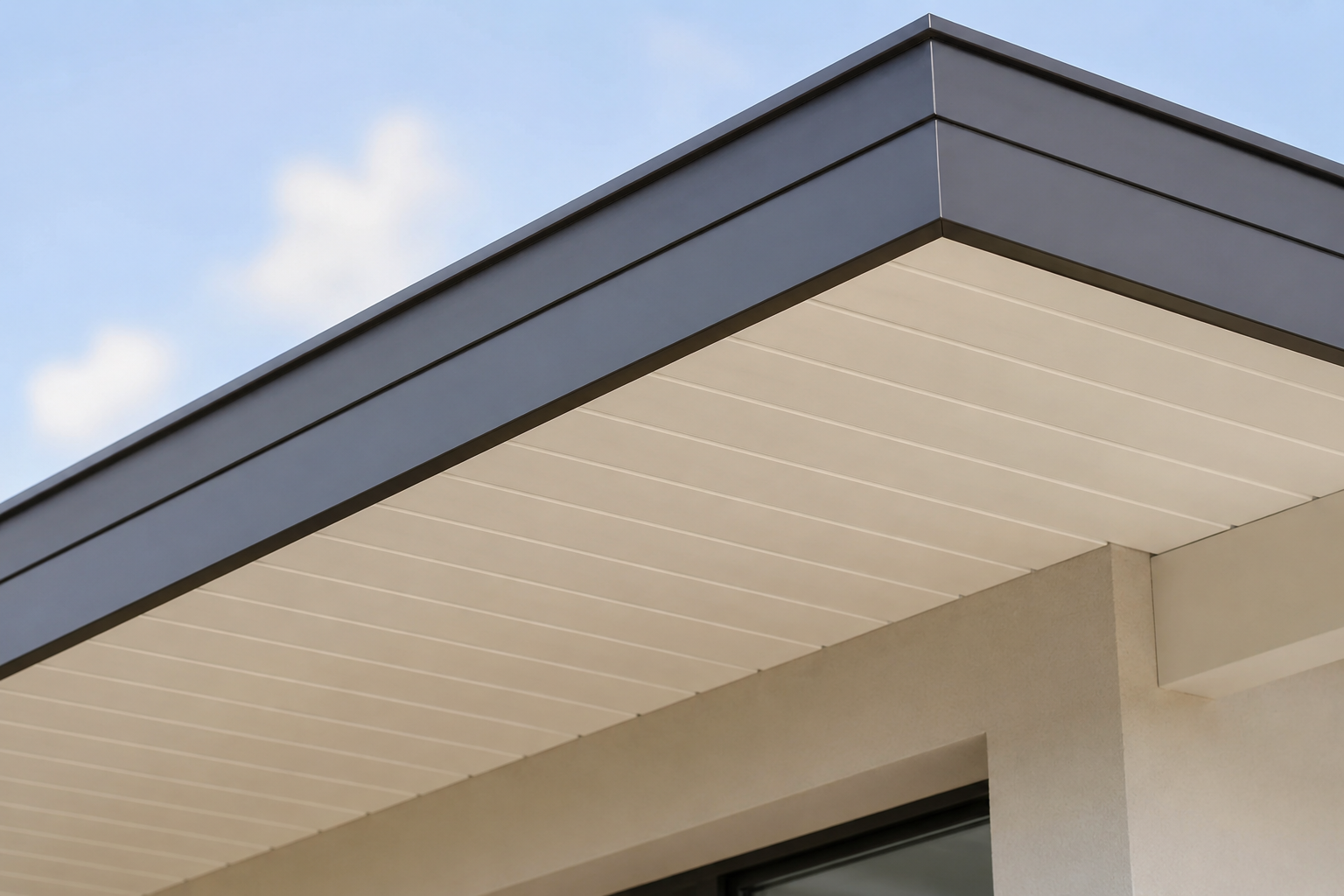
Professionally finished soffit and fascia on a modern Maryland residential roofline.
Most homeowners don’t think about the soffits or fascias until something goes wrong, like peeling paint, water damage, or birds nesting under the eaves. But these two quiet components do far more than just make your roofline look neat.
They’re the backbone of your roof’s ventilation system, helping your attic breathe and your home stay healthy.
Let’s break down what soffits and fascias really are, why roofers rely on them, and how they protect your home from top to bottom.
What Are Soffits and Fascias?
Before we dive into their superhero duties, let’s start with the basics.
Soffits are the boards tucked under the eaves (the underside of your roof overhang). They’re often vented with small holes or slits that allow air to flow into your attic.
Fascias are the horizontal boards that runs along the edge of your roof, right where the gutters are attached. It seals the edge of the roof and gives it a finished, clean look.
Together, they form the roof’s lower edge, protecting it from the elements and ensuring air moves freely through your attic.
How Soffits and Fascias Support Roof Ventilation
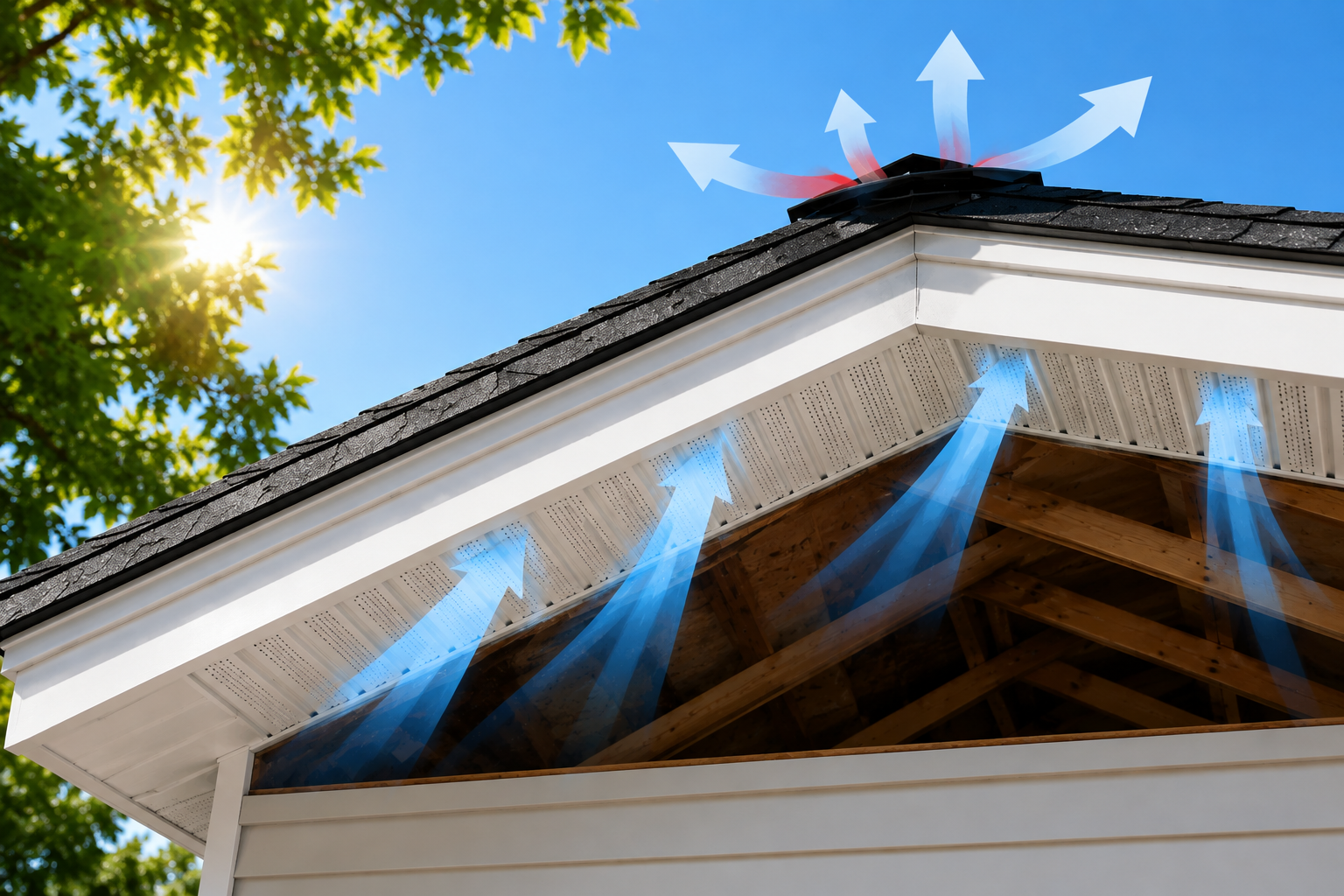
Soffit ventilation showing cool air entering through soffit vents and warm attic air escaping through the roof ridge vent.
Your attic needs a steady flow of air to regulate temperature and moisture. Without ventilation, heat and humidity build up, which can warp shingles, grow mold, and rot wood.
Here’s how soffits and fascias keep the air moving:
Soffit vents bring in cool, fresh air. These vents allow outdoor air to enter the attic space, replacing hot, stale air.
Ridge or gable vents let warm air escape. As air rises, it exits through vents higher up on the roof, creating a natural airflow.
Fascias help seal and direct airflow. While fascias don’t have vents, it supports the soffits and gutters, keeping the intake path unobstructed.
It’s a simple system that makes a big difference. They work quietly to keep your attic from turning into a sauna or a breeding ground for moisture problems.
Why Roofers Rely on Soffits and Fascias
Roofers often call soffits and fascias part of the “unsung heroes” because they do so much heavy lifting behind the scenes. Here’s why these parts are a big deal:
1. Prevent Moisture Damage: Proper ventilation keeps condensation from building up under your roof, reducing the risk of mold, rot, and ice dams.
2. Boost Energy Efficiency: A cooler attic means less strain on your HVAC system during hot Maryland summers.
3. Protect Roof Edges: Fascias keep rainwater out of the roof’s interior layers and support your gutters to channel water safely away.
4. Add Curb Appeal: Together, they frame your home’s roofline and give it a crisp, polished finish.
5. Keep Pests Out: Vented soffits are designed to let air in, not critters. When installed properly, they keep squirrels, birds, and insects at bay.
Common Soffits and Fascias Materials
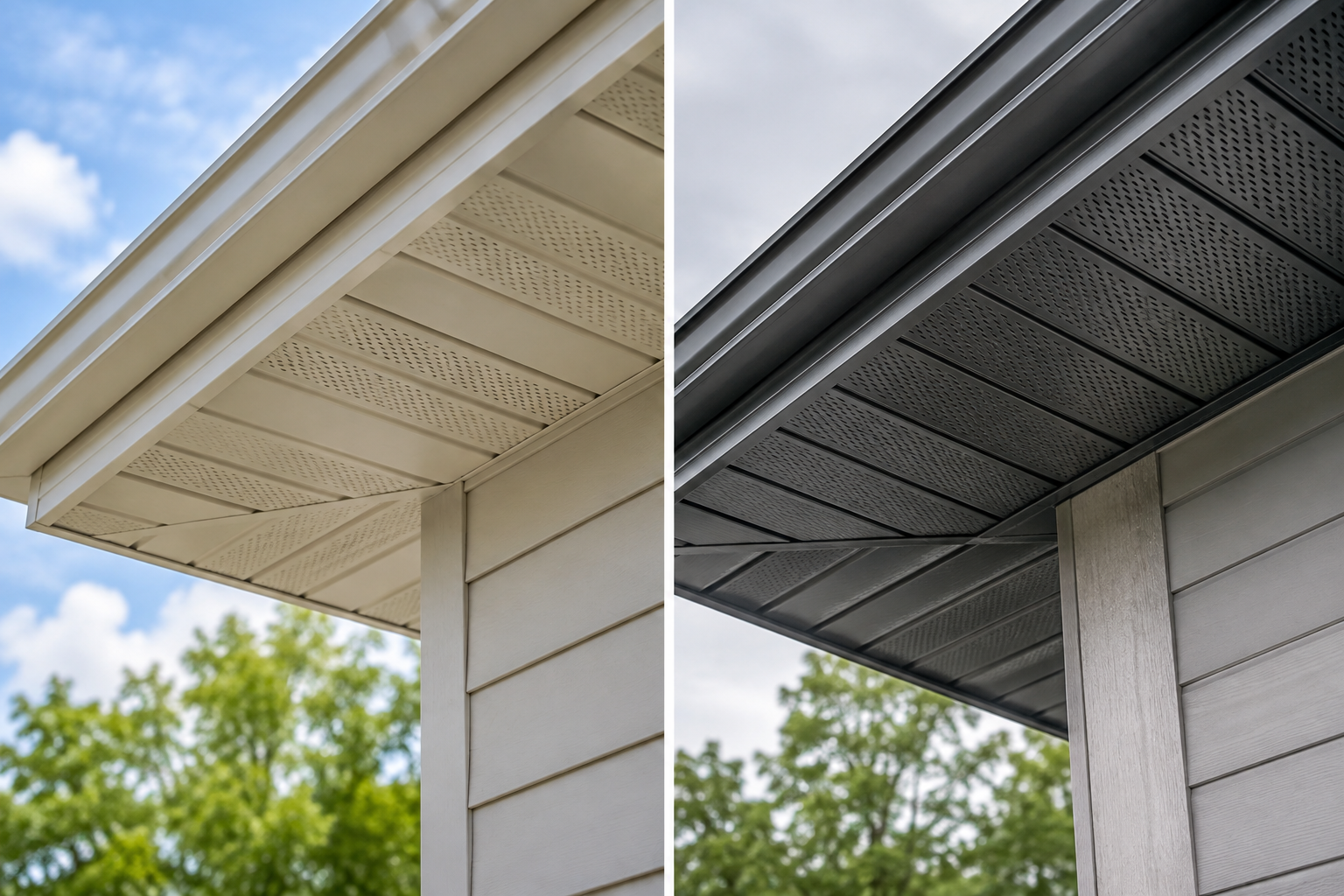
Side-by-side comparison of white vinyl soffits and dark aluminum soffits with ventilated panels under residential roof eaves.
When it comes to materials, homeowners have a few reliable options. The best choice depends on budget, maintenance preferences, and the home’s exterior design.
Vinyl: Affordable, low-maintenance, and resistant to rot. Great for ventilation and easy cleaning.
Aluminum: Durable and weather-resistant, though pricier than vinyl. Excellent for humid climates.
Wood: Traditional and attractive, but needs regular painting or sealing to resist decay.
Fiber Cement: Long-lasting and strong, offering a nice balance between durability and aesthetics.
Roofers in Maryland often recommend aluminum for its resistance to humidity and corrosion — vinyl is a budget-friendly option too, though it can grow brittle during hard freeze-thaw swings.
Signs Your Soffit or Fascias Need Attention
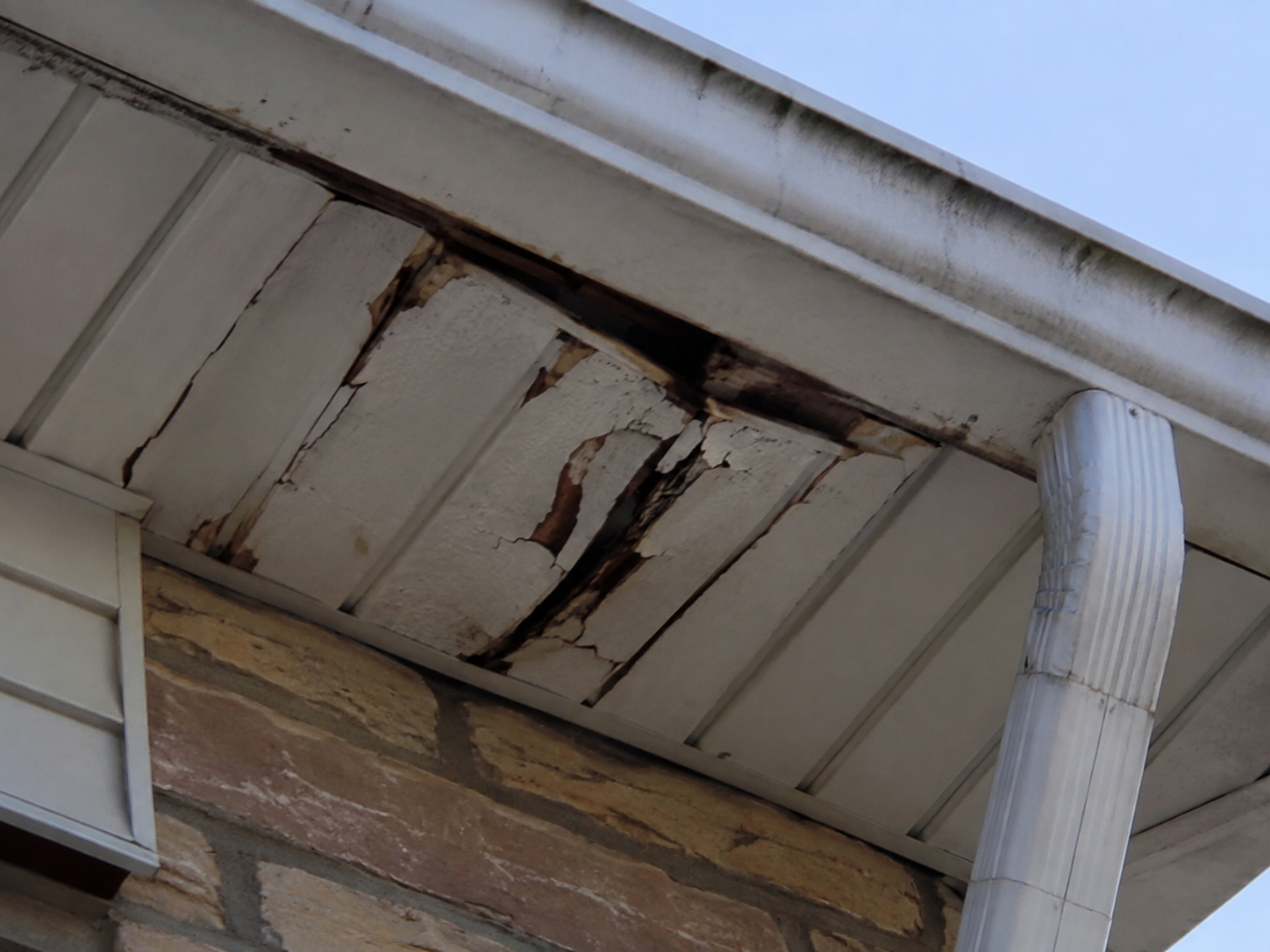
Cracked and deteriorated soffit panels showing signs of moisture damage beneath a home’s roofline.
Even the strongest roof components wear down over time. Keep an eye out for these warning signs:
Peeling or flaking paint
Visible rot or mold
Water stains on exterior walls
Rusting gutters pulling away from the fascia
Sagging or soft soffits panels
Pests sneaking into attic spaces
If you notice any of these issues, it’s best to call a roofing professional, like Da’ Roofers, before minor damage turns into a full-blown repair.
How to Maintain Soffits and Fascias
These parts don’t demand much upkeep, but a little care goes a long way:
Clean gutters regularly to prevent water overflow that can damage fascia boards.
Inspect soffit vents once or twice a year for blockages from debris or nests.
Repaint or reseal wood soffits and fascia boards to keep them weatherproof.
Schedule annual roof inspections to catch hidden issues early.
Regular maintenance ensures your soffits and fascias continue doing their job quietly and efficiently.
Why Ventilation Matters More Than You Think
Many homeowners underestimate the power of good roof ventilation. When soffits and fascias are working properly, you’ll notice benefits across your home:
Lower cooling costs in summer
Fewer attic moisture problems
Extended shingle lifespan
Less mold and mildew
A more comfortable home year-round
In short, ventilation isn’t just about air; it’s about protecting your investment from the inside out.
Maryland Homes and Ventilation Challenges
In Maryland, where humidity and seasonal swings are common, soffits and fascias play an even more crucial role. Summer heat can trap moisture in poorly vented attics, while winter freezes can lead to condensation and ice damming.
That’s why local roofers emphasize keeping your soffit vents clear, your fascia boards sealed, and your attic well-insulated. It’s one of the simplest ways to prevent costly roof damage and maintain your home’s comfort.
When to Call a Roofing Professional
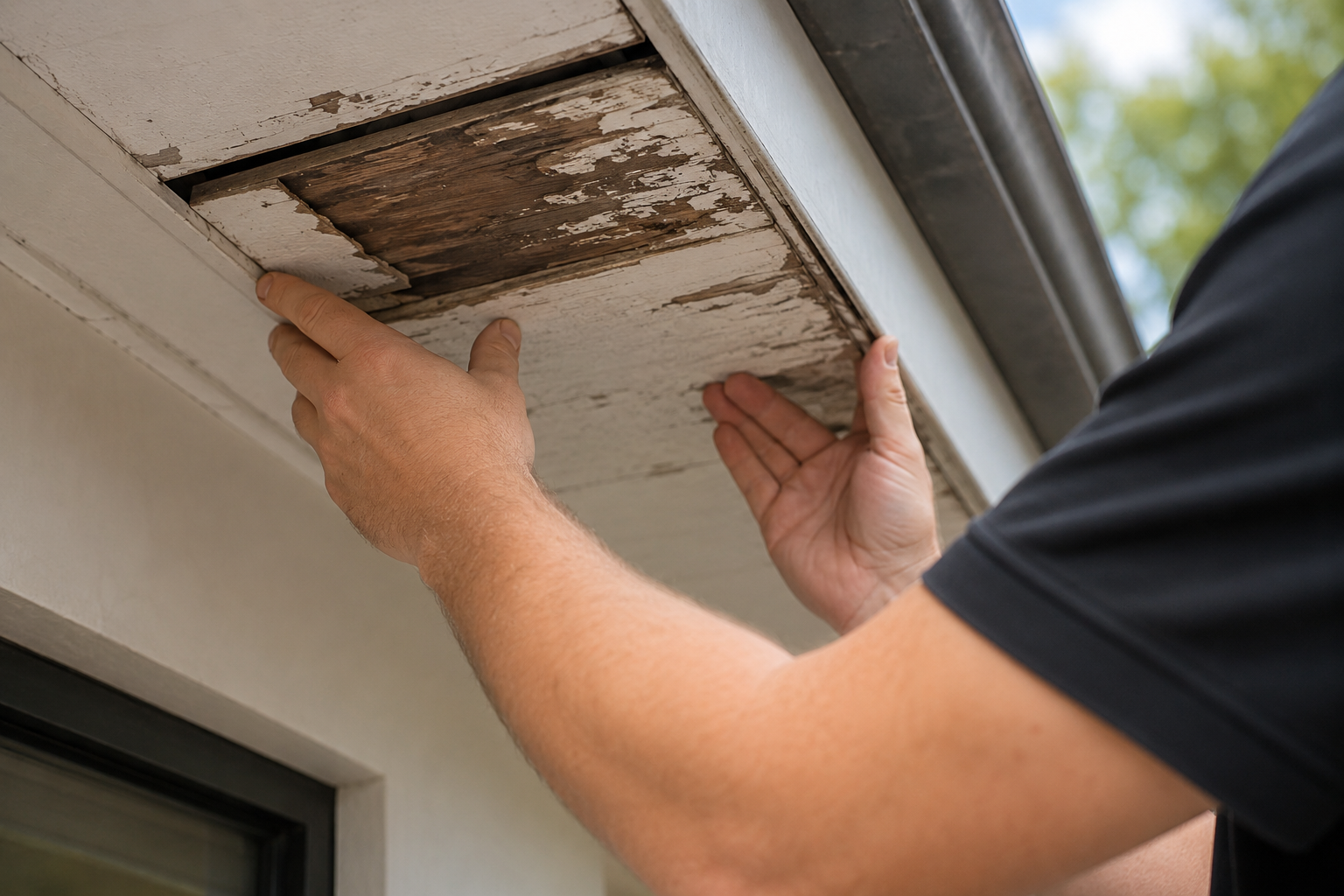
Maryland roofer inspecting old, damaged soffits beneath a home's roofline.
If your soffits or fascias looks worn, start sagging, or your attic feels hot and stuffy even in mild weather, it’s time to bring in a pro. Roofing specialists can:
Inspect for hidden water or pest damage
Replace rotten or rusted panels
Improve attic ventilation with new soffit vents
Install upgraded materials for longer-lasting protection
Fixing or replacing soffits and fascias isn’t just cosmetic, it’s a key part of keeping your whole roofing system in top shape.
Final Thoughts
Soffits and fascias might not be the most glamorous parts of your roof, but they’re some of the most important. These humble components manage airflow, prevent water damage, and help your home stand strong through every Maryland season.
So next time you look up at your roofline, give a little nod to the soffits and fascias — the quiet heroes keeping your home safe, dry, and well-ventilated.
FAQs
1. How often should soffits and fascias be inspected?
At least once a year, ideally during your routine roof inspection.
2. Can damaged soffits or fascias affect my attic insulation?
Yes. Poor ventilation from damaged soffits or fascias can cause excess heat and moisture that degrade insulation.
3. What’s better, vinyl or aluminum soffits?
Both are great options. Vinyl is more affordable and easy to maintain, while aluminum is stronger and handles humidity better.
4. Do all roofs have soffits and fascias?
Most modern roofs do. Older homes may not have them or have limited ventilation, but you can upgrade during reroofing or replacement.
5. Can I replace soffits and fascias myself?
It’s possible for small repairs, but for full replacement or vent upgrades, it’s best to hire a professional roofer.
