

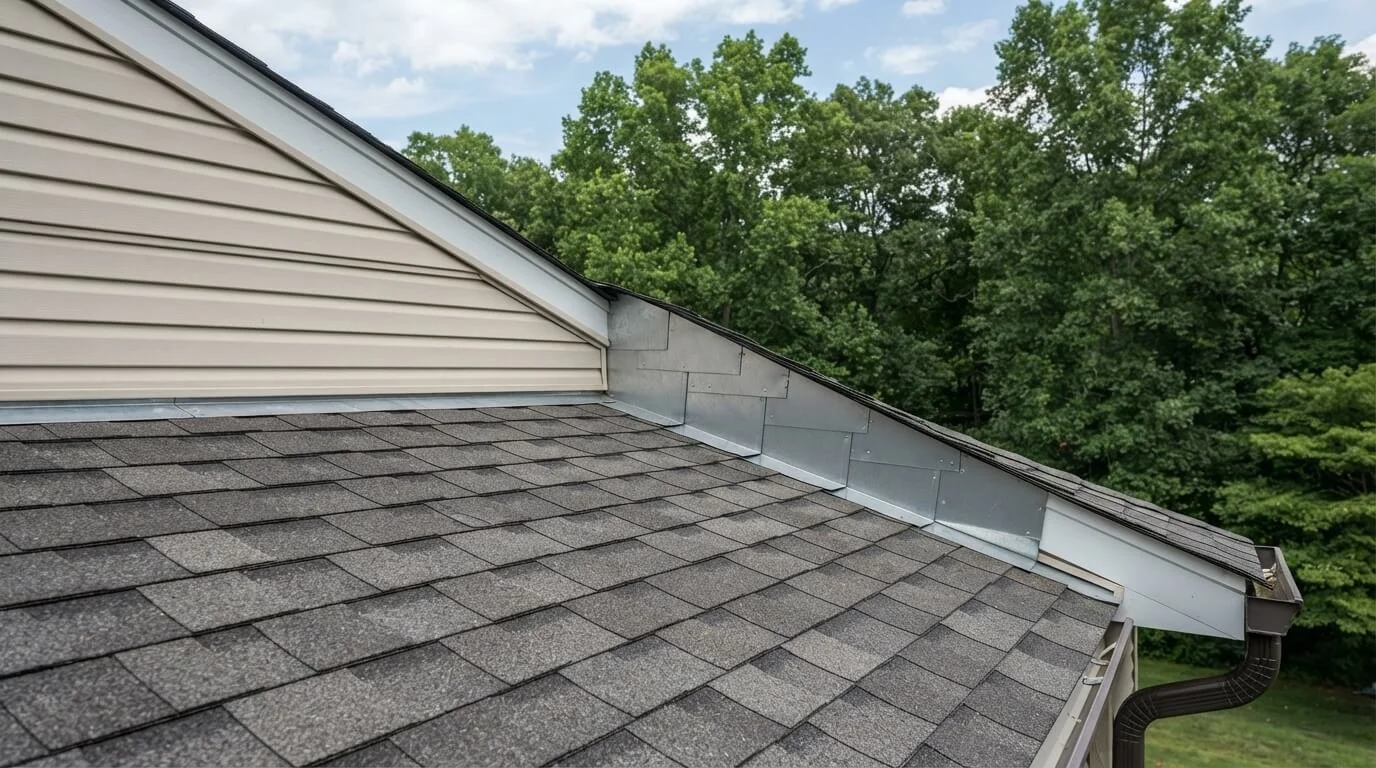
Metal flashing where a shingle roof meets a wall on a Maryland home.
If you’ve ever looked closely at your roof, you’ve probably noticed thin strips of metal tucked around chimneys, walls, or vents. That’s roof flashing, and while it may not look like much, it’s one of the hardest-working parts of your roof.
The purpose of roof flashing is to seal off the weak points of your roof and guide water safely away from them. It’s installed wherever two surfaces meet (like around chimneys, vent pipes, roof valleys, and walls) to stop leaks from forming in those tight spots. Without flashing, rainwater would easily slip under your shingles, soak your roof deck, and cause major water damage over time.
You definitely don't want rainwater sneaking into small cracks and gaps, because before long, you’d be dealing with leaks, rot, or even ceiling stains. Let’s talk about what flashing really does, where it’s installed, and why it’s such a big deal for homes across Maryland.
What exactly is Roof Flashing?
Roof flashing is a thin material that's usually made from steel, aluminum, or copper. It directs water away from spots where your roof meets something else, like a wall, chimney, or vent pipe.
Think of it as your roof’s rain guard. When water runs down your shingles, flashing makes sure it doesn’t sneak underneath them. It covers the weak points, such as those seams and corners where leaks love to start.
The Real Purpose of Roof Flashing
The main job of roof flashing is simple: keep water out. But digging deep, flashing helps to:
Prevent leaks at roof joints and edges
Protect wood decking and framing from rot
Extend roof life by reducing water damage
Maintain energy efficiency by preventing damp insulation
Protect chimneys, walls, and valleys from heavy runoff
Basically, flashing is what makes your roof watertight. Without it, even a perfectly installed roof can leak during the first heavy downpour.
Where Roof Flashing Is Installed
Flashing doesn’t go everywhere; only in spots where water could get in. Here’s where you’ll usually find it:
1. Around Chimneys
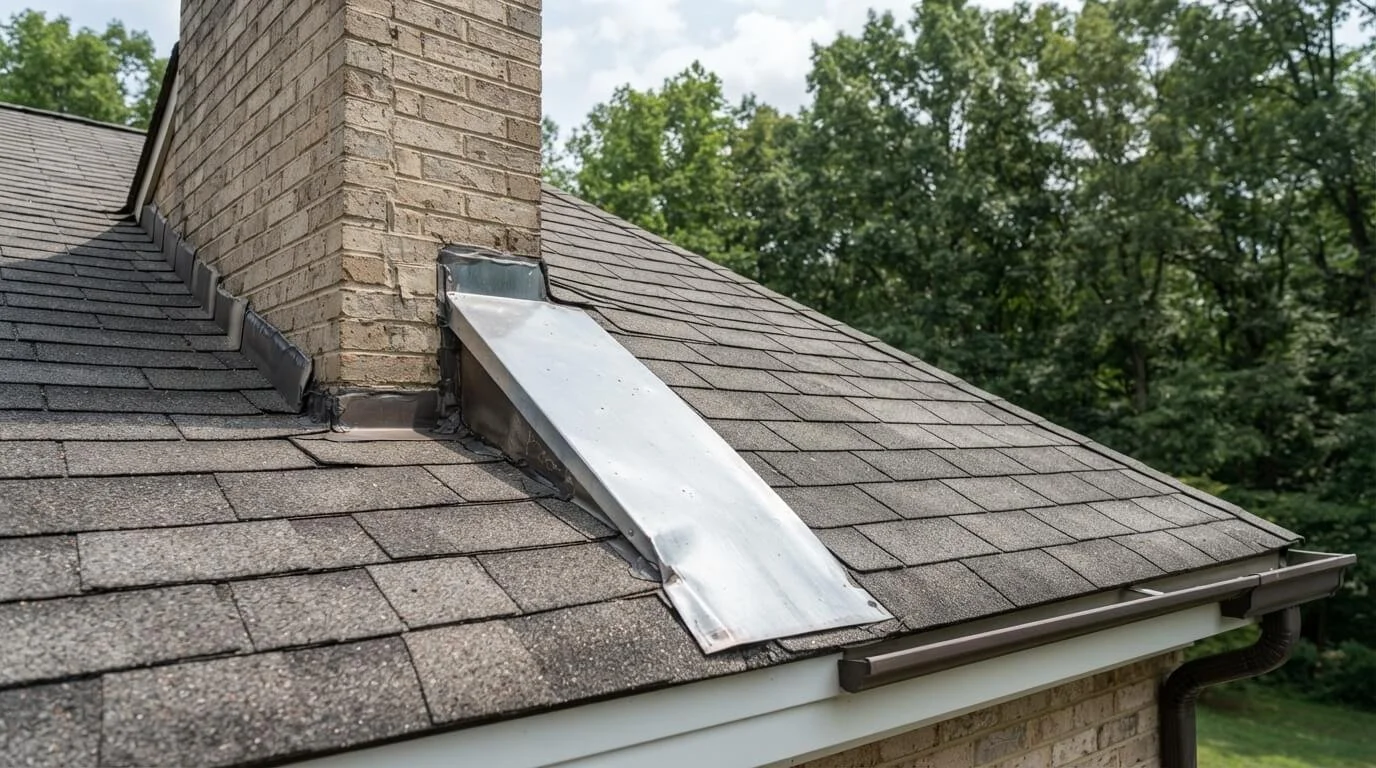
Metal flashing around a brick chimney on a shingle roof of a Maryland home.
Flashing is wrapped around all sides of the chimney, with step flashing on the sides, apron flashing at the front, and counter flashing overlapping it all. It’s what seals the gap between brick and shingles.
2. Along Walls or Dormers
When your roof meets a wall (like where your second-story wall hits the roof below) that’s where step flashing goes. It’s installed one piece at a time, with a shingle and then a piece of flashing layered step-by-step up the wall.
3. In Roof Valleys
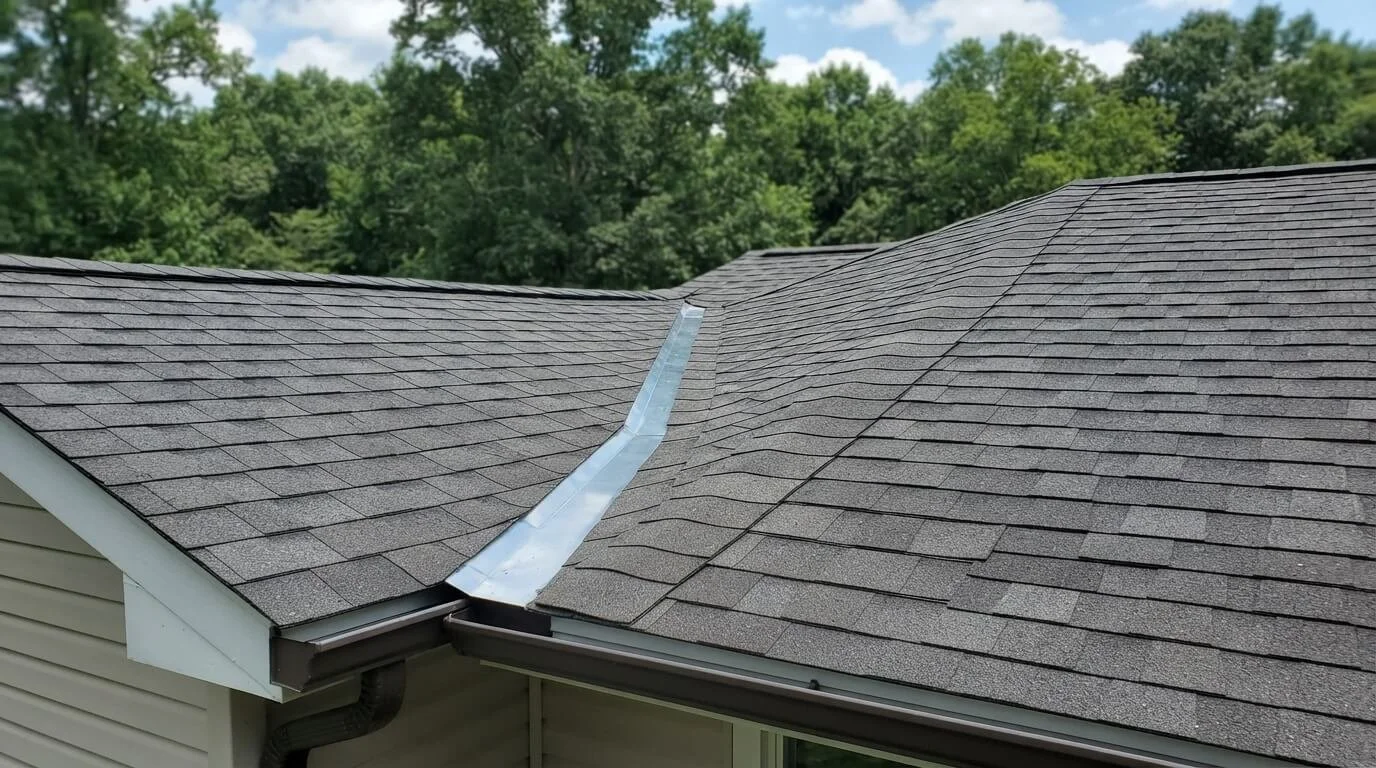
Metal valley flashing between two shingle roof slopes on a Maryland home.
Where two roof slopes meet, they form a valley, which is often a prime spot for leaks. That’s where valley flashing comes in. It’s a long strip of metal that channels water down and off the roof instead of letting it pool or seep in.
4. Around Vents and Pipes
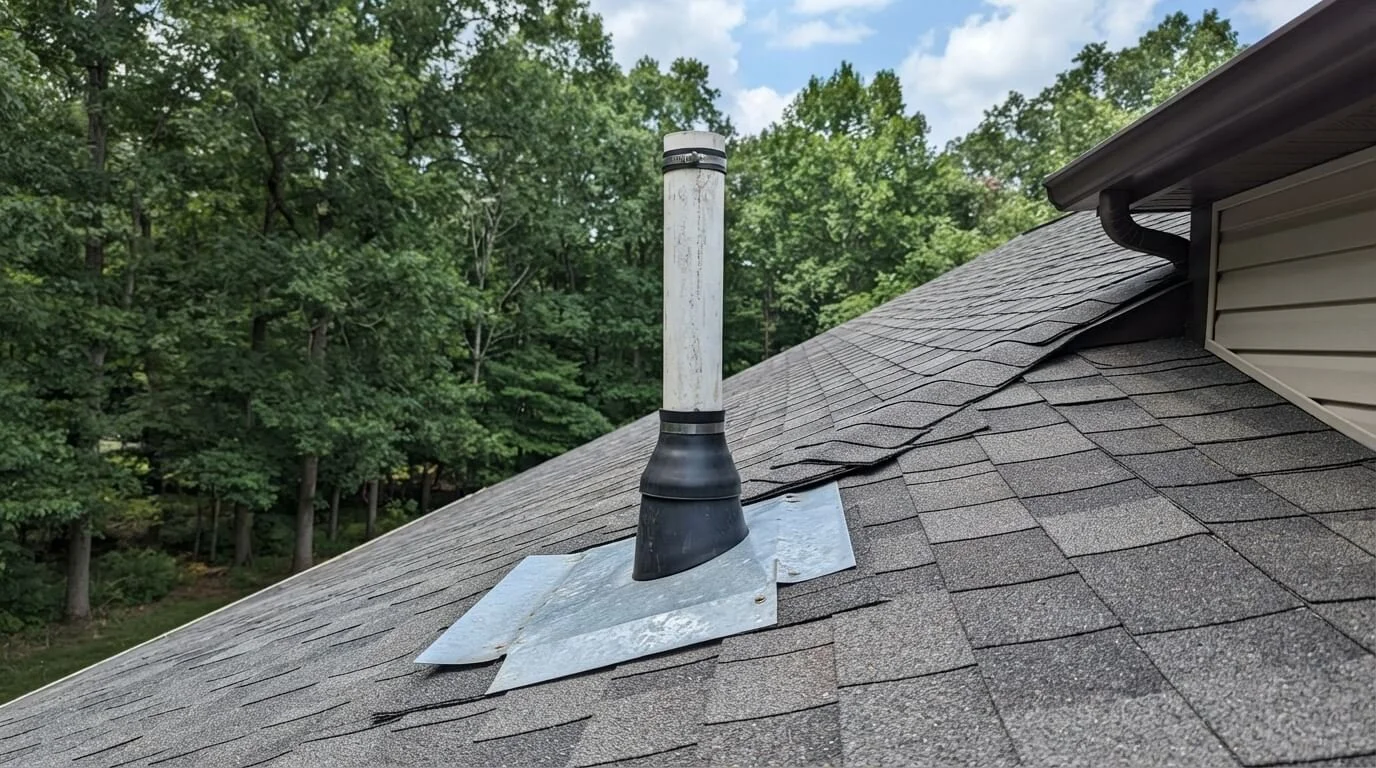
Vent pipe with a metal flashing base and rubber boot on a Maryland shingle roof.
Those small pipes sticking out of your roof (for plumbing or ventilation) need pipe flashing or vent collars. They seal around the base so rain can’t sneak in where the pipe meets the roof.
5. Along Roof Edges
Drip edge flashing is installed along the eaves and rakes (the lower edges of your roof). It helps guide water into your gutters and keeps it from soaking into the fascia board or under your shingles.
So, if you’re ever looking at your roof and notice metal along these areas, that’s your flashing doing its job quietly.
The Common Types of Roof Flashing
There are several types of flashing, each made for a different job:
Step flashing – Installed where a roof meets a wall or side of a chimney.
Counter flashing – Covers step flashing; often cut into the chimney mortar for extra seal.
Apron flashing – Used at the base of walls or dormers.
Valley flashing – Sits in roof valleys to channel water off.
Drip edge flashing – At the edges to direct water into gutters.
Pipe flashing / vent boot – Around vent pipes or roof penetrations.
Each type plays its part in keeping your roof watertight. A well-installed system uses several kinds of flashing working together.
Flashing Materials: What’s Best for Your Roof?
Most Maryland homeowners go with aluminum, because it's lightweight, affordable, and looks clean.
Other options include:
Copper – Long-lasting and attractive, but pricier.
Galvanized steel – This is more durable, and more budget-friendly than copper.
If your roof has a specific look or style, talk with your contractor about matching the flashing material to your home’s finish and your budget.
Do You Need to Replace Flashing with a New Roof?
Short answer: yes, you usually should.
When you replace your roof, it’s smart to replace all the flashing too. Old flashing can rust, loosen, or simply not seal properly with new shingles. Even if it looks okay now, it might not last as long as your new roof.
The only exception? If your roofer inspects the flashing and finds it’s in perfect condition — no rust, cracks, or loose edges — and it was installed correctly. But in almost every case, new flashing is the safer bet.
Maintaining Your Roof Flashing
Like anything else on your roof, flashing needs a little attention now and then. Here’s how to keep it in good shape:
Inspect it once or twice a year, especially after heavy storms.
Look for rust or gaps where water could get in.
Check the caulking around flashing edges and reseal if needed.
Keep gutters and valleys clear so water flows freely.
Even a small gap in flashing can lead to major water damage over time. A quick roof inspection every year can save you a lot of trouble later.
Flashing and the Maryland Climate
In Maryland, flashing is especially important because of our mixed climate.
We get heavy rain, snow, freeze-thaw cycles, and humid summers — all of which put stress on roof joints and sealants. High-quality flashing and professional installation make a big difference here.
Poor or missing flashing in Maryland often leads to:
Leaks during spring storms
Ice dams and rot in winter
Mold or ceiling stains from trapped moisture
That’s why local roofers, like Da’ Roofers, always stress proper flashing. It's your home’s line of defense.
Common Roof Flashing Problems
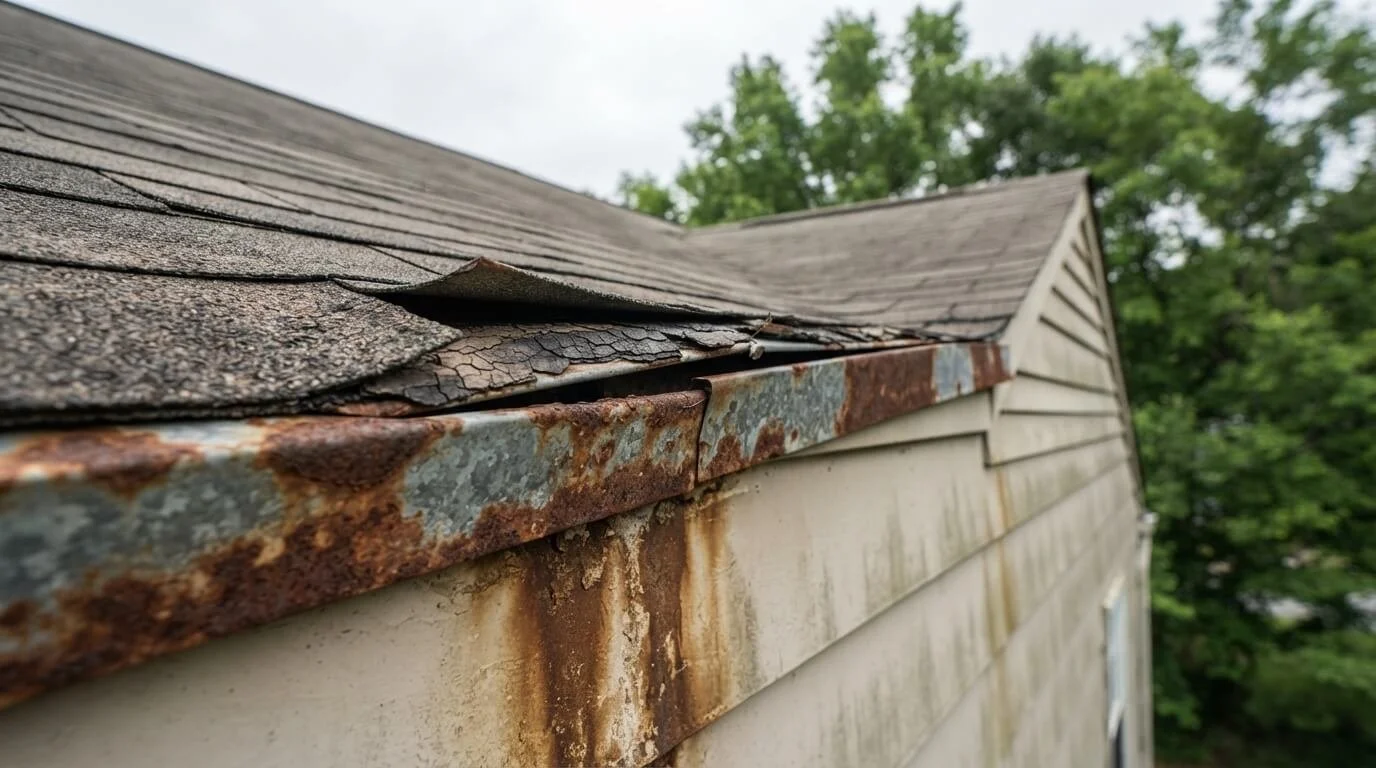
Rusted, lifted roof flashing with cracked sealant and water stains on a Maryland home.
Here are some signs your flashing may need repair or replacement:
Rusted or corroded metal
Loose or lifted edges
Missing caulk or sealant
Water stains near walls, ceilings, or chimneys
Shingles curling near flashing areas
If you spot any of these, it’s a good idea to call a local roofer for an inspection. Catching flashing issues early is much cheaper than fixing water damage later.
Final Thoughts
Flashing may not be the flashiest part of your roof (pun intended!), but it’s easily one of the most important. It keeps your home dry, your roof lasting longer, and your peace of mind intact.
If you’re in Maryland and aren’t sure about the condition of your flashing, it’s worth scheduling a quick inspection. A little preventive care today can save you a big headache, and a big repair bill, tomorrow.
FAQs
1. What is roof flashing and why do I need it?
Flashing is a thin metal layer that keeps water from leaking into joints and corners of your roof. It’s essential for every home, no matter how new your roof is.
2. Where is flashing installed on a house?
It’s placed around chimneys, walls, valleys, roof edges, vents, and anywhere the roof meets another surface.
3. What materials are used for flashing?
Steel, aluminum, and copper are most common. Copper lasts longest but costs more.
4. Should flashing be replaced when you get a new roof?
Yes. Replacing it along with your roof ensures a fresh, leak-free seal.
5. How often should flashing be inspected?
Once or twice a year; ideally in spring and fall, and after major storms.
