

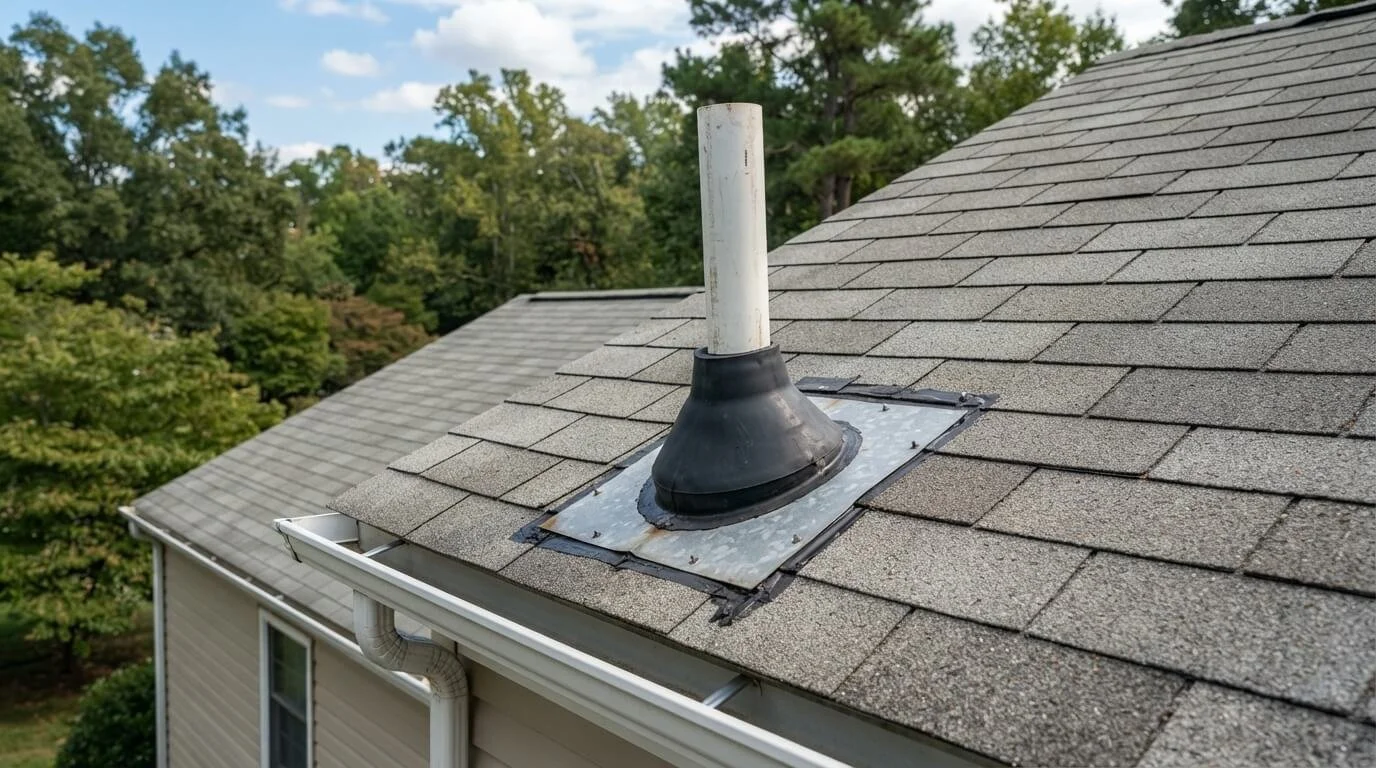
A pipe boot sealed around a vent pipe on a sloped Maryland roof.
Picture this: it’s raining outside, and suddenly, you notice a wet spot on your ceiling near the bathroom vent. You might think it’s just condensation — but oftentimes, that’s a sign your pipe boot has failed.
Most Maryland homeowners have never even heard of a pipe boot. But these small parts do a big job in keeping water out of your home. It’s also known as pipe flashing or a roof vent boot or vent collars. A pipe boot seals the base of pipes that stick out of your roof. Without them, leaks can sneak in through roof pipes and vents, slowly damaging insulation, drywall, and even the roof deck itself.
So, let’s break it down; what exactly is a pipe boot, what does it do, and why does every Maryland homeowner need to pay attention to it?
What Exactly Is a Pipe Boot?
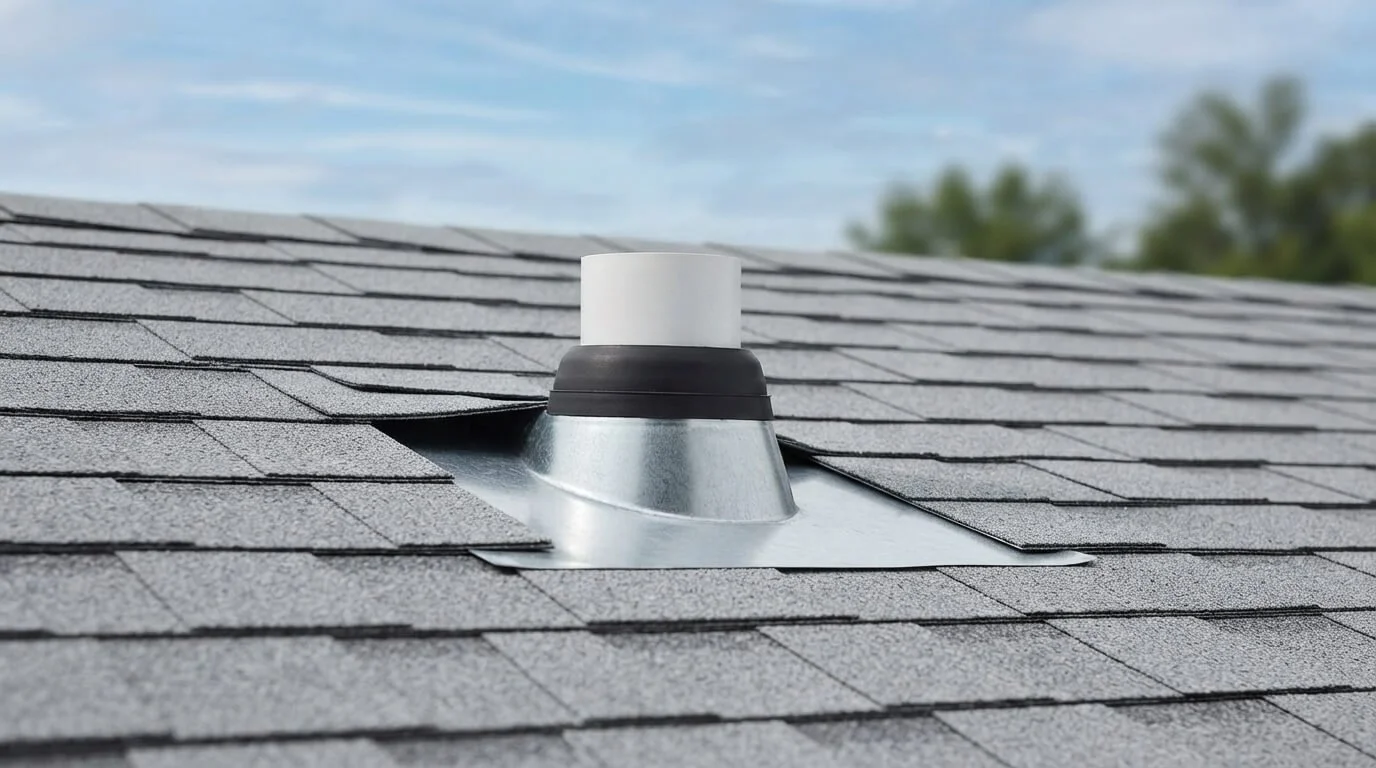
A black rubber pipe boot on a metal base around a vent pipe on a Maryland shingle roof.
A pipe boot, also known as a vent collar or pipe collar, is a type of flashing that seals the base of plumbing pipes that stick out through your roof. Think of it like a waterproof sleeve that hugs the pipe and stops rainwater from running down into your attic.
Pipe boots can be made from different materials; neoprene rubber, plastic, lead, copper, or silicone. The most common type you’ll see on Maryland roofs today is neoprene, a flexible rubber that expands and contracts as temperatures change.
Without a proper pipe boot, water would follow the pipe down through your roof and leak into your home. So while it’s a small component, it’s absolutely crucial for keeping your roof watertight.
Why Pipe Boots Are Especially Important in Maryland
Maryland’s mix of hot summers, freezing winters, and humid conditions can be tough on roofs. All that sun exposure, temperature change, and moisture slowly wear down materials — especially rubber ones like pipe boots.
UV rays break down neoprene over time, causing it to crack.
Cold snaps make the rubber stiff and brittle.
Heavy rains and humidity can speed up deterioration.
Because of these factors, pipe boots in our region tend to wear out faster than in drier or milder climates. A cracked boot might not seem like a big deal, but once water starts seeping in, it can cause stains, mold, or wood rot around the vent area.
That’s why local roofers often check pipe boots first when inspecting for leaks.
How to Tell If Your Pipe Boot Is Leaking
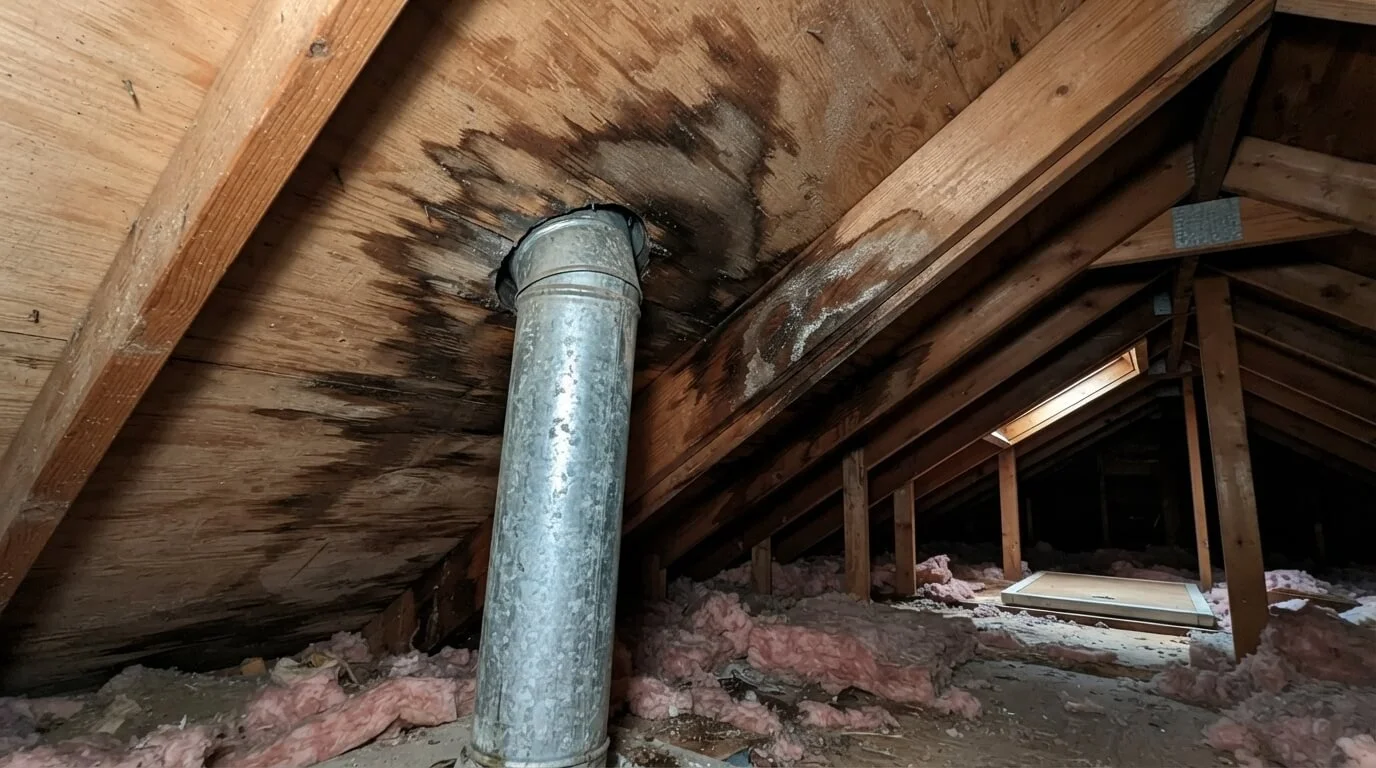
Water stains on the attic roof wood around a vent pipe in a Maryland home.
Most pipe boot problems start small. You might not see a full-on drip, but there are early signs:
Brown or yellow stains on your ceiling
A musty smell in your attic after rain
Water marks around vents or bathroom fans
Bubbling paint or damp drywall near vent pipes
If you notice any of these, it’s time to have a roofer inspect the area. Catching a failing boot early can save you hundreds in water damage repairs.
Why Pipe Boots Fail
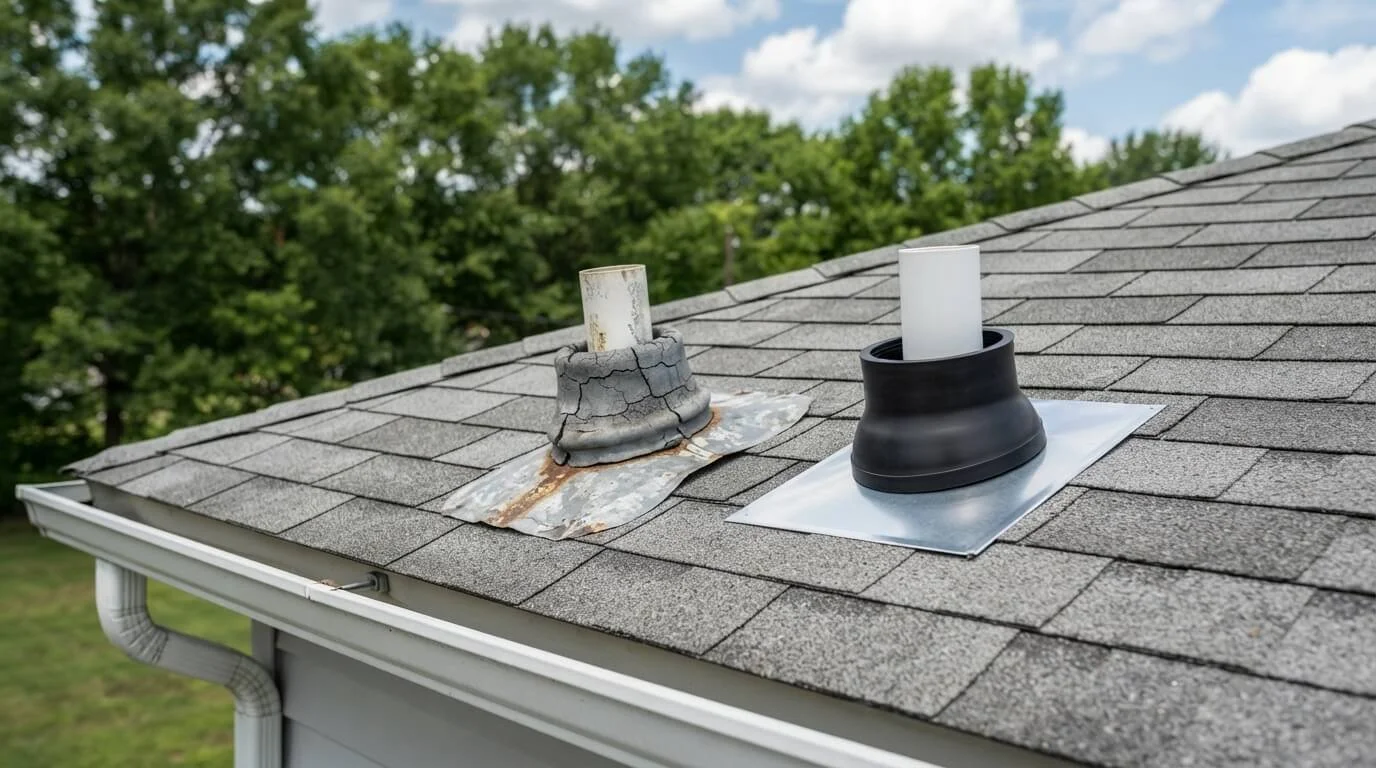
A cracked old pipe boot next to a new black rubber pipe boot on a Maryland roof.
Even the best-installed pipe boot won’t last forever. The most common causes of failure are:
UV Damage – Sun exposure cracks the neoprene or plastic.
Age – Most last about 10 years before breaking down.
Animal Damage – Birds or squirrels sometimes chew on the rubber edges.
Improper Installation – If the flashing wasn’t sealed or nailed correctly, leaks can start early.
Weather Wear – Repeated freezing and thawing causes the material to flex and eventually tear.
When that happens, water finds the easiest path down; usually into your bathroom ceiling or laundry room.
Repairing vs. Replacing a Pipe Boot
Once your roofer spots a cracked or failed boot, you have two main options: repair it or replace it.
Option 1: Repair with a Rubber Collar
If the damage is minor, roofers can slide a new rubber collar over the old boot. This acts like a second layer of protection and can extend its life by another 5–10 years. It’s quick, affordable, and doesn’t require removing shingles.
Option 2: Replace the Pipe Boot
If the old boot is beyond saving, your roofer will replace it completely. This involves removing the shingles around the pipe, pulling out the old boot, installing a new one, and sealing everything up again. It’s a bit more labor-intensive but ensures the leak is completely fixed.
Both methods work. The right one just depends on how worn out the original boot is.
How Long Does a Pipe Boot Last?
Most neoprene or rubber pipe boots last around 8–10 years, depending on sun exposure and local weather. But in Maryland, with our hot summers and icy winters, they might start to show wear closer to year seven.
Metal or copper boots last much longer, sometimes as long as your shingles. These are considered lifetime pipe boots.
Unlike regular pipe boots that may crack or wear out after 5 to 10 years, lifetime pipe boots are designed to last 30 years or more. They can handle heat, cold, and UV rays without breaking down, which means fewer repairs and less worry about water damage over time. This is actually what DA Roofers always use. They cost much more, but last the lifetime of your roof.
Still, every lifetime pipe boot should be checked during your annual roof inspection to ensure it’s sealed and flexible.
Why Maintenance Is Key
The best way to avoid a leaky pipe boot is simple: regular roof maintenance. A professional roofer will check your boots during inspections and replace them before cracks lead to leaks.
Here’s what a typical maintenance visit includes:
Checking all pipe and vent boots
Inspecting shingles and flashing
Clearing debris from valleys or gutters
Resealing any weak spots
These small visits can prevent bigger, pricier repairs — especially in older Maryland homes where the roof has already gone through several weather cycles.
DIY Fix or Call a Pro?
If you’re comfortable climbing on your roof, you can install a rubber collar yourself. But we don't advise this — working on a steep or wet roof is dangerous, and small mistakes can cause bigger leaks.
It’s usually best to hire a local Maryland roofing contractor who knows how to match your boot type and seal it correctly. They’ll make sure the repair blends in with your shingles and stands up to the next summer thunderstorm.
Can You Prevent Pipe Boot Leaks Altogether?
Not completely (you can with lifetime pipeboots, but not with rubber/neoprene ones), but you can definitely delay them. Here are a few simple tips:
Schedule annual or biannual roof inspections.
Use higher-quality boots like silicone or lead for longer durability.
Make sure the boot is properly sealed and flashed during roof installation.
Ask your roofer to use UV-resistant materials.
A small investment now saves you from major headaches later.
When to Replace Pipe Boots Along with Your Roof
If you’re getting a new roof, always replace your pipe boots (even if they look okay). They’re inexpensive and easy to swap during installation, and skipping them could lead to leaks on an otherwise brand-new roof.
Your roofer will typically install new boots for every plumbing vent and flue pipe, ensuring everything matches the new shingles and flashing. Since they last the lifetime of a roof; always ask for lifetime pipeboots. They're simply the best option.
Why Local Roofers Matter
Roofing in Maryland isn’t the same for every home. From Bethesda and Chevy Chase to Olney and Clarksville, roof designs and materials differ a lot.
A local roofing company understands the area’s weather patterns and the materials that hold up best here.
They’ll know how to spot early boot wear, recommend the right replacement type, and seal everything tight before our next summer storm or winter freeze. So if you're looking for a reliable local roofer for your repairs or replacement, DA Roofers is a good match for you.
Final Thoughts
Pipe Boots might be small, but they do one of the biggest jobs; keeping water out of your home. In Maryland, where weather can shift from humid and sticky to freezing overnight, they need a little extra attention.
A cracked or aging boot can lead to leaks before you even notice. So, get your roof checked at least once a year, especially after major storms. Whether it’s a quick pipe boot repair or a full replacement, taking care of your pipe boots now will protect your home, and your wallet later.
FAQs
1. What does a pipe boot do on a roof?
A pipe boot seals the base of vent pipes, preventing rain from leaking through the roof opening.
2. How do I know if my pipe boot is leaking?
You may notice water spots, damp drywall, or ceiling stains near vents after rain.
3. How long do rubber or neoprene pipe boots last?
Typically 8–10 years, but Maryland weather can shorten that to around 7 years.
4. Can I replace a pipe boot myself?
You can for minor repairs, but professionals ensure a safer, longer-lasting fix. We also don't advise this, as climbing a roof can be dangerous.
5. How much does it cost to replace a pipe boot in Maryland?
Usually between $250–$550, depending on the roof type and accessibility.
