

Ridge Vents vs Box Vents vs Turbine Vents vs Attic Fans: Which One’s Best for Your Roof?
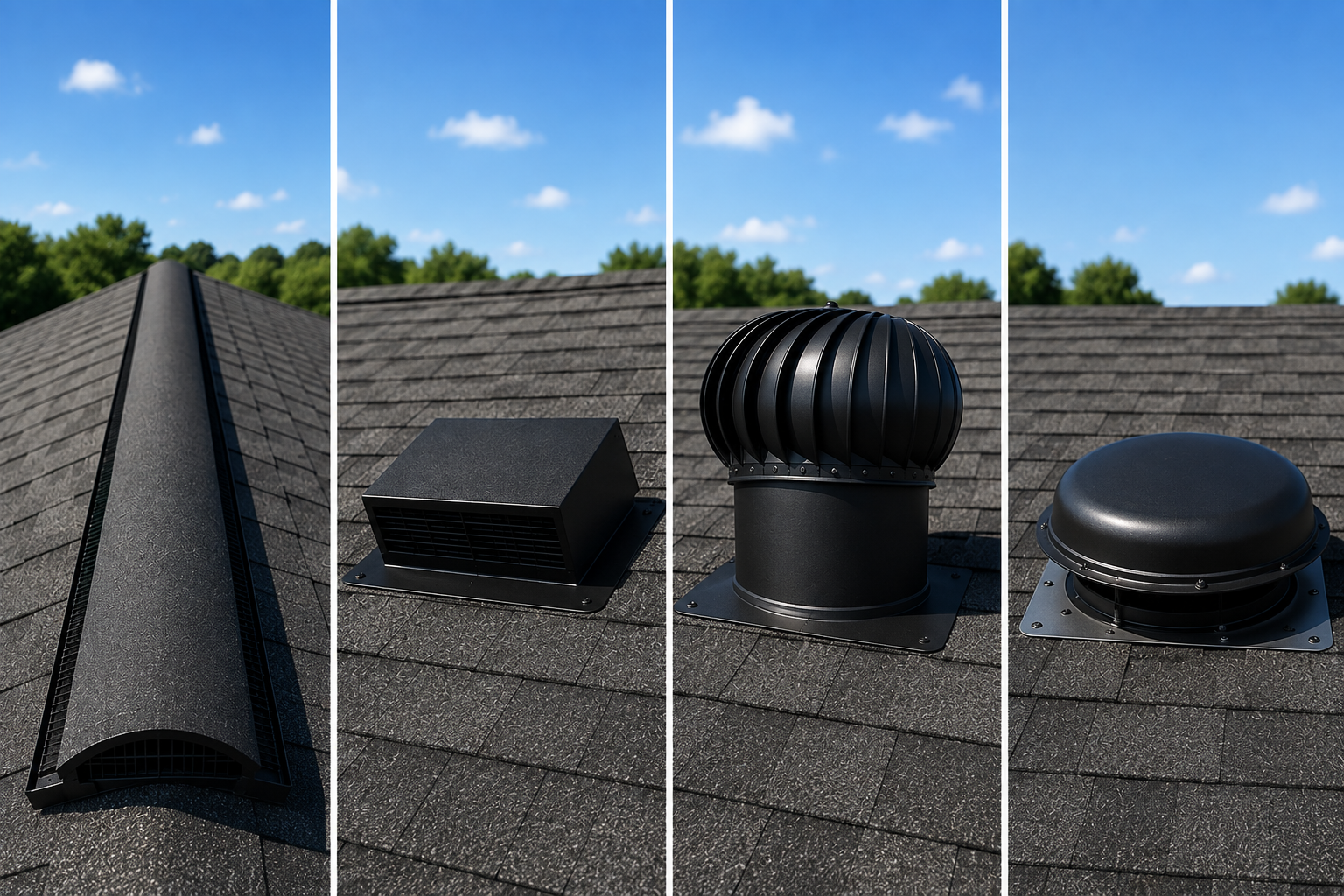
Side-by-side comparison of ridge vents, box vents, turbine vents, and attic fans installed on asphalt shingle roofs.
If you’ve ever looked up at a roof and noticed little boxes, spinning domes, or a thin line running across the ridge, you’ve already seen roof vents in action. They might not look like much, but these small features play a big role in how long your roof lasts and how comfortable your home feels inside.
Roof vents are what allow your attic to “breathe.” Without proper ventilation, heat and moisture get trapped in your attic, leading to higher energy bills, mold growth, and even roof damage. But not all roof vents work the same way. The most common types are: ridge vents, box vents, turbine vents, and attic fans. Each of them comes with its own pros, cons, and best-use cases.
So, how do you know which one’s right for your Maryland home? Let’s break it down for you.
Ridge Vents: Sleek and Efficient
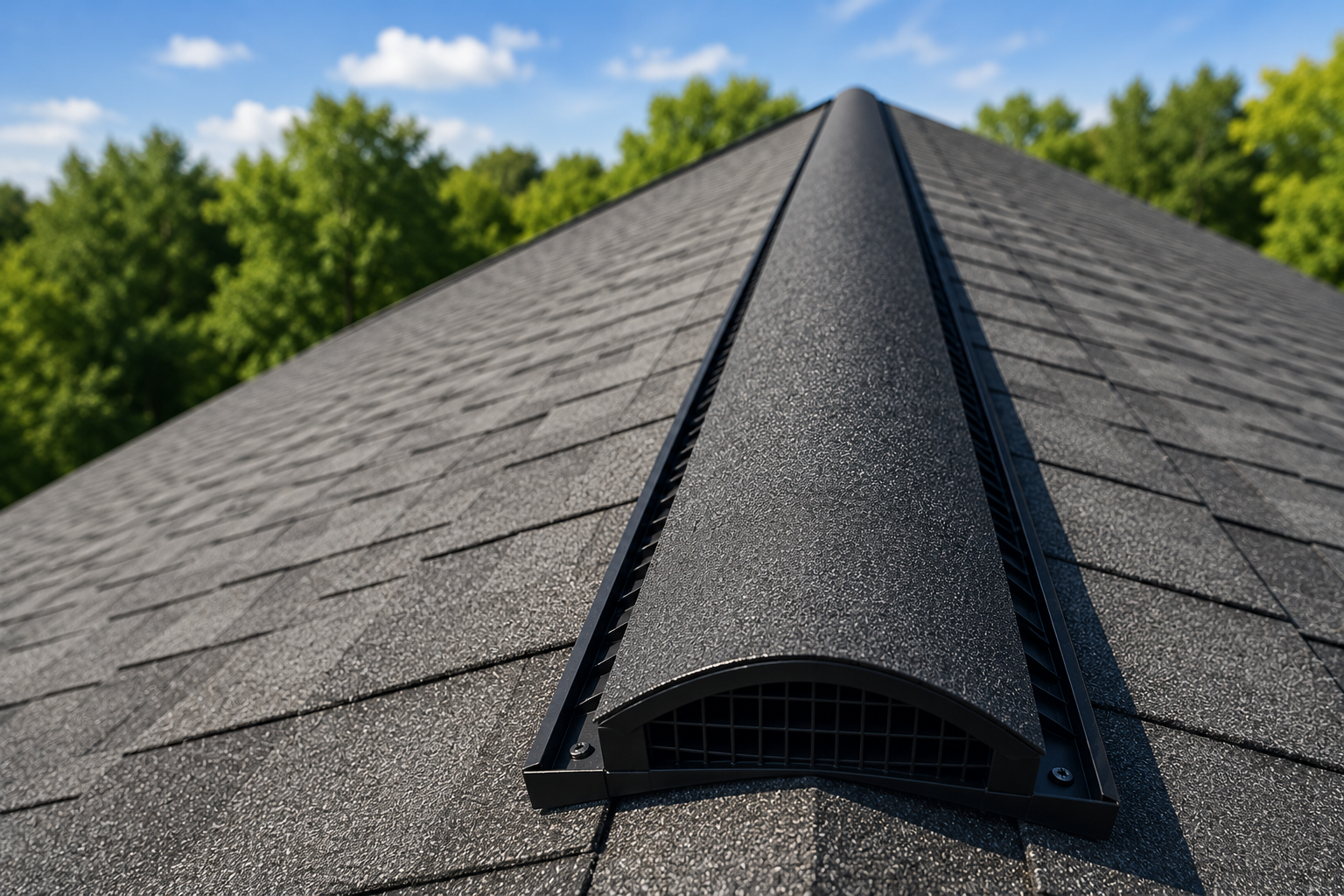
Ridge vent installed along the peak of an asphalt shingle roof
If you want your roof to look clean while staying well-ventilated, ridge vents are the gold standard.
A ridge vent runs horizontally across the peak of your roof, right where both slopes meet. It’s designed to let warm air naturally escape along the entire ridge line. When paired with continuous soffit vents, this creates a smooth airflow — cool air in from below, hot air out from above.
Pros:
Even ventilation: Because they span the whole ridge, airflow stays consistent from one end to the other.
Low profile: They’re nearly invisible from the ground, keeping your roof looking neat.
Quiet and low-maintenance: No moving parts, no humming, no upkeep.
Energy-efficient: Helps maintain attic temperature without using electricity.
Cons:
Installation matters: They must be paired with proper soffit intake vents to work effectively.
Not ideal for every roof: Homes without a long ridge line or with complex roof shapes might not benefit as much.
Ridge vents are best for modern homes or newer roof builds with a long ridge and proper soffit ventilation. They're especially popular with asphalt shingle roofs.
Box Vents: Simple and Reliable
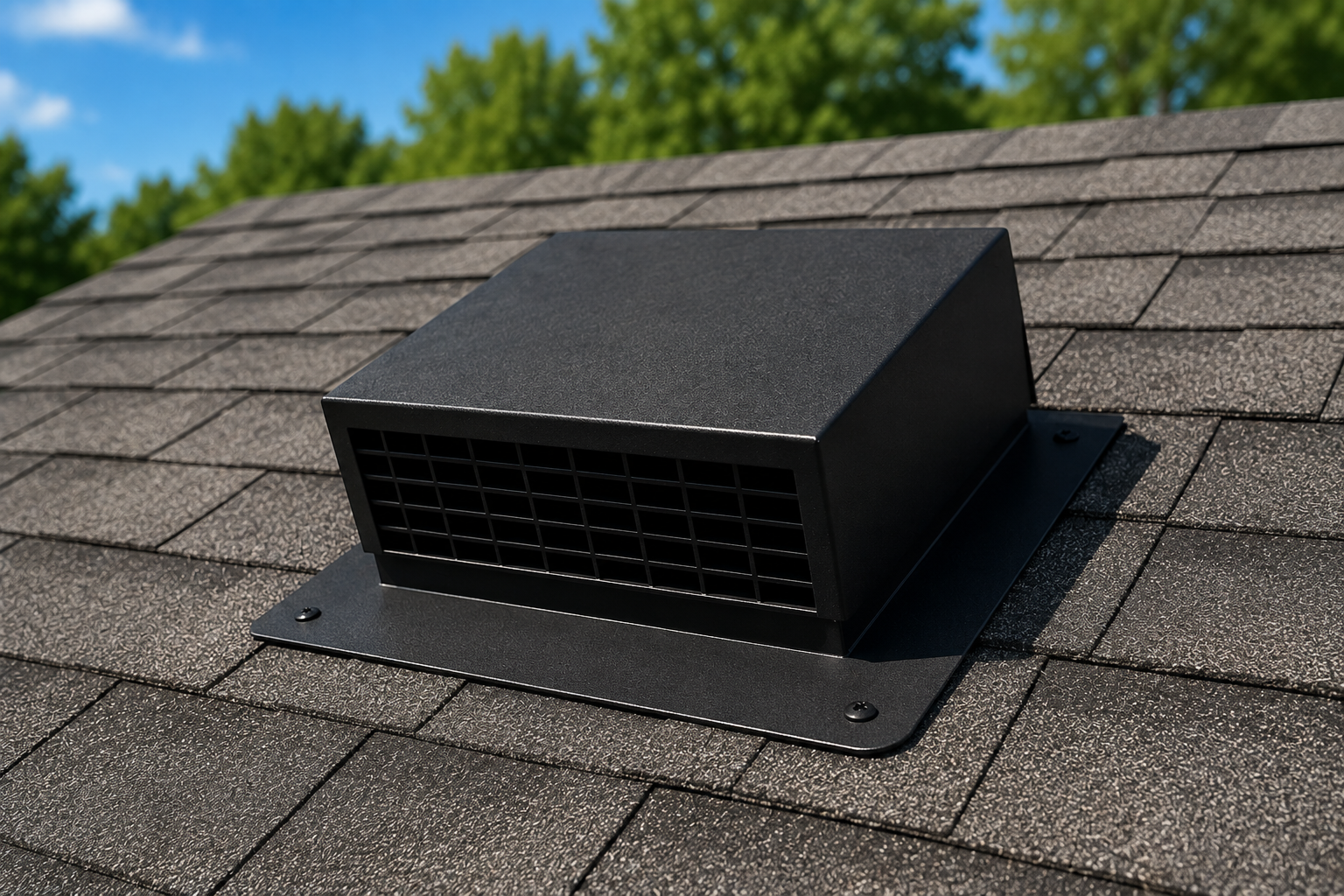
Residential roof with a box vent
Box vents (sometimes called static vents, turtle vents, or louver vents) are small, square vents installed near the roof’s peak. They don’t have any moving parts; instead, they rely on natural convection. As hot air rises, it escapes through these openings, allowing cooler air to flow in from the soffits.
Pros:
Budget-friendly: Usually cheaper and easier to install than ridge vents.
No power needed: Works naturally without motors or electricity.
Good for complex roofs: Ideal for roofs with multiple ridges or valleys where ridge vents can’t be installed continuously.
Cons:
Less efficient: Since they’re stationary and spaced out, airflow isn’t as even as ridge vents.
More visible: The little “boxes” are noticeable from the ground.
More vents needed: Larger attics often require several box vents to provide enough ventilation.
They're best for older homes, smaller roofs, or roofs with several peaks where ridge vents aren’t practical.
Turbine Vents: The Power Spinners
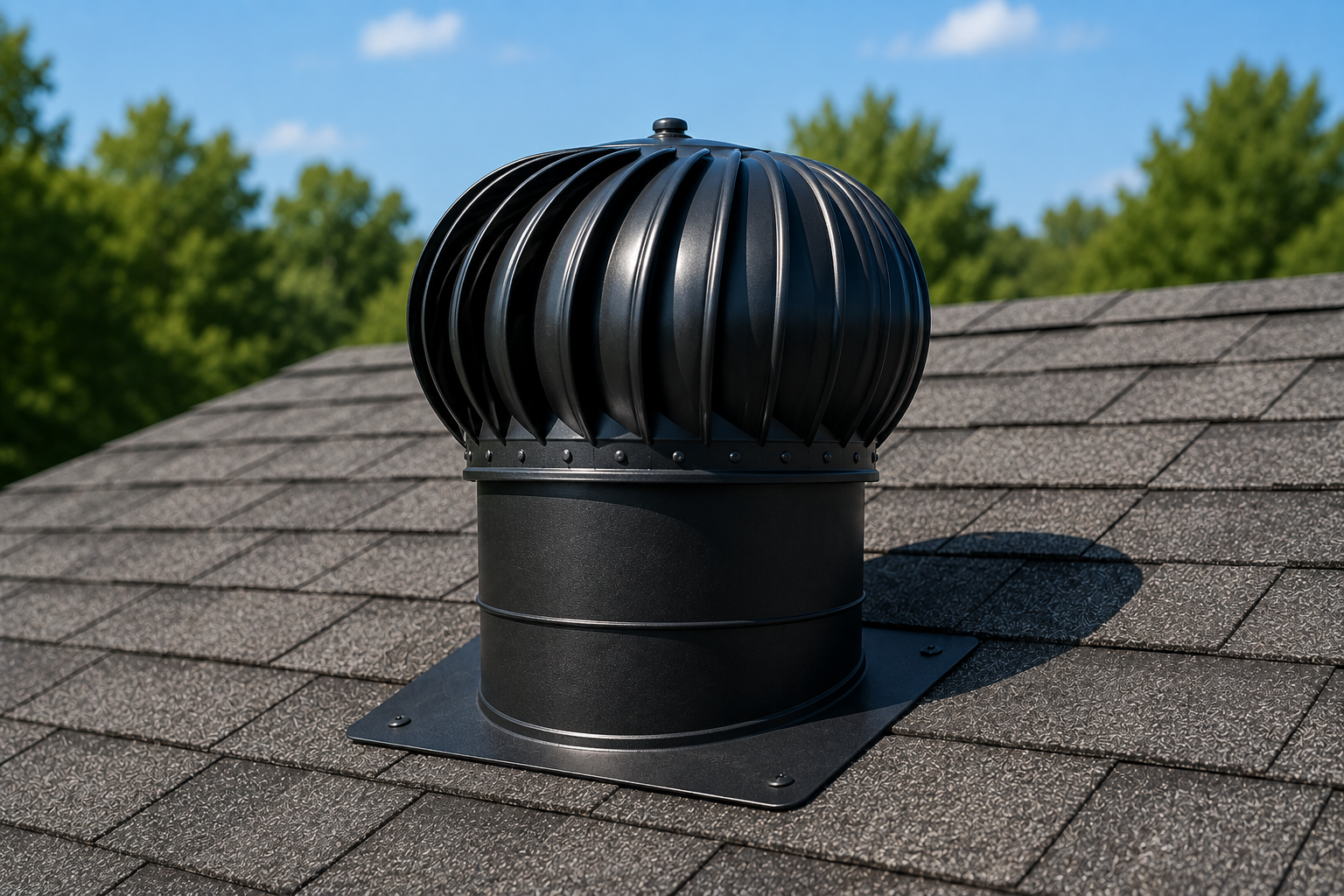
Turbine roof vent mounted on a residential asphalt shingle roof.
If you’ve ever seen a shiny spinning dome on top of a roof, that’s a turbine vent (also called a whirlybird). These vents use a combination of wind power and convection to draw hot air out of the attic. As the wind blows, the turbine spins, creating suction that pulls stale air out. Even on calm days, rising heat helps move air through the vents.
Pros:
High airflow: Moves more air than passive box vents, especially on windy days.
Affordable and effective: Great performance for the price.
Helps reduce attic temperature: Especially useful in summer months.
Cons:
Moving parts: Bearings can wear out over time, requiring replacement.
Potential noise: Cheap or older turbines may rattle or squeak.
Aesthetic concerns: Some homeowners don’t like the industrial look.
Can leak if damaged: Must be installed properly to prevent rain intrusion.
Turbine vents are best for homes in areas with frequent wind or large attics needing stronger airflow.
Attic Fans: Powered Airflow Control
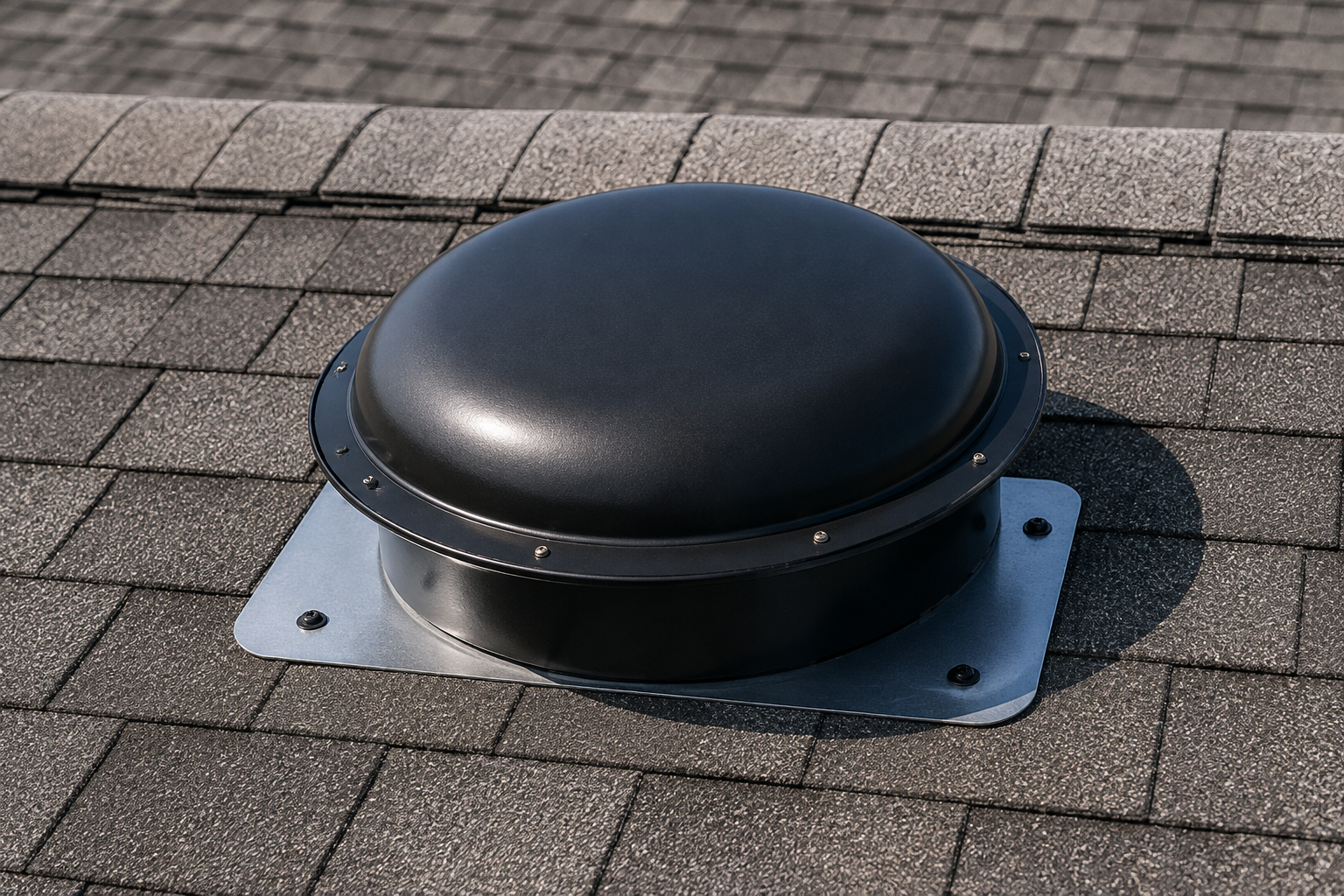
Close-up of an attic fan installed on an asphalt shingle roof.
Attic fans take ventilation a step further. Instead of relying on wind or natural airflow, they use electric or solar power to pull hot air out of your attic much faster. They can be installed either on your roof or inside a gable wall, depending on your attic’s layout.
Pros:
Powerful airflow: Moves air out of the attic faster than passive vents.
Cools your attic and home: Helps lower indoor temperatures in summer.
Solar options available: Cuts energy use while improving ventilation.
Supports your HVAC system: Reduces strain on air conditioning.
Cons:
Needs power: Runs on electricity or sunlight, depending on the model.
Requires maintenance: The motor or fan blades may need servicing over time.
Higher cost: More expensive than passive vents to buy and install.
Attic fans are best for larger attics or homes that hold a lot of heat, especially during Maryland's humid summer months. Solar-powered models are a great option if you want stronger ventilation without higher energy bills.
Active vs Passive Ventilation: What’s the Difference?
It helps to know that ridge vents and box vents are passive systems. That means they rely on natural airflow. Turbine vents and attic fans, on the other hand, are active, meaning they create their own suction to move air faster.
In general:
Passive vents = simpler, quieter, and lower maintenance.
Active vents = stronger airflow but need upkeep.
In Maryland's climate, either system can work as long as it's balanced with proper soffit intake and installed by an experienced roofer, like Da’ Roofers.
Which Vent Is Best for Maryland Homes?
Here In Maryland, we see it all; humid summers, rainy springs, and cold, sometimes snowy winters. That mix makes balanced attic ventilation especially important.
Ridge vents are the top choice for most newer homes. They provide consistent airflow, stay hidden, and don’t require maintenance.
Box vents are great alternatives when your roof’s layout doesn’t support ridge vents or when you’re replacing a few damaged vents on an existing roof.
Turbine vents can be excellent for older, larger attics that need stronger air movement, especially in open, windy areas.
Attic fans are great if your attic gets excessively hot, or you want more control over air movement.
The key is matching the vent to your roof’s design, attic size, and the local weather. A professional roofing contractor can calculate exactly how much ventilation your attic needs to stay healthy year-round.
Why Roof Ventilation Matters
A good ventilation system balances two forces:
Intake vents: Usually installed under your roof’s eaves (the soffit area). They let cool, fresh air in.
Exhaust vents: Installed at or near the top of your roof. They let hot, moist air escape.
Together, they keep temperatures steady, prevent condensation, and protect your roof from premature wear. In Maryland, where summers are humid and winters can get icy, that balance is especially important.
What Happens If Your Roof Isn’t Properly Vented
It’s easy to underestimate ventilation until you see the damage it prevents. Without enough airflow:
Heat builds up in summer, cooking shingles from underneath.
Moisture collects in winter, leading to mold, rot, and insulation damage.
Energy bills climb because your HVAC system has to work harder.
Roof lifespan shortens, sometimes by years.
Whether you choose ridge vents, box vents, turbine vents, or attic fans, the goal is to keep your attic’s temperature and humidity in balance. That’s what protects both your roof and your wallet.
Final Thoughts
There’s no “perfect” vent for every roof. The best one for you depends on your roof’s layout, your attic’s size, and your local weather.
For most Maryland homeowners, ridge vents paired with soffit vents offer the best long-term value and performance. But if your home has unique rooflines or older structures, box vents or turbine vents might be the smarter choice. And if it traps more heat, attic fans are the way to go.
The best way to be sure? Have a trusted local roofer inspect your attic and roof design. A quick visit can help you choose the right ventilation system. The right one will keep your home cooler, your roof stronger, and your energy bills lower for years to come.
FAQs
1. Are ridge vents better than box vents?
Generally, yes. Ridge vents provide more even airflow along the roof’s entire length. But if your roof design doesn’t allow for a full-length ridge vent, box vents can still do a good job when installed properly.
2. Do turbine vents and attic fans work better than ridge vents?
Turbine vents and attic fans can move more air faster. But ridge vents provide steady, quiet airflow with no moving parts, and no risk of wear or noise.
3. What’s the best vent for humid climates like Maryland?
Ridge vents combined with continuous soffit vents or attic fans are most suitable. They help remove trapped moisture and regulate attic temperatures through all four seasons.
4. Can I mix vent types on one roof?
It’s best not to. Mixing, say, ridge vents with turbine or box vents can disrupt airflow and reduce efficiency. Stick to one type for balanced ventilation.
5. How long do these vents last?
Ridge vents often last the lifespan of a typical asphalt shingle roof (20–30 years). Box vents have a similar lifespan to ridge vents with minimal maintenance. Turbine vents usually need servicing or replacement every 10–15 years due to moving parts. Attic fans last 10–20 years with occasional maintenance.
