

Laying the Underlayment: Your Roof’s Hidden Layer of Protection
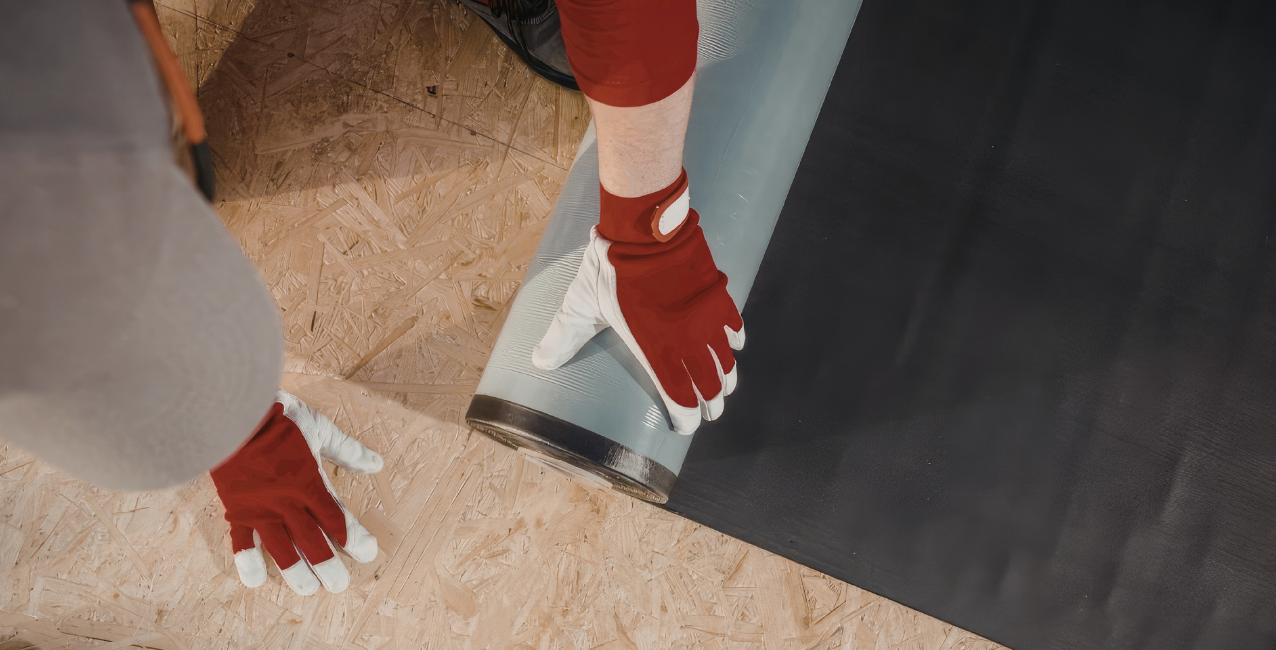
Maryland roofer installing waterproof roof underlayment on an OSB roof deck.
Once waterproofing is complete, your roof isn’t quite ready for shingles yet. There’s another key layer that most homeowners never see, but it’s one of the most important parts of the roofing system. That’s the underlayment. Curious what that waterproofing step actually involves? Here's what ice and water shield is and why roofers use it.
Da’ Roofers install CertainTeed Synthetic Undrelayment across your entire roof to create a continuous protective barrier between the decking and shingles. It’s like your roof’s hidden armor — you may not see it, but it’s working hard year-round to keep your home dry and damage-free. Here’s what Roofers do during the process:
Inspect and Prepare the Decking: Ensure the surface is smooth, clean, and dry.
Roll out CertainTeed Synthetic Underlayment: Installed across the entire roof surface that is not covered with ice and watershield.
Overlap Seams and Fasten Securely: Prevents water penetration and wind uplift.
Cover Valleys, Rakes, and Edges: Adds extra protection in high-risk leak areas.
Inspect and Prepare for Shingles: The roof is now ready for shingle installation.
This layer quietly protects your home from moisture, heat, and wind, extending the life of your roof. It might not be something very obvious from your lawn, but it's definitely irreplaceable.
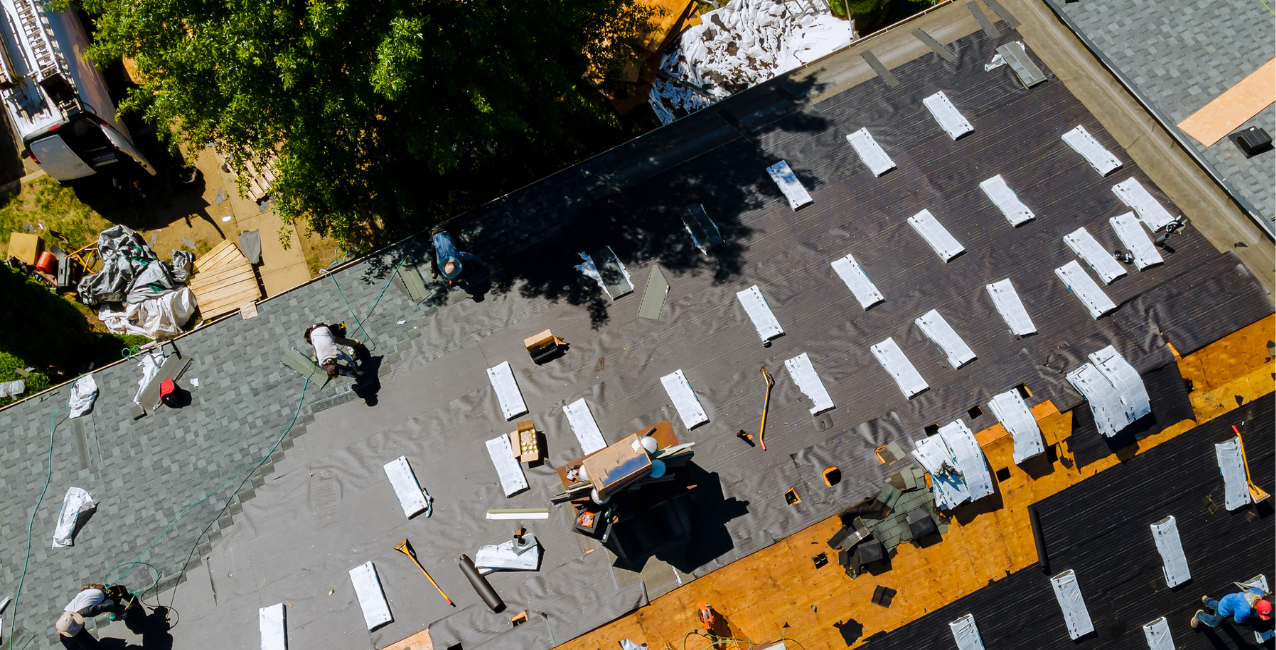
Aerial view of a residential roofing project in Maryland showing contractors installing roof underlayment.
The Step-by-Step Installation Process
1. Deck Preparation
Before installation begins, the roof decking is inspected one last time. It must be clean, dry, and securely fastened. No loose nails, dust, or debris that could interfere with adhesion.
2. Rolling Out the Underlayment
We often start at the bottom edge of the roof and work our way up, rolling out CertainTeed Synthetic Felt in overlapping rows. Each strip is laid flat and tight to prevent wrinkles or air pockets.
It is installed over the entire roof surface and provides consistent protection from eave to ridge. Underlayment also ensures smooth coverage for shingle application later on.
3. Overlapping and Fastening
Each section overlaps the one below it, just like shingles, to prevent water from sneaking through seams. The underlayment is then fastened using corrosion-resistant nails or cap fasteners to keep it firmly in place, even under strong Maryland winds.
4. Covering High-Risk Areas
Extra care is given to valleys, rakes, and roof edges. These areas face the most water flow and wind pressure. The underlayment in these spots is double-checked for tight seals and full coverage.
5. Preparing for Shingle Installation
Once the entire roof is covered, the roofers perform a final inspection. Any bubbles, tears, or loose edges are fixed immediately. The surface is now ready for shingle installation, which is the next visible step in your roof’s transformation.
Why Underlayment Matters
Even the best shingles need backup. The underlayment serves as your roof’s second defense line, providing protection against what shingles alone can’t stop. Here’s why it matters:
Stops Water Intrusion: If wind lifts shingles or rain blows sideways, the underlayment keeps water from reaching the decking.
Prevents Damage from Moisture: Helps keep your wood deck dry and free from mold or rot.
Adds Fire Resistance: Synthetic felt offers an extra safety layer in case of embers or sparks.
Improves Shingle Installation: Provides a smooth, even surface for shingles to adhere properly.
Increases Roof Longevity: Reduces stress and wear on shingles over time.
When properly installed, CertainTeed Synthetic Felt helps ensure your roof system performs at its absolute best.
Benefits of Using CertainTeed Synthetic Felt
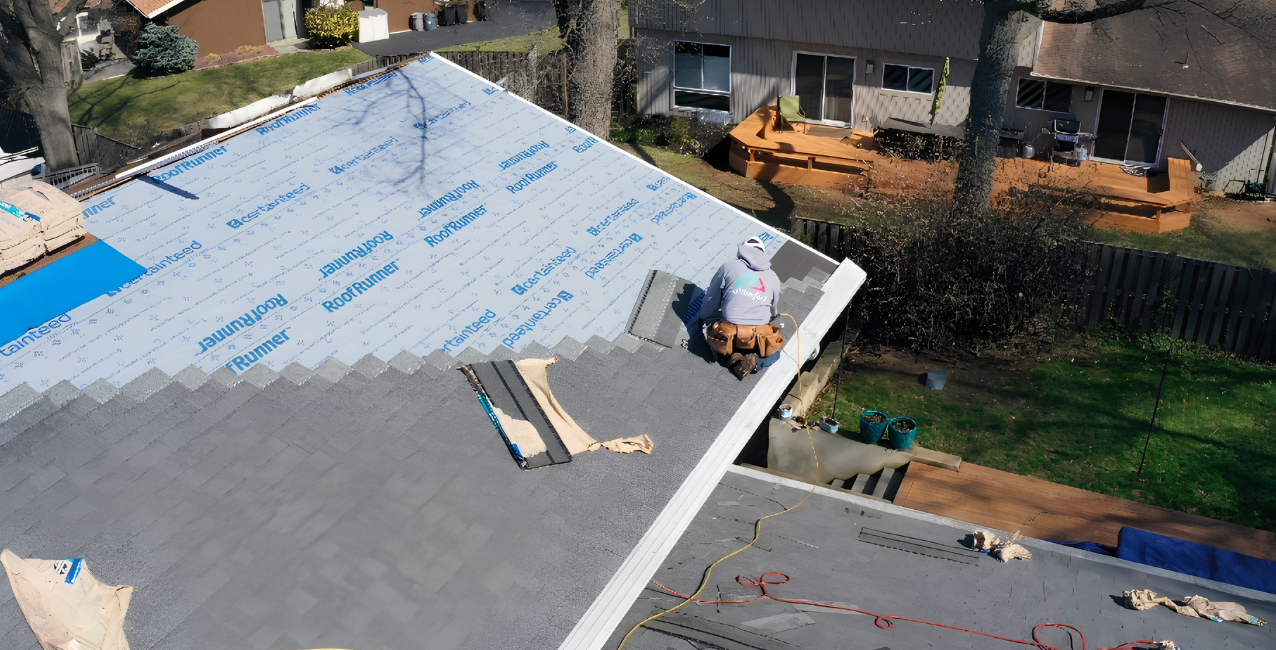
Professional Maryland roofer installing asphalt shingles over synthetic roof underlayment.
Da’ Roofers use CertainTeed Synthetic Felt because it outperforms traditional tar paper or basic felt. Here’s why:
Lightweight but Strong: Easier to handle, yet tear-resistant.
Moisture and Mold Resistant: Doesn’t absorb water like paper felt.
UV Protection: Can be exposed temporarily without damage.
Slip-Resistant Surface: Keeps the roofing crew safe during installation.
Long-Lasting Performance: Designed to work as part of CertainTeed’s Integrity Roof System.
This underlayment gives your roof superior protection and durability, which is a key part of Da’ Roofers’ quality-first approach.
Final Thoughts
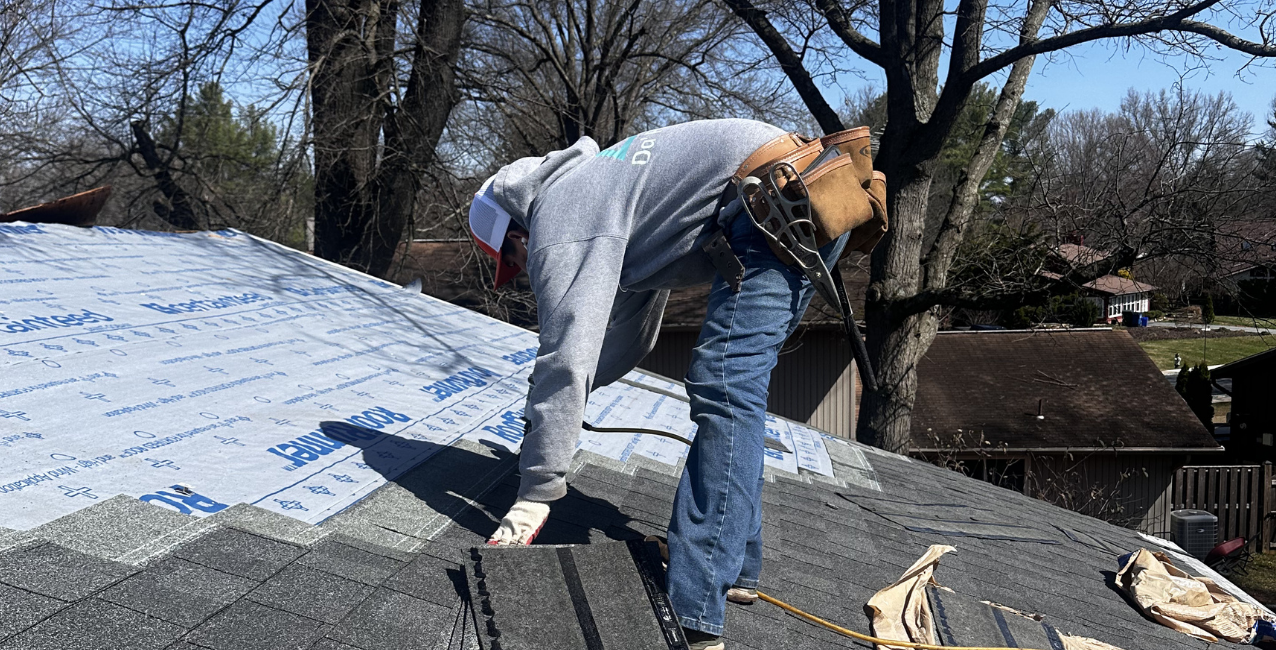
Maryland roofer installing architectural asphalt shingles over synthetic roof underlayment during a residential roof replacement.
Laying the underlayment may seem like a behind-the-scenes step, but it’s one of the most important parts of your new roof. It’s what keeps water out, protects your decking, and helps your shingles last longer.
By using CertainTeed Synthetic Felt, Da’ Roofers ensure your roof is equipped with top-quality protection from the very start. It’s this attention to detail, even in the parts you never see, that makes your new roof strong, reliable, and built to last.
FAQ
1. What exactly is roof underlayment?
It’s a synthetic or felt material installed between your roof decking and shingles to provide extra water and weather protection.
2. Why does Da’ Roofers use CertainTeed Synthetic Felt?
It’s more durable, moisture-resistant, and longer-lasting than traditional felt, ensuring better protection for your home.
3. How long does this step take?
Usually just a few hours, depending on the roof size and complexity.
4. Can I see the underlayment after installation?
Not once shingles are installed, but you can ask the crew to show you during the process before shingles go on.
5. Is this step required for all roofs?
Yes. Underlayment is a building code requirement and essential for a properly functioning roof system.
